
Last updated: August 4, 2026
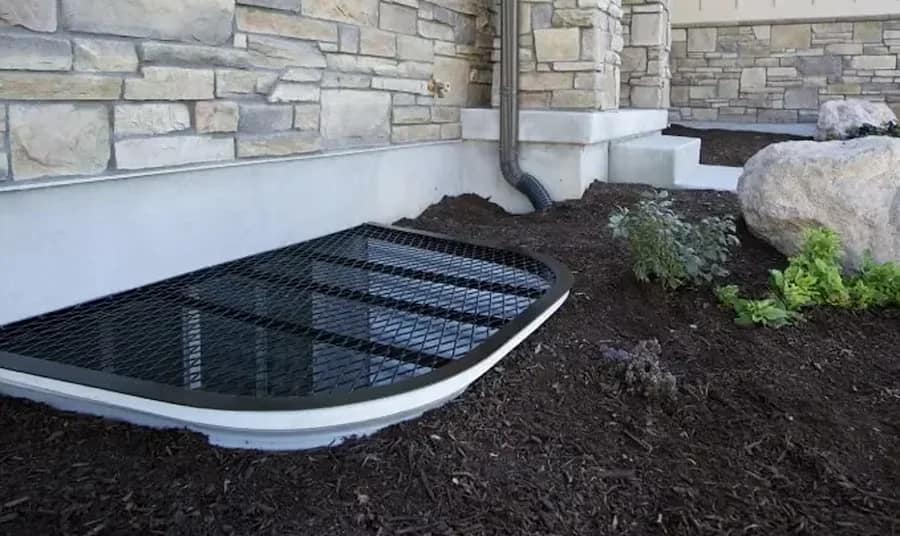
A window well does three jobs: it holds back the soil around a below-grade window, it lets in light and air, and for a bedroom it provides emergency egress. Two things decide whether it protects your basement: drainage and the material. For drainage, the base of the well should hold roughly 4 to 12 inches of clean, coarse gravel (depending on the well and the drainage design) with the top of the gravel below the window sill, tied into the home’s weeping tile so water drains down and away instead of pooling against the glass.
For material, a concrete window well typically lasts 30 to 50 years or more with no rust, while a corrugated galvanized-steel well usually lasts about 20 to 30 years in service before it rusts where metal meets damp, mineral-rich soil. In Calgary’s freeze-thaw clay ground, a well that traps water against the sill will leak no matter how good the window is.
(Sources: AquaGuard.)
This is the broad primer on how wells work and why yours might be failing. The legal egress numbers (opening area, sill height, the permit, the registry) are a separate, more technical question. We cover those in our Calgary egress window-well code guide; this page is about drainage, corrosion, and choosing a well that lasts.
What a window well actually does
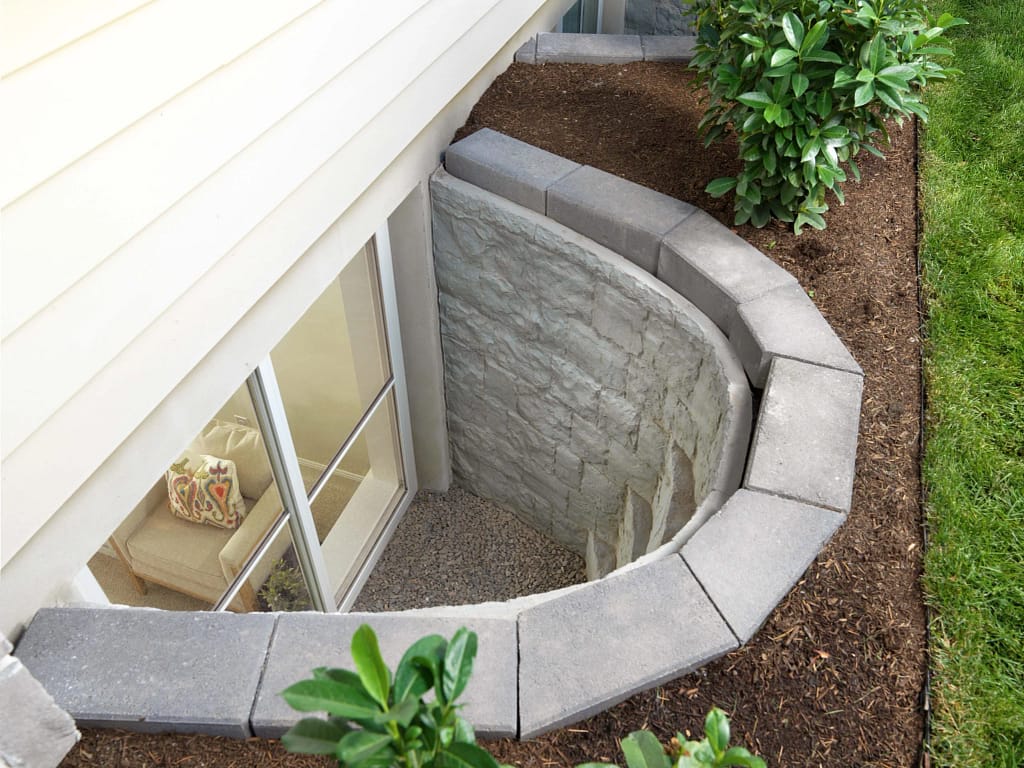
A window well is a curved or rectangular barrier set against the foundation around a below-grade window. It serves three purposes at once:
- It retains soil. Without the well, backfill would press against and bury a basement window. The well holds the earth back so the window stays clear.
- It admits light and air. A below-grade window with a properly sized well brings daylight and ventilation into a basement, which is what makes a basement bedroom or suite livable.
- It provides egress. For a bedroom, the window and well together are an emergency exit. That’s where code comes in, and where the dimensions stop being a matter of preference.
The first two jobs are about comfort and dryness. The third is a legal requirement for any below-grade bedroom, and the City of Calgary sets those numbers. We’ll point you to them rather than restate the checklist here.
The part that keeps your basement dry: drainage
The single most important feature of a window well is drainage. A well that holds standing water will leak into the basement, and that same pooled water is what rusts a steel well from the inside out.
The drainage detail is straightforward in principle. The base of the well is filled with clean, coarse gravel so water passes through it rather than collecting. That gravel either drains into the subsoil or, better in Calgary’s clay, connects to the home’s weeping tile (the perforated drain pipe at the footing) so water is carried down and away from the foundation.
(Source: Window Well Experts.)
A few practical numbers:
- Gravel depth: plan for roughly 4 to 12 inches of clean stone at the base, depending on the well depth and the drainage design. The constant is that the top of the gravel sits below the window sill so water never rises to the glass.
- Height above grade: the well should sit a few inches above the surrounding grade so surface water and snowmelt run away from it rather than over the lip into it. Raise it more on a slope or a wet spot.
- The weeping-tile tie-in: connect the well to the weeping tile, either by excavating down to the footing or by augering a new drain line. This is the connection that turns “gravel that fills up” into “gravel that drains.”
In Calgary, the drainage detail matters more than in drier climates. Roughly 128 freeze-thaw cycles a year plus spring snowmelt repeatedly saturate the well base. (Source: freeze-thaw context, Omega Knowledge Base.) A well without a working drain becomes a small reservoir against your foundation every spring.
Why corrugated metal wells rust (and why paint won’t fix it)
The most-replaced window well in Calgary is the corrugated galvanized-steel one, and it fails for two reasons: standing water and galvanic corrosion where the steel contacts your foundation’s steel.
The standing-water part is simple. A well without drainage collects water after every rain and snowmelt, and even galvanized metal eventually corrodes when water is allowed to pool repeatedly at its base. (Source: Newzire.)
The galvanic part is more specific, and it’s the reason a fresh coat of paint never solves a rusting well. InterNACHI (the International Association of Certified Home Inspectors) explains it as electrolysis: “Electrolysis occurs when dissimilar metals are in contact in the presence of an electrolyte, such as water.” The steel well acts as a sacrificial anode while the foundation’s steel reinforcement acts as the cathode, and the well corrodes.
The two named triggers are fasteners or anchors that are long enough to contact the foundation rebar, and contact between the well and a steel window frame. Critically, InterNACHI states that “painting cannot prevent electrolysis-driven corrosion.” The fix is remounting the well so it isn’t in electrical contact with the foundation’s steel.
(Source: InterNACHI, https://www.nachi.org/window-well-corrosion.htm .)
So a rusting steel well usually has two things going on: water it can’t drain, and a metal-to-metal contact path you can’t paint over.
How long each material lasts
Here’s the honest comparison. A concrete well wins on longevity, but galvanized steel can last a long time in the right soil, so we’ll say where each one really lands.
| Material | Typical service life | Notes |
|---|---|---|
| Concrete | 30–50+ years | No rust, rot, or UV breakdown. Mass retains soil well and carries an egress ladder cleanly. |
| Corrugated galvanized steel (~18-gauge) | ~20–30 years (practical) | Rusts where metal meets damp soil; the most-replaced well in Calgary. |
| Plastic / composite | Varies | Lighter and rust-free, but less structural for deep wells or wells carrying a ladder. |
(Source: Window Well Supply.)
A word on the “75-year” galvanized claim. Some galvanized-well sellers cite a 75-year life, drawn from the American Galvanizers Association’s figures for zinc coatings in low-corrosion soil (with 35 to 50 years quoted for more aggressive soil). That’s a best-case, soil-dependent lab figure from a galvanizing-industry body, not a Calgary expectation.
(Source: AGA figures cited via Bright Idea Egress.)
Galvanizing genuinely can last decades in good ground. But Calgary’s wet, mineral-rich, clay-heavy soil (derived from Bearpaw shale) is the aggressive end of that range, and acidic or clay-heavy soil speeds metal degradation compared with sandy, well-draining soil.
Sizing a well for light, air, and egress
A well has to be big enough for the window to fully open, for a person to climb out in an emergency, and to let usable light in. For comfort and daylight, the rough idea is that a larger well admits more light to the room. For egress, the binding numbers belong to the City of Calgary, not to a rule of thumb.
For a bedroom, the City requires a minimum clear projection in front of the window (760 mm for new installations, 550 mm for existing suites) and a ladder or steps if the well is deeper than 1.2 m. The takeaway for this primer: size the well so the window opens fully, a person can stand and climb out, and light reaches the room, then confirm the legal minimums against the code.
One reason this matters right now is Calgary’s secondary-suite wave. Many homeowners are adding or enlarging egress wells to legalize basement suites, which makes this the moment to get the drainage and the material right rather than redo it.
FAQ
How does a window well keep my basement dry? With a gravel base, roughly 4 to 12 inches of clean stone with the top below the window sill, tied into the home’s weeping tile so water drains down and away instead of pooling against the window. A well that holds standing water will eventually leak into the basement regardless of the window itself.
Why does my corrugated metal window well rust? Two reasons: standing water it can’t drain, and galvanic electrolysis where the steel well contacts your foundation’s rebar or a steel window frame. Per InterNACHI, even galvanized steel corrodes through this electrolysis, and painting the well will not stop it. The real fix is drainage plus remounting the well so it isn’t in contact with the foundation’s steel.
How long does a window well last (concrete vs steel vs plastic)? A concrete well typically lasts 30 to 50 years or more with no rust. Corrugated galvanized steel usually lasts about 20 to 30 years in service before it rusts. Plastic and composite wells vary and are less structural for deep wells or wells carrying an egress ladder.
Do galvanized window wells really last 75 years? That 75-year figure is the galvanizing industry’s best-case number for low-corrosion soil. In Calgary’s wet, mineral-rich clay, which is the aggressive end of the range, the practical service life of a corrugated steel well is closer to 20 to 30 years.
How big should a window well be? Big enough for the window to fully open, for a person to climb out, and to admit light. For a bedroom, the City of Calgary requires a 760 mm clear projection in front of the window (550 mm for existing suites) and a ladder if the well is deeper than 1.2 m. See our egress-code guide for the full dimensions.
How do I stop my window well from flooding? Make sure it has a clean gravel base below the sill and a working tie-in to the weeping tile. A well that pools water will leak no matter how good the window is, and that same pooled water is what rusts a steel well. If your existing well floods, the drainage connection is usually the thing that’s failed.
Can I add a cover to my window well? A clear, properly fitted cover can keep out rain, snow, leaves, and debris while still admitting light, which reduces how much water the well has to drain. On an egress (bedroom) well, the cover must be openable from inside without tools or special knowledge so it doesn’t block the emergency exit. Confirm egress requirements before fitting any cover.
Replacing a Rusted or Flooding Window Well?
A window well is only as reliable as its drainage and foundation connection. Whether you’re replacing an old corrugated steel well, installing a new concrete egress well, or upgrading a basement for a legal secondary suite, getting the drainage right is what keeps water out for decades.
Omega Precast manufactures durable precast concrete window wells designed for Calgary’s freeze-thaw climate. Combined with proper excavation, gravel drainage, and weeping-tile integration, a precast well provides a long-lasting, low-maintenance solution for residential foundations.
We can help you with:
- Precast concrete window wells
- Egress window well installations
- Basement suite upgrades
- Window well replacements
- Drainage and weeping-tile integration
- New home and foundation projects
Planning a new window well or replacing one that’s leaking or rusting? Contact Omega Precast for a no-obligation quote and we’ll help you choose the right precast solution for your home, drainage conditions, and code requirements.