
Last updated: August 6, 2026
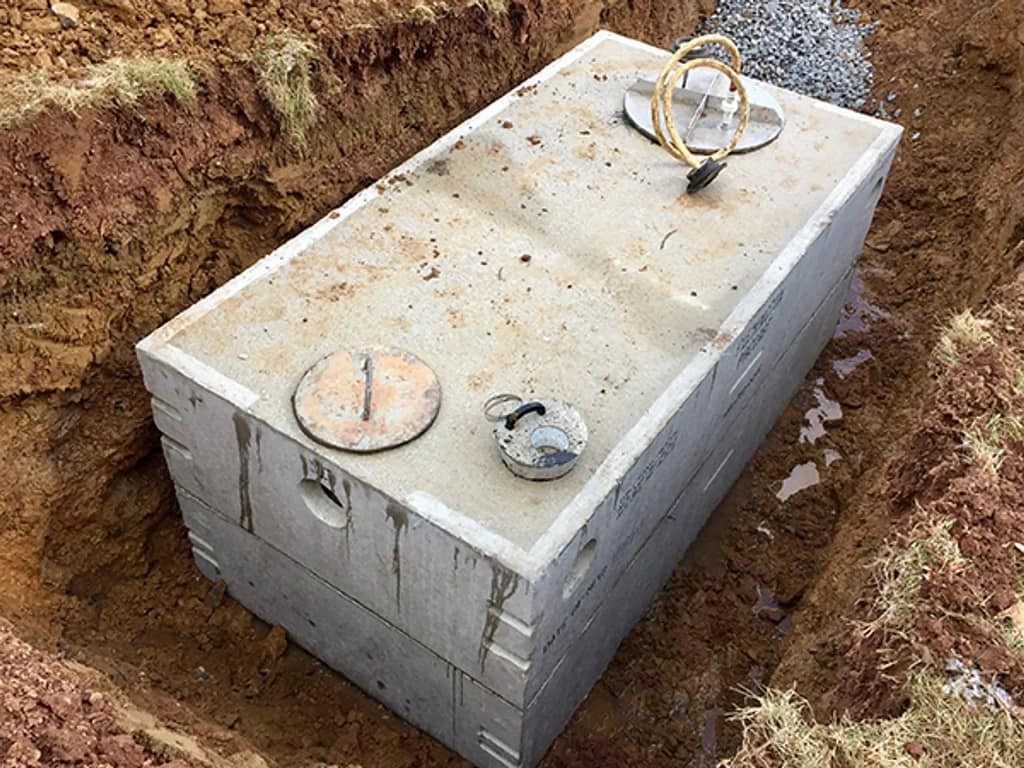
A well-built, properly installed and maintained concrete septic tank typically lasts about 40 to 50 years, and often outlasts the home it serves. Plastic (polyethylene) tanks generally last 20 to 30 years, with some modern poly rated 30 to 40, and fibreglass sits in between. What shortens a concrete tank is biogenic sulfide corrosion: bacteria in the tank produce hydrogen sulfide gas, which turns to sulfuric acid on the damp surfaces above the water line and slowly eats the concrete, worst at the tank crown and lid.
A dense, low-water-cement-ratio mix (the same logic behind Alberta’s sulphate-resistant Type HS concrete) resists that attack, which is one reason a quality tank built to CSA B66:21 lasts decades. Routine pumping (about every 3 years) and a yearly effluent-filter check are what protect the lifespan.
(Sources: High Plains Engineering, InspectAPedia, Alberta Private Sewage Systems Standard of Practice)
This article answers the lifespan question in depth: how long, what shortens it, and what preserves it. If your real question is “concrete or plastic,” that material decision is covered in our concrete-vs-poly septic guide for Alberta acreages; here we go deep on years and durability.
The headline numbers
The consensus across engineering and industry sources is consistent:
| Tank material | Typical service life |
|---|---|
| Concrete | ~40–50 years (often outlasts the home) |
| Plastic (polyethylene) | ~20–30 years (some modern poly 30–40) |
| Fibreglass | between the two |
A civil engineer’s published analysis puts concrete at 40 to 50 years against plastic at 20 to 30 “under normal conditions.” Other sources describe concrete tanks as “often outlasting the homes they serve.” (Source: High Plains Engineering (above); Septic & Well Pro, https://septicandwell.com/articles/concrete-vs-plastic-septic-tank ; Tank Depot, https://www.tank-depot.com/blog/plastic-vs-concrete-septic-tanks-main-advantages-and-disadvantages .)
Those are ranges, not guarantees. Two tanks of the same material can have very different lives depending on the mix quality, the install, the local water chemistry, and the maintenance. The rest of this article is about what moves a concrete tank toward the top of its range or cuts it short.
What shortens a concrete septic tank: biogenic sulfide corrosion
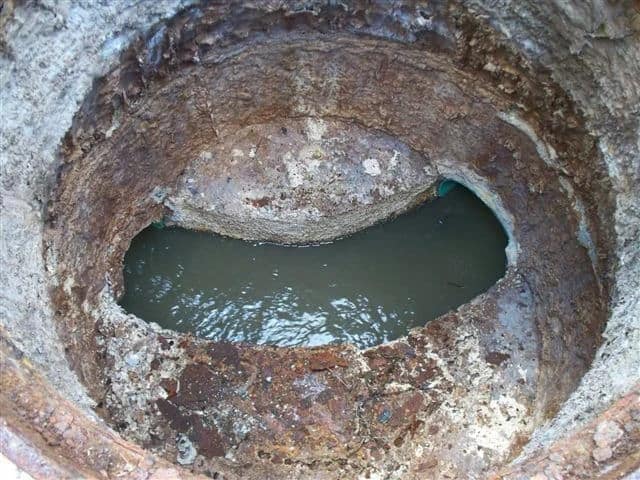
The thing that ages a concrete tank from the inside is biogenic sulfide corrosion, a four-stage process that turns the tank’s own gases into acid. Most homeowner articles skip the mechanism, so here it is plainly, drawn from InspectAPedia’s technical reference (which sources peer-reviewed work by De Belie and others):
- Bacteria make hydrogen sulfide. Anaerobic sulfate-reducing bacteria (Desulfovibrio) in the wastewater produce hydrogen sulfide (H₂S) gas.
- The gas rises into the air space. H₂S escapes the liquid into the air pocket above the wastewater, near the crown and lid.
- It deposits as sulfur. The gas is absorbed onto the damp concrete surfaces and converts to elemental sulfur.
- Other bacteria turn it into acid. Thiobacillus bacteria metabolize that sulfur into sulfuric acid, which attacks the concrete.
Two details matter for understanding tank life. First, the damage is above the water line. The corrosion is “visible entirely above the level of the floating scum layer,” worst at the crown, because that’s where the gas and damp surfaces meet. The submerged concrete is largely protected. Second, the rate depends on the concrete: “In worst case situations, the degradation is in the order of several millimeters per year,” but a dense, low-water mix is “stronger and more resistant to biogenic sulfuric acid attack.”
That second point is the whole game for tank longevity, and it connects directly to how Alberta tanks are built.
Why Alberta’s concrete spec is built to last
The dense, sulphate-resistant concrete Alberta requires to fight soil sulphate from the outside is the same density that resists acid corrosion from the inside. Here’s the connection most lifespan articles miss.
Calgary-area ground is classed as S-2 for sulphate exposure, so a precast tank built for it uses Type HS (sulphate-resistant) cement, produced under CSA A23.4 with concrete made to CSA A23.1:24 at a low water-to-cementing-materials ratio.
(Source: Omega Knowledge Base §3; Omega’s concrete-vs-poly septic guide.)
That low water content is specified to resist external sulphate attack from the soil. The useful coincidence is that the same dense, low-water concrete is also more resistant to the internal biogenic acid attack described above, because acid penetrates a dense, low-porosity mix more slowly.
So a tank built to Alberta’s ground conditions is, by its own specification, resistant on both fronts. That’s a genuine Calgary-area advantage, not a marketing line: the chemistry the region forces on the concrete happens to be the chemistry that makes the tank last.
What “built to last” means: the standards to verify
Longevity isn’t luck; it’s a function of how the tank was made. When you’re buying or replacing a tank, these are the standards to ask any precaster about:
- CSA B66:21 is the binding Canadian standard for prefabricated septic tanks. Under Alberta’s Private Sewage Systems Standard of Practice, every prefabricated tank installed in the province must be CSA B66 certified. Ask to see that in writing.
(Source: Omega’s concrete-vs-poly guide; CSA Group, https://www.csagroup.org/store/product/CSA%20B66:21/ .) - ASTM C1227 is the precast-industry specification (published with guidance from the National Precast Concrete Association). It covers structural design (loading, concrete strength, buoyancy, reinforcing and steel placement) and watertightness testing, and industry summaries note a 4,000 PSI minimum concrete strength. The NPCA states that “when properly installed and maintained, precast concrete septic tanks can last 40 years or more, often outlasting the homes they serve.” (Source: NPCA, “A Guide to ASTM C1227,” https://precast.org/wp-content/uploads/100223_Products_AGuidetoASTMC1227.pdf .)
In Alberta, CSA B66:21 is the requirement that binds; ASTM C1227 and the NPCA are the precast-industry depth layer (both are US/industry standards). The practical point for a buyer: a tank’s lifespan starts with whether it was built to a real standard, so verify the certification rather than taking it on trust.
What maintenance preserves the lifespan
A concrete tank reaches the top of its range when it’s maintained, and falls short when it isn’t. The routine is simple:
- Pump roughly every 3 years. The exact interval depends on household size and use, but a regular pump-out prevents solids from building past the point where they damage the system.
- Check the effluent filter yearly. Alberta’s Standard of Practice requires every system to include an effluent filter that removes particles 3.2 mm (about 1/8 inch) and larger; that filter should be inspected each year.
(Source: Alberta SOP, https://www.alberta.ca/private-sewage-codes-and-standards .) - Keep heavy traffic off a non-traffic-rated tank. Driving or parking over a tank not rated for vehicle loads can crack the lid or the structure.
- Don’t overload the system. Excess water or solids stress the tank and the field.
A useful maintenance benchmark from InterNACHI: sludge “should not occupy more than 1/3 of the tank’s total volume or rise to the level of the baffles.”
(Source: InterNACHI, https://www.nachi.org/inspecting-septic-systems.htm .)
A note on buoyancy and ground movement
Lifespan isn’t only about corrosion. A tank that shifts or floats fails early no matter what its material life is. Concrete’s mass keeps it stable in Alberta’s high-water-table ground and through Chinook freeze-thaw movement (roughly 128 cycles a year), where a lighter plastic tank can shift or float if it isn’t anchored and backfilled correctly. That stability is a durability factor over a 40-to-50-year life.
FAQ
How long does a concrete septic tank last? Typically 40 to 50 years when it’s properly installed and maintained, and often longer than the home it serves. Plastic tanks generally last 20 to 30 years, with some modern poly rated 30 to 40.
What shortens a concrete septic tank’s life? Biogenic sulfide corrosion. Bacteria in the tank produce hydrogen sulfide gas, which turns to sulfuric acid on the damp concrete surfaces above the water line and slowly eats the concrete, worst at the crown and lid. A dense, low-water concrete mix resists it.
Does concrete or plastic last longer? Concrete, at about 40 to 50 years versus roughly 20 to 30 for plastic (modern poly up to about 40). Concrete also resists Alberta’s freeze-thaw ground movement and won’t float. For the full material comparison, see our concrete-vs-poly guide.
How does Alberta’s soil affect tank life? Alberta’s sulphate-heavy soil requires a dense, sulphate-resistant (Type HS) concrete to resist external attack. That same dense, low-water concrete is also more resistant to the internal acid corrosion that ages a tank, so a tank built to the region’s spec is built to last on both fronts.
What maintenance makes a septic tank last longer? Pump roughly every 3 years, check the effluent filter yearly (Alberta requires a filter that removes particles 3.2 mm and larger), keep heavy vehicles off a non-traffic-rated tank, and avoid overloading the system. Sludge should stay under about a third of the tank’s volume.
Will a concrete tank really outlast a plastic one in Alberta? In Alberta’s freeze-thaw, high-water-table ground, yes. Concrete’s mass and dense mix resist both flotation and corrosion over decades, where plastic’s service life is shorter and a poorly anchored plastic tank can shift or float.
Can well water make my septic tank corrode faster? It can. Water supplies high in iron and sulfur are more prone to hydrogen sulfide, which feeds the corrosion process. On a rural well with that water chemistry, the dense concrete mix and regular maintenance matter even more.