
Last updated: August 4, 2026
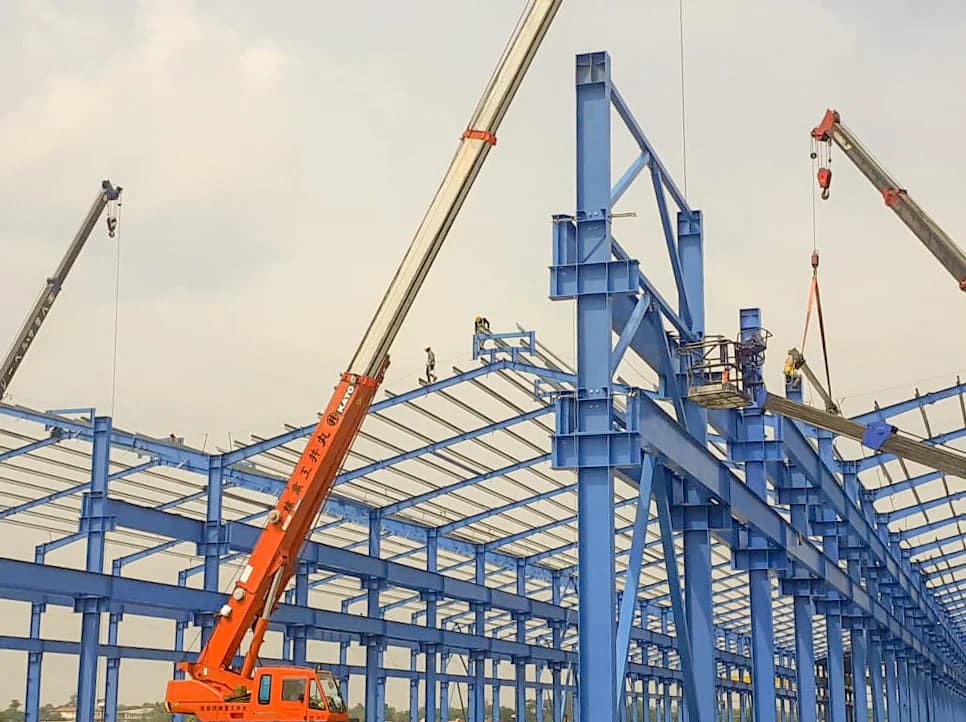
Precast erection on a commercial site is a separately engineered operation that runs off an erection plan. The erector’s field and project managers review site conditions, delivery logistics, and crane access, then produce rigging and lift diagrams, a crane layout designed for maximum reach with minimal disruption, and a sequencing strategy that protects workflow and safety zones. Pieces are delivered in erection order, so the trucks effectively become the staging area, and each member is set, connected, and braced in sequence so the structure is stable before the next piece lands.
Factory tolerances only matter if the manufacturing plant is certified for the products it’s producing. Our Specifier’s Guide to CPCQA Categories explains what each certification category covers and how specifiers can verify compliance during procurement.
For a general contractor, the practical point is that precast erection drops into the critical path as a coordinated, fast-moving activity (the structural frame can go up in days rather than weeks), but only when delivery sequence, crane access, and connection order are planned with the precaster up front, because a missed or out-of-order delivery cascades down the whole trade stack.
Most pages on precast erection are written from the erector’s side and describe their own process. This one is written for the GC who has to slot precast into a Procore schedule and answer for the critical path. For what those panels do once erected, see “Architectural Precast as Structure + Façade + Fire Rating”.
What happens when precast gets erected?
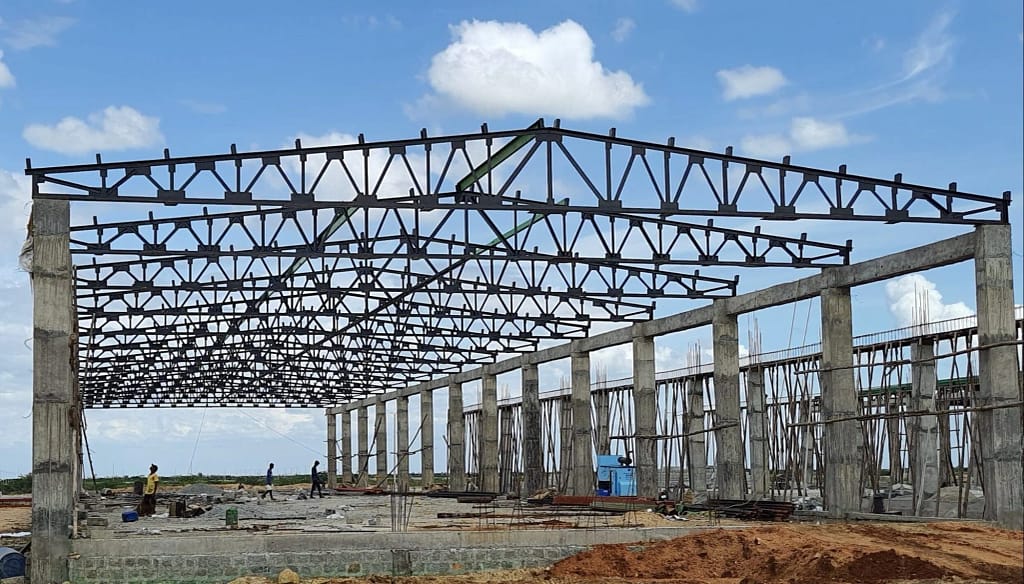
A precast frame is not poured on site. It arrives as finished pieces and gets assembled, which means the work is a sequenced lift-and-connect operation rather than a forming-and-curing operation. The chain runs like this: an erection plan, then rigging and lift diagrams, then a crane layout, then a connection sequence, then delivery scheduled in erection order. Each link sets the next.
The headline benefit is speed. Precast pieces are “erected quickly and efficiently, achieving schedules measured in days, not weeks” compared with weeks of forming, casting, curing, stripping, and clean-up. (Source: Clark Pacific.) But that speed is conditional. It depends on the sequence being planned with the precaster before the first truck rolls.
What is an erection plan?
The erection plan is the document everything else hangs off. “Every project starts with a detailed erection plan developed by field and project managers,” addressing site conditions, material logistics, and crane access. The plan includes four parts a GC should expect to see:
- Rigging and lift diagrams reviewed by field supervisors
- Crane layouts designed for maximum reach and minimal disruption
- Sequencing strategies that protect workflow and safety zones
- Communication protocols between trades and delivery teams
(Source: Concrete Erectors.)
That four-part plan is the direct answer to a PM’s “how is this sequenced?” It tells you where the crane sits, in what order the pieces go up, how the lifts are rigged, and who talks to whom when a truck is twenty minutes out. As a GC, you are coordinating with this plan, not writing it, but you need to read it, because it touches your site logistics and your trade calendar.
How does the sequence drive the crane and the shoring?
The erection sequence is not cosmetic. It sets real cost and equipment decisions.
“Crane type, size, and capacity should be determined based on logistics and the weight of precast panels,” and “the installation sequence should be planned carefully, as it may influence the type and cost of shoring needed, especially for load-bearing walls with steel frames.”
(Source: PCI-MA, “Installation & Erection Considerations.”)
Two things follow for the GC. First, crane selection is downstream of the pick weights and the site reach, so a tight inner-city footprint or a heavy panel can change the crane class and the cost. Second, the order pieces go up can change how much temporary shoring or bracing is needed and for how long. A poorly ordered sequence leaves members un-braced longer and adds shoring; a well-ordered one minimizes it.
There is also a schedule overlap most GCs underuse. Precast components can be fabricated “while permitting and foundation work progress, so they are ready to begin erection as soon as foundations are complete.” The plant is building your frame while you are still pouring footings.
Why does delivery sequence matter so much?
This is the fragile point, and it is the one a GC should care about most.
Precast is delivered in erection order. The coordination process ensures “our crews are ready to move when materials arrive,” aligning trades on timing, and detailed planning “minimizes downtime and keeps our partners’ projects moving forward safely and efficiently.” (Source: Concrete Erectors, URL above.) On a tight site, the trucks are the staging area, so pieces come off the trailer and go straight up in the order they were loaded.
That just-in-time model is exactly what makes precast fast and exactly what makes it fragile. If a truck is late, mis-loaded, or out of order, the crew has nothing to lift next, the crane idles, and the delay cascades down to every trade waiting on the frame. This is the GC’s deepest concern with precast, and it is real. The control for it is up-front coordination: confirm the delivery sequence, the crane access, the laydown (or lack of it), and the connection order with the precaster and erector during preconstruction, not on the day.
Who owns the lift, the fit, and the engineering?
Three ownership questions come up on every precast job.
Who owns the crane and the lifts? The erector. They produce the rigging and lift diagrams and the crane layout, and crane size and shoring follow from the installation sequence. (Source: PCI-MA, URL above.)
Who guarantees the pieces fit? The plant, through tolerance control. Factory production holds tighter tolerances than field-built work (PCI-certified plants “achieve greater strengths and tighter production tolerances”), and CSA A23.4 plus PCI set the erection tolerances the sequence has to respect.
(Source: PCI, Parking Structures Recommended Practice.) If you are worried about an out-of-square panel, the answer is the certified plant’s tolerance discipline, which is one reason to verify a precaster’s certification for the product category, covered in the specifier’s guide to CPCQA categories.
Who owns the engineering if a connection has to change? The members are set, connected, and braced in sequence so the partially erected structure is stable before the next piece is placed, and the connection and erection engineering sit under CSA A23.4 with a professional engineer (P.Eng.) owning the design-to-erection chain. In Alberta, that licensure is through APEGA.
Is there a recognized standard for precast erection?
Yes, and it is separate from the plant certification. PCI publishes the Erectors’ Manual: Standards and Guidelines for the Erection of Precast Concrete Products, the governing reference for erection practice, and it certifies erectors through PCI Erector Certification. Certified erectors are typically PCI- and OSHA-trained, with consistent inspection, communication, and tag-line procedures.
(Sources: PCI Erector Certification.)
Worth keeping straight: erector certification is an erection-side credential and is not the same as a plant’s quality certification. A plant can be certified to make the pieces; an erector is certified to put them up. A GC vetting a precast scope should know both exist.
The Calgary layer
Three local realities shape how a Calgary precast sequence gets planned.
Winter and wind. Calgary erection has to plan around cold and wind. The erection plan builds weather contingency into the sequence, and Omega Precast treats sustained wind as an operational crane-day consideration. (This is an internal operational standard to confirm against Alberta OHS requirements, not a hard public spec.)
Tight inner-city footprints. Calgary multi-family and commercial infill often has no laydown yard. Precast’s “deliver in erection order, trucks are the staging” model is built for exactly that, and Clark Pacific cites tight-footprint, lean-construction sites as a precast strength.
Compressed seasons. Fabricating panels during permitting and foundation work recovers calendar in a market with a roughly six-month hard-pour winter. The local schedule logic is to let the plant work through the cold while the site does the parts that have to happen outdoors.
The Calgary parkade and multi-family GC is a real, established buyer here, and firms forming parkades and panels have been doing it locally for decades. Omega Precast enters as a solid-precast manufacturer building capability for that work; we frame our value as the coordination discipline a clean erection sequence needs, not a count of frames already erected.
FAQ
How is precast concrete erection sequenced on a job site? It runs off an erection plan: the erector reviews site conditions and crane access, then produces rigging and lift diagrams, a crane layout, a connection sequence, and a delivery schedule that brings pieces to site in erection order.
How long does precast erection take versus cast-in-place? The structural frame can go up in days rather than weeks, and panels are fabricated during foundations and permitting so erection can start as soon as foundations are ready.
What is an erection plan in precast construction? The erector’s engineered plan covering site conditions, crane access, rigging and lift diagrams, sequencing strategies that protect workflow and safety zones, and trade-coordination protocols.
Why does delivery sequence matter so much for precast? Pieces arrive in erection order and the trucks act as the staging area, so an out-of-order or missed delivery leaves the crew with nothing to lift and the delay cascades down the trade stack. Up-front coordination is the control.
Who is responsible for the crane and the lift planning? The erector, using rigging and lift diagrams and a crane layout. Crane size and shoring follow from the installation sequence and the pick weights.
Is there a standard for precast erection? Yes. The PCI Erectors’ Manual and PCI Erector Certification, with the engineering under CSA A23.4 and a P.Eng. (APEGA in Alberta) owning the connection and erection chain. Erector certification is separate from a plant’s quality certification.
How do tolerances get controlled so the panels fit? Through the plant. Factory production holds tighter tolerances than field-built work, and CSA A23.4 plus PCI set the erection tolerances the sequence must respect. Verifying a plant’s certification for the product category is the buyer’s check.