
Precast concrete has become one of the most reliable, efficient, and durable building solutions in modern construction. Whether you’re a developer seeking faster timelines, an architect looking for design flexibility, or a contractor wanting higher quality and reduced on-site risks, precast concrete offers a powerful answer. Yet many people still ask the same foundational question: What exactly is precast concrete—and why is it used so widely across Canada?
In this comprehensive guide, we break down everything you need to know: how precast concrete works, how it’s manufactured, its benefits, applications, and why builders are choosing precast solutions more than ever.
Understanding Precast Concrete
Definition of Precast Concrete
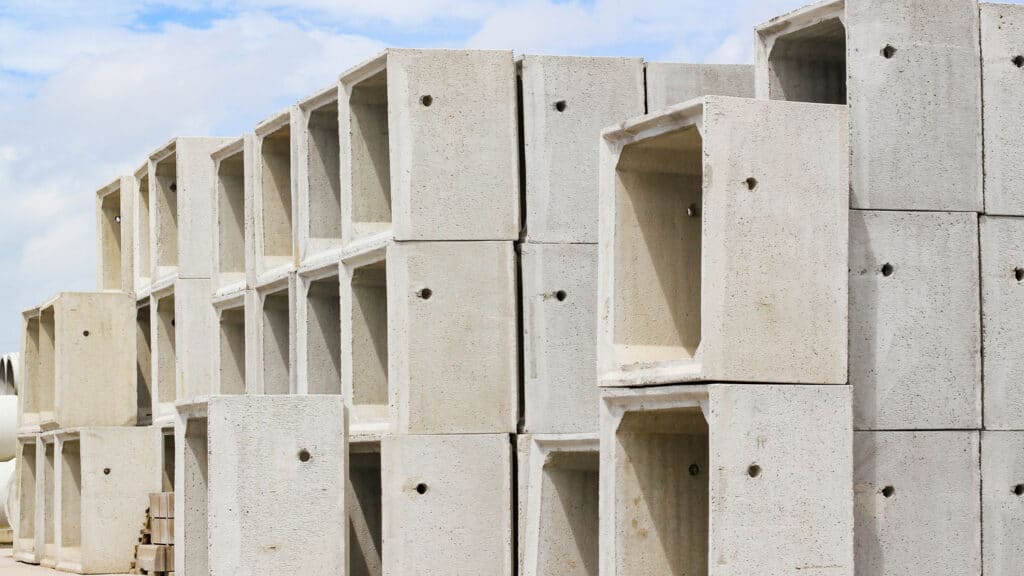
Precast concrete is a construction material created by casting concrete in a controlled manufacturing facility using reusable molds. Unlike traditional cast-in-place concrete, which is poured and cured directly at the job site, precast components are produced under strict quality standards, ensuring consistency, strength, and durability.
Once fully cured, these components—such as beams, wall panels, slabs, and utility structures—are transported to the job site and installed using cranes. This process reduces weather delays, speeds up project timelines, and minimizes on-site labor risks.
How Precast Differs From Cast-in-Place Concrete
Many builders compare precast to cast-in-place concrete because both are essential in construction. However, they differ significantly in process and performance. Here’s a quick comparison:
| Criteria | Precast Concrete | Cast-in-Place Concrete |
|---|---|---|
| Production Environment | Controlled factory setting | On-site, exposed to weather |
| Quality Consistency | High—strict monitoring | Varies—dependent on site conditions |
| Installation Speed | Very fast | Slower due to curing time |
| Labor Requirements | Lower on-site labor | Higher on-site labor |
| Weather Impact | Minimal | High risk of delay |
Because of these advantages, precast concrete has seen increasing adoption in Canada, especially in regions with unpredictable weather patterns.
Why Precast Is Becoming More Popular in Canada
Canadian construction faces unique challenges—long winters, remote sites, and pressure to reduce project delays. Precast concrete solves these problems by offering rapid installation, reduced weather exposure, and predictable quality.
In fact, according to the Canadian Precast/Prestressed Concrete Institute (CPCI), projects using precast can reduce construction timelines by up to 30% compared to traditional methods. This speed advantage has made precast a preferred solution for commercial, industrial, municipal, and residential developments across the country.

How Precast Concrete Is Manufactured
One of the biggest advantages of precast is its high level of quality control. Because production happens in a closed, controlled facility, manufacturers can ensure consistent curing conditions, precise dimensions, and excellent structural performance.
Below is a step-by-step look at how precast concrete is manufactured before being delivered to your project location.
Step 1 – Engineering & Shop Drawings
Every precast project begins with detailed engineering. Structural engineers design each component, determine reinforcement requirements, and prepare shop drawings for production. These drawings include dimensional details, connection points, lifting inserts, and required finishes.
Shop drawings ensure that each precast element fits perfectly during installation, minimizing on-site adjustments and delays.
Step 2 – Mold Fabrication
Next, molds—also called forms—are created. These may be steel, wood, fiberglass, or rubber, depending on the complexity of the design. Reusable steel molds are commonly used for large-scale production because they provide exceptional precision and efficiency.
Accurate molds are essential because they shape the final precast component and determine its dimensional accuracy.
Step 3 – Reinforcement Placement
Reinforcement such as rebar or welded mesh is placed inside the mold. This ensures the precast element is strong enough to handle heavy loads, transportation, lifting, and long-term structural use.
The reinforcement layout strictly follows engineering plans to maintain structural integrity.
Step 4 – Concrete Pouring & Vibration
High-quality concrete is poured into the mold. During this stage, vibration techniques are used to remove trapped air pockets. This helps the concrete settle evenly, resulting in higher density and long-term durability.
Step 5 – Curing in a Controlled Plant Environment
One of the biggest advantages of precast concrete is controlled curing. Plants use managed temperature and humidity levels to ensure the concrete cures uniformly and reaches maximum strength.
This tightly controlled process is more predictable than outdoor curing, where weather fluctuations can weaken the final product.
Step 6 – Demolding, Finishing & Quality Checks
Once the concrete reaches the specified strength, the mold is removed. Technicians perform surface finishing techniques depending on the project—smooth, textured, painted, or patterned surfaces.
Rigorous inspections check dimensions, connections, and structural integrity. Every precast component must meet strict industry standards before transportation.
Step 7 – Transportation to the Job Site
After quality assurance, the finished precast components are safely loaded onto specialized trucks and transported to the job site. Because precast elements can be extremely large and heavy, shipping logistics are carefully planned.

Common Types of Precast Concrete Products
Precast concrete is versatile and used across multiple industries. Below are the most common categories of precast components used in Canada and worldwide.
Structural Precast Components
Structural precast elements form the backbone of buildings and heavy infrastructure. These components are engineered to carry loads and provide essential support.
- Beams – used to support slabs and roofs
- Columns – vertical support elements that transfer loads
- Slabs – floor and roof systems
- Load-bearing wall panels – provide both structural strength and enclosure
Architectural Precast Elements
Architectural precast is selected for visual appeal and design flexibility. These elements include various textures, colors, and finishes.
- Façade wall panels
- Cladding systems
- Decorative trims and finishes
Infrastructure Precast Products
Precast is heavily used for municipal and industrial infrastructure due to its strength and durability.
- Utility vaults
- Drainage structures
- Manholes
- Bridge girders and barriers

Benefits of Precast Concrete
Choosing precast concrete brings numerous advantages to construction projects of all sizes. These benefits are especially valuable in Canada, where weather unpredictability, labor shortages, and strict building standards require dependable building solutions.
Faster Construction Timelines
With precast components manufactured off-site, production and site preparation happen simultaneously. This parallel workflow significantly reduces project timelines.
- Precast components are delivered ready to install.
- No on-site curing time is needed.
- Fewer weather delays, especially during Canadian winters.
Studies from the Canadian Precast/Prestressed Concrete Institute (CPCI) show that projects using precast can save up to 20–30% of construction time.
Superior Durability & Strength
Precast concrete is engineered to withstand heavy loads, harsh climates, and decades of use. Controlled curing environments ensure optimal strength and density.
This makes precast the preferred choice for infrastructure, industrial buildings, and high-traffic commercial environments.
Consistent Quality From Plant Production
One of the biggest advantages of precast is consistency. Every component is manufactured under strict quality guidelines using precision molds and advanced mixing equipment.
This level of quality control is difficult to achieve with cast-in-place methods exposed to unpredictable site conditions.
Lower Lifetime Maintenance Costs
Because precast concrete is dense, durable, and resistant to moisture and corrosion, it requires far less maintenance than traditional building materials.
- Longer service life
- Less cracking or surface deterioration
- Reduced need for repairs or replacements
Better Safety on Construction Sites
Precast reduces on-site hazards by minimizing the amount of formwork, scaffolding, and concrete work needed at the job site. With fewer workers required on-site, the risk of accidents decreases.
Weather-Independent Manufacturing
Canadian winters often slow down construction projects due to freezing temperatures. Precast concrete eliminates this issue because fabrication takes place indoors.
Sustainability & Waste Reduction
Precast concrete is an environmentally responsible choice due to precise material use, energy-efficient production, and long-term durability.
- Reduced waste from reusable molds
- Optimized mix designs
- Lower lifetime emissions due to longer lifespan
Applications of Precast Concrete in Canada
Precast concrete is used across virtually every construction sector in Canada. Its versatility, speed, and structural reliability make it a top solution for both large-scale and small-scale developments.
Commercial & Industrial Buildings
Factories, warehouses, retail stores, and logistics centers benefit from precast’s superior load-bearing capacity and fast installation timelines.
Residential Housing & Multi-Family Projects
Developers increasingly use precast for townhouses, apartments, and mid-rise buildings due to its insulation benefits and long-lasting performance.
Infrastructure & Public Works
Canadian municipalities rely on precast for essential infrastructure:
- Bridges
- Stormwater systems
- Retaining walls
- Sound barriers
Agricultural & Utility Structures
Farm operators and utility companies use precast because it withstands heavy loads, chemical exposure, and demanding environments.
Precast Concrete vs Cast-in-Place Concrete
Choosing between precast and cast-in-place depends on project goals, location, timeline, and budget. Below is a deeper comparison to help decision-makers choose the best option.
Speed Comparison
Precast wins in speed due to parallel workflows and no curing downtime on-site. Cast-in-place requires full curing before the structure becomes usable.
Quality & Durability Comparison
Precast offers predictable outcomes due to controlled curing environments. Cast-in-place outcomes vary depending on weather, crew expertise, and material handling.
Cost Differences
Precast may have slightly higher upfront costs but offers lower installation labor and long-term maintenance savings.
Labor Requirements
Cast-in-place relies heavily on large crews, whereas precast reduces the need for extensive on-site labor.
Environmental Impact
Precast reduces waste and energy consumption due to efficient plant operations and long-lasting performance.
Cost Factors of Precast Concrete
The cost of precast concrete varies depending on design complexity, project size, transportation distance, and reinforcement requirements. Understanding these factors helps project owners make informed budgeting decisions.
Material & Reinforcement Requirements
High-strength concrete mixes and robust reinforcement dictate pricing. Larger or heavily loaded structures require more steel and concrete.
Mold Complexity
Custom shapes, textures, or architectural finishes require more complex molds and may increase cost.
Transportation Distance in Canada
Because Canada spans long distances, transportation is a key factor. Specialized trucks and logistics planning ensure safe delivery of heavy components.
Installation Equipment & Crew
A crane is typically required for installation, along with a trained crew to ensure precision placement and alignment.
Project Size & Customization Level
Larger projects benefit from economies of scale. Custom architectural features may increase production times and tooling expenses.
How Precast Concrete Is Installed on Site
Once precast components arrive at the job site, installation is quick and highly coordinated. A typical installation process follows the steps below.
Site Preparation
The site must be graded, foundations prepared, and access routes cleared for large transport vehicles.
Delivery & Crane Setup
Heavy-duty cranes are positioned to lift components directly from the truck into place.
Lifting & Positioning Components
Precision is key. Components are lowered into place using certified rigging and alignment tools to ensure accuracy.
Joint Sealing, Grouting & Finishing
Once installed, joints are sealed to prevent water infiltration. Grouting strengthens anchor points and connections.
Final Quality Inspection
The final inspection verifies alignment, stability, connection integrity, and overall finish quality.
Why Choose Omega Precast for Your Project in Canada?
At Omega Precast, we combine advanced manufacturing technology with an experienced engineering and production team to deliver exceptional precast solutions across Canada.
Advanced Manufacturing Equipment
Our modern facilities ensure consistent quality, precise molds, and advanced curing systems.
Skilled Engineering & Production Teams
We bring decades of combined experience in designing, fabricating, and installing high-performance precast systems.
Fast Turnaround Across Canada
We understand the importance of timelines and offer efficient turnaround, even for large and complex projects.
Custom Solutions for Any Scale
From small residential projects to major commercial and municipal developments, we deliver tailored solutions that fit your specific needs.
Proven Reliability in Harsh Canadian Climates
Our precast components are engineered for Canada’s demanding weather conditions—from freezing temperatures to heavy snow loads.
Frequently Asked Questions About Precast Concrete
How long does precast concrete last?
Precast concrete structures can last over 75–100 years with minimal maintenance thanks to their density and durability.
Is precast more expensive than cast-in-place?
While upfront material costs may be similar or slightly higher, precast reduces labor, speeds installation, and lowers lifetime maintenance, making it more cost-effective overall.
Can precast be customized?
Yes. Precast concrete can be customized with various textures, colors, sizes, and architectural designs to meet project requirements.
How does transportation affect precast cost in Canada?
Transportation costs depend on distance, load weight, and route accessibility. Proper logistics planning ensures cost-efficiency and safety.
Is precast concrete eco-friendly?
Precast is considered sustainable due to efficient production, low waste, and long-term durability.
Conclusion
Summary of Key Benefits
Precast concrete offers superior speed, quality, durability, and efficiency. Its controlled production environment minimizes risks and ensures high-performance results.
When Precast Is the Right Choice
If your project requires fast timelines, durable materials, architectural flexibility, or high structural performance, precast is an excellent solution.
Contact Omega Precast
Ready to start your project? Contact Omega Precast today to learn how we can support your build anywhere in Canada with high-quality precast concrete manufacturing and installation services.