
Last updated: November 2, 2026
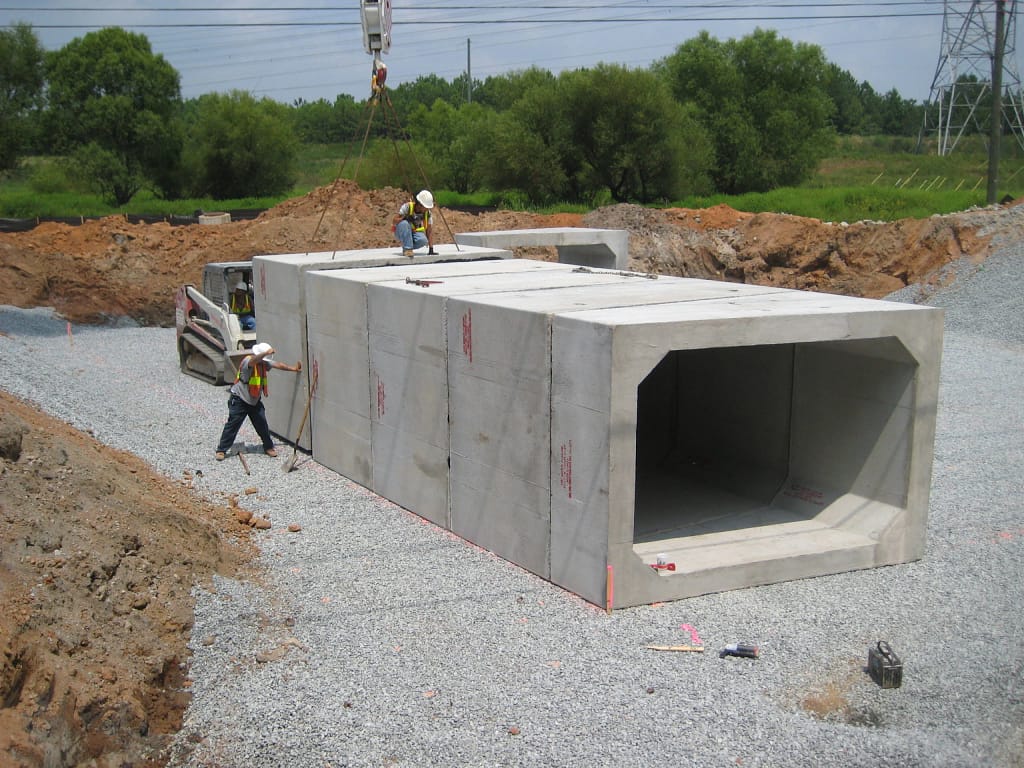
The culvert is the easy part. The calendar is not.
A precast culvert ships in weeks. The legal window in which it may be set can be a few months wide, and it is not negotiable. That asymmetry decides the order date.
This page is about the approval path, not the product spec. It covers which rule set applies, what the notice is, who signs the plan, what the Code demands at the structure itself, and how the fixed window drives the plant order.
Quick answer
Most road and access crossings of an Alberta watercourse do not need an individual Water Act approval. They run under the Code of Practice for Watercourse Crossings, made under the Water Act and the Water (Ministerial) Regulation. The Code sets the path.
Three things govern the schedule:
- Written notice to the Director at least 14 calendar days before any works are carried out.
- The class of the water body, which decides whether a restricted activity period applies.
- Works must not be carried out within any applicable restricted activity period, unless separately authorized.
A buried precast culvert that covers or replaces the natural bed is a Type 3 crossing. On a Class B or Class C water body, a Type 3 crossing has to be built outside the restricted activity period shown on the Code’s maps for that water body. Read the window first. Order second.
The Code replaces the approval, not the obligation
The Code’s publication record, consolidated to include amendments in force as of March 8, 2019, says it “outlines required practices for the construction, maintenance, replacement or removal of permanent and temporary watercourse crossings, such as bridges and culverts,” and sets requirements for “providing notice, planning, emergency response procedures, certification and confirmation, reporting, record keeping, information availability and monitoring,” plus criteria for “the classification of water bodies and restricted activity periods, as well as watercourse crossing types.”
Two points matter on a bid. The Code binds the owner and any person carrying out the works, so it is not a document the contractor leaves with the consultant. And the Code does not apply to crossings that are exempt from approval under the Water (Ministerial) Regulation. Exempt is not untimed. Confirm the status of the specific crossing before anyone treats the window as optional.
Crossing types: where a precast culvert sits
The Code sorts crossings by how much of the natural bed survives. The April 2001 Guide to the Code sets them out.
| Type | Structure | Bed |
|---|---|---|
| Type 1 | Single span bridge or similar | Active channel not disturbed |
| Type 2 | Multi span bridge, open bottom culvert or similar | Natural bed largely intact |
| Type 3 | Culvert, pipe, box or similar | Natural bed covered or replaced |
| Type 4 | Ford or low level crossing | Structure below the water surface |
| Type 5 | Temporary log fill crossing | Temporary only, specific winter or dry conditions |
A precast box section, a round pipe and a three sided structure on cast footings all land in the same place: they cover or replace the bed, so they are Type 3. An open bottom arch that leaves the streambed in place is Type 2. The difference is not cosmetic. It changes which timing clause applies, and on a sensitive reach it can change the construction season.
That makes the type a product decision with a regulatory consequence. Sizing, fill height and load are covered in our precast box culvert spec page.
The class of the water body decides the calendar
The Code designates mapped water bodies as Class A, B, C or D. An uncoded water body defaults to Class D unless otherwise specified. The Guide describes the classes by sensitivity and ties the timing to them.
| Class | Sensitivity | What governs timing |
|---|---|---|
| Class A | Highest | Works carried out within the period recommended by a qualified aquatic environment specialist |
| Class B | High | Type 2, 3 and 4 crossings carried out outside the restricted activity period on the applicable map |
| Class C | Moderate | Type 2, 3 and 4 crossings carried out outside the restricted activity period on the applicable map |
| Class D | Low | Works may be carried out at any time |
The Code defines the restricted activity period as the time when fish migration, spawning, egg incubation, fry emergence or early fry development are likely to occur. The dates are not in the body of the Code. They are on the Code’s maps, keyed to the water body. There is no province wide set of dates to quote.
So the sequence is: identify the water body, pull its class and its mapped restricted activity period, and only then put a date on the culvert.
On a Class A reach there is no map window. A qualified aquatic environment specialist recommends the period, and that recommendation is the schedule. Budget time for that opinion before the order.
Federal rules sit on top of this. Fisheries and Oceans Canada publishes guidance on timing windows for projects in or near water, describing them as “one of many measures used to mitigate risks to fish and fish habitat” that “define periods in the year when projects are recommended to take place.” For Alberta, the federal page directs readers to the provincial water codes of practice and advises seeking “the help of a qualified environmental professional to determine the best timing for your project.”
Notice: 14 calendar days, in writing
The owner gives written notice to the Director at least 14 calendar days before any works are carried out, unless the Director specifies otherwise in writing. The Guide confirms the same figure and adds that notice may be given up to a year in advance, while the crossing plans still have to be prepared at least 14 days before work begins.
Notice content is set by Schedule 1, and it differs for permanent and temporary crossings. Permanent Type 1 through Type 4 crossings take a longer list.
One clause is easy to miss and expensive to learn. If the works are not started or completed within the period stated in the notice, the notice is no longer valid and a new notice is required. A delivery slip of two months can invalidate the notice that authorised the work. That is the whole argument for ordering against the window rather than against the drawing release.
Who signs the plan
The Code requires certification or confirmation of the crossing plans before the work. Three routes exist, and the Guide names them plainly:
- A professional engineer stamps, certifies and signs the plans.
- An engineering technical specialist certifies and signs the plans.
- Where neither prepared them, the owner signs confirming the plans meet the standards of the Code.
Certifications and confirmations are prepared a minimum of 14 days before the works are carried out. The same clock as the notice, running in parallel.
What the Code asks of the structure itself
Schedules 2 and 3 carry the physical standards. Four of them bear directly on how a precast culvert is detailed and installed.
| Requirement | What it means on site |
|---|---|
| Culvert placed at or below the level of the water body bed | Invert embedment has to be on the drawing, not decided in the trench |
| Fish migration through or over the crossing maintained | Velocities must not create a barrier to migrating fish for more than 3 consecutive days at a 1 in 10 year recurrence interval |
| Flow of the water body maintained at all times | Flow is carried through or around the crossing for the full duration of the works |
| Work area isolated from flowing water | The works are separated from the flow, which dictates the isolation method and its cost |
Embedment is the clause that most often changes a precast order. Setting the barrel at or below bed level moves the invert down, and that moves the rise, the fill height over the top slab and the excavation. Those are numbers a plant prices from. Catching embedment after the sections are cast is a re-cast, not a revision.
After the work: three clocks, not one
The obligation does not end at backfill. Three separate deadlines run afterwards, and they belong to the owner.
| Event | Deadline |
|---|---|
| Written confirmation that the plan was followed and the Schedule 2 standards were met | Within one year of the date of completion of the works |
| Reporting a contravention to the Director | Within 24 hours, by telephone, fax, email or other written method |
| Written report following a contravention | Within 7 calendar days of reporting it |
| Information after emergency works | Within 30 days of completion of the works |
Records are compiled within three months of completion and retained for one year after the crossing is removed. That is a long tail, and a reason to keep the plant’s submittal package rather than discard it after acceptance.
What the fixed window does to the order
The window is set by biology and a map. It does not move for a procurement delay. Plant lead time does move, but only in one direction once the queue fills. So the order date is derived backwards from the window, not forwards from design approval.
A workable sequence:
- Identify the water body and pull its class and mapped restricted activity period.
- Fix the crossing type. Type 2 and Type 3 are different products and different timing clauses.
- Get the plan certified. That has to exist at least 14 days before the works.
- File the notice, with a construction period you can actually hold.
- Place the precast order so that delivery lands inside the window with float, not on its first day.
Target the first available day of the window and one weather week can push the work past its close. Then the notice lapses, the crossing waits for the next season, and the sections sit in the yard through a winter.
Precast exists to compress the in stream days. That advantage is only real if the pieces are on site when the window opens. More on where precast earns its place on this work is in our note on infrastructure uses for precast concrete.
Ordering: what the plant needs
Send these with the enquiry. We can quote from them without a second round of questions.
- Crossing type intended: Type 2 open bottom, or Type 3 closed bottom.
- Water body name and legal location of the crossing.
- Water body class, and the mapped restricted activity period for that reach.
- The construction period you intend to state in the notice.
- Span, rise, barrel length and fill height over the top slab.
- Required invert elevation, and the embedment below bed level.
- Design live load and the owner’s governing standard drawing, if one is enforced.
- End treatment scope: headwalls, wingwalls, aprons, and whether they are in the same order.
- Site access, crane or excavator reach, and the setting sequence.
- Whether a qualified aquatic environment specialist’s recommendation applies, and its dates.
Lead time is quoted against the window you give us. Give us the window, not the hope.
Send the crossing details and a target delivery week through our solutions page and we will come back with a quantity based price and a delivery slot measured against the restricted activity period, not against a generic calendar.
Where this article stops
This page covers the approval path and the timing. It does not cover product design.
It does not set span, rise, fill height or live load. It does not cover end treatment geometry, skew limits or apron sizing, which belong with headwalls and wingwalls. It does not cover trench drain or surface drainage products, which sit in a different load class and are dealt with in our trench drain class and spec page. It does not cover plant production standards, piece marking or acceptance testing.
It also does not print restricted activity period dates. Those come from the Code’s maps for the specific water body, and a generic range would be wrong in most of the province.
Two cautions on the legal text. The Code’s publication record is consolidated to amendments in force as of March 8, 2019, and numbering has changed over the life of the document, so confirm clause numbers against the current consolidated version before citing them in a submittal. The Guide quoted here was published in April 2001, which makes it reliable for structure and intent and unreliable for current exemptions. Verify both the exemption status and the current maps with the Director for the region before you commit a date.
FAQ
Does a precast culvert in a creek need a Water Act approval?
Usually not. Most watercourse crossings run under the Code of Practice for Watercourse Crossings instead of an individual approval. Crossings exempt from approval under the Water (Ministerial) Regulation fall outside the Code as well. Confirm which of the three applies before you plan the work.
How much notice does the Code require?
Written notice to the Director at least 14 calendar days before any works are carried out, unless the Director specifies otherwise in writing. Notice may be filed up to a year ahead. If the works are not started or completed within the stated period, the notice lapses and a new one is required.
What is a restricted activity period?
The period when fish migration, spawning, egg incubation, fry emergence or early fry development are likely to occur. Works must not be carried out within an applicable restricted activity period unless separately authorized. The dates are on the Code’s maps for the individual water body.
Which water bodies have no timing restriction?
Class D. The Code allows works in or over a Class D water body at any time, and an uncoded water body defaults to Class D unless otherwise specified. Class B and Class C carry mapped restricted activity periods for Type 2, 3 and 4 crossings. Class A has no map window and relies on a specialist’s recommendation.
Does an open bottom culvert get a different window than a buried box?
They are different crossing types. An open bottom structure that leaves the natural bed largely intact is Type 2. A culvert that covers or replaces the bed is Type 3. Both are named in the Class B and Class C timing clause, so check the applicable map rather than assuming the open bottom option buys schedule.
How early should the precast order be placed?
Work backwards from the close of the window. Certification has to exist at least 14 days before the works, the notice runs 14 calendar days, and delivery should land inside the window with float.