
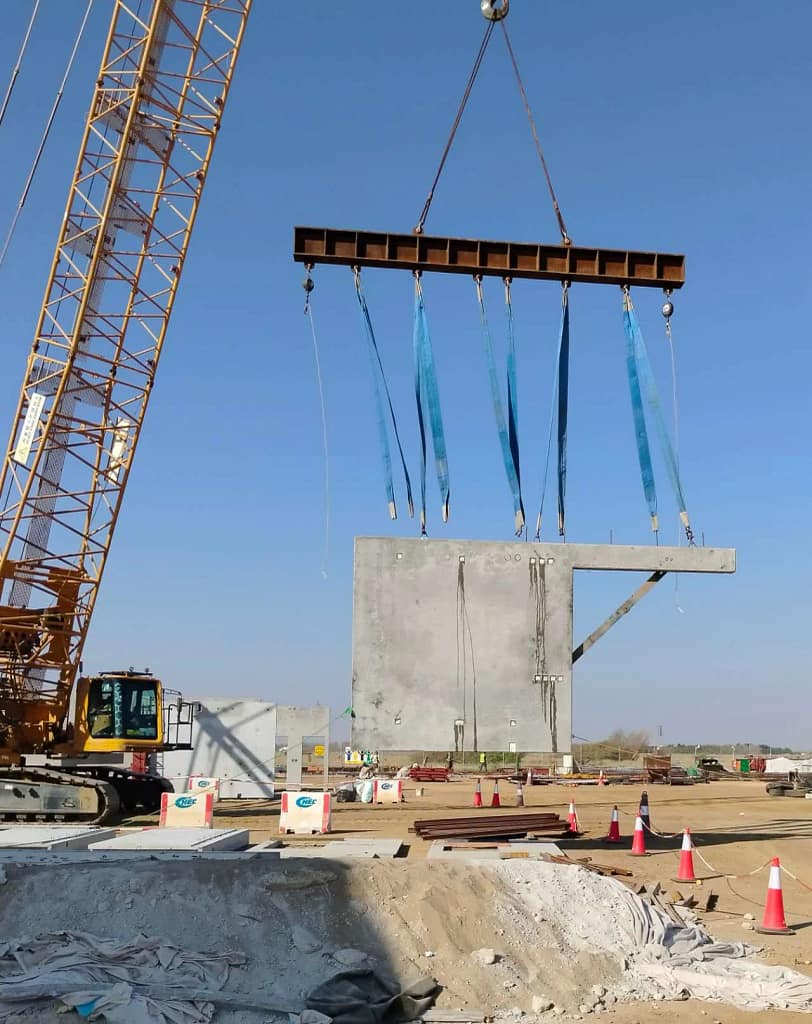
Precast concrete powers some of the world’s most durable bridges, buildings, utilities, and infrastructure.
But how is precast concrete actually manufactured? And why do builders and developers across Canada rely on professional precast suppliers like Omega Precast to guarantee strength, precision, and long-term performance?
This in-depth guide walks you through the complete, step-by-step precast concrete manufacturing process — from design to curing — based on real plant workflows, best practices, and industry research.
You’ll learn how each stage works, which technologies are used, and how expert teams ensure accuracy, safety, and consistency for every component.
What Is Precast Concrete?
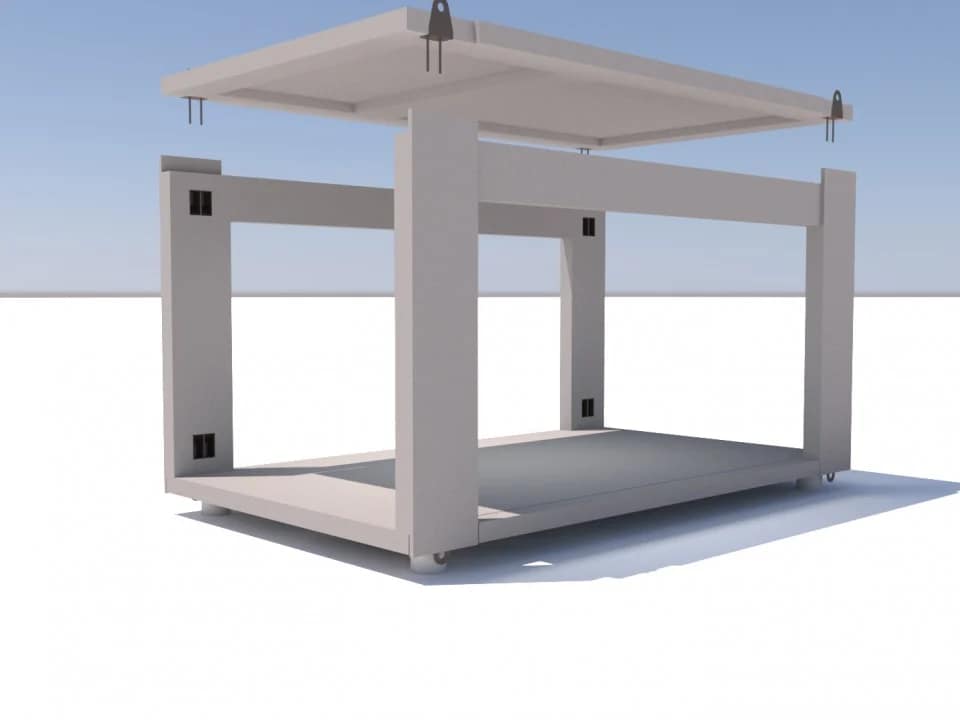
In Canada, precast concrete manufacturing has become a core part of modern construction due to its precision, durability, and cost efficiency. Understanding precast concrete manufacturing is essential because every step of the process affects quality, strength, and long-term performance.
Precast concrete is concrete that is cast and cured in a controlled manufacturing facility rather than on the construction site.
This controlled environment ensures better consistency, tighter tolerances, and faster production timelines — a major advantage for commercial, industrial, municipal, and residential projects.
Common precast elements include:
- Structural components such as beams, columns, and slabs
- Architectural panels and façades
- Utility products like manholes, pipes, and chambers
- Precast stairs, retaining walls, and foundation systems
According to the Canadian Precast/Prestressed Concrete Institute (CPCI), precast elements offer superior durability, reduced onsite labour, and improved quality control, making them ideal for Canadian climates where weather variability can affect cast-in-place concrete.
Why the Manufacturing Process Matters
A well-managed precast concrete manufacturing process ensures consistent quality, reduced waste, and reliable structural performance across all project types.
A high-quality precast element doesn’t happen by accident — it results from a precise, regulated workflow.
Each step directly affects the final product’s strength, accuracy, safety, and long-term performance.
In modern construction, precast concrete manufacturing ensures higher consistency and durability compared to traditional cast-in-place methods.
Builders, engineers, and developers prefer precast because it offers:
- Consistent quality through factory-grade controls
- Faster project schedules due to parallel site preparation
- Reduced waste via optimized batching and reusable molds
- Enhanced safety by reducing onsite work
- Better cost predictability with standardized production
At Omega Precast, our team combines modern equipment, precision engineering, and years of field experience to deliver reliable precast solutions across Canada.
Step-by-Step: How Precast Concrete Is Manufactured
Below is the first half of the manufacturing process — from early planning to concrete mixing. Each stage is executed with strict quality control to meet CSA standards and project specifications.
Step 1: Engineering, Design & Structural Planning
Every precast component starts with a detailed engineering phase. This is where structural requirements, load calculations, reinforcement layouts, connection points, and dimensional tolerances are established.
The engineering phase is the foundation of precast concrete manufacturing, ensuring each component meets structural and architectural requirements.
1.1 Reviewing Architectural & Structural Drawings
The engineering team begins by analyzing the project’s architectural plans to determine:
- Load-bearing requirements
- Fire resistance ratings
- Thermal performance
- Connection types (bolted, welded, embedded plates, etc.)
- Dimensional accuracy needed for assembly
This ensures the precast elements will fit seamlessly with other building systems on-site.
1.2 Creating Shop Drawings
Next, engineers prepare shop drawings — precise documents that guide production.
These typically include:
- 3D models or CAD details
- Mold dimensions
- Location of lifting pins and anchors
- Rebar cage design and spacing
- Surface finishes and architectural features
Shop drawings undergo rigorous review by engineers, architects, and the client before production begins.
1.3 Selecting Materials & Mix Design
The concrete mix is custom-designed for each project. The design considers:
- Required compressive strength (often 30–50 MPa)
- Weather resistance — crucial in Canadian climates
- Workability for molds with complex geometry
- Surface finish requirements
- Durability and freeze-thaw performance
The right mix design is essential to ensure long-term structural performance and aesthetic quality. Choosing the right mix design is one of the most important factors in precast concrete manufacturing, especially for projects exposed to harsh Canadian weather conditions.
Step 2: Mold Preparation & Setup
Once designs are approved, the production team prepares the molds. Precast plants use both steel molds (for repeated use) and wood or fiberglass molds for custom projects.
2.1 Cleaning & Oil Application
Molds must be meticulously cleaned to remove dust, residue, or hardened concrete.
Next, workers apply a thin layer of form-release agent to prevent the cured concrete from sticking — ensuring a smooth finish and easier demolding.
2.2 Installing Reinforcement & Embedded Items
Rebar cages and welded wire mesh are positioned according to engineering specifications.
At this stage, the team also installs:
- Embedded plates
- Anchor bolts
- Lifting hooks
- Conduits and sleeves
These embedded elements must be positioned with millimetre accuracy. Even small misalignments can affect onsite assembly.
2.3 Quality Checks Before Pouring
Before concrete is poured, the quality control team inspects:
- Mold alignment
- Dimensions and geometry
- Rebar spacing and cover thickness
- Placement of openings and inserts
- Condition of the release agent
These checks help prevent defects such as honeycombing, uneven surfaces, or structural inconsistencies. Proper mold preparation is essential because any mistake at this stage carries through the entire precast concrete manufacturing process.
Step 3: Concrete Batching & Mixing
Once molds are ready, the plant begins producing concrete based on the approved mix design. This phase takes place in a fully controlled environment using automated batching systems.
3.1 Weighing & Proportioning Materials
Batching systems carefully measure:
- Cement
- Aggregates
- Sand
- Water
- Admixtures (plasticizers, retarders, accelerators)
Automated weighing ensures consistency, reducing the risk of strength variations between batches.
3.2 Mixing the Concrete
A high-power planetary or twin-shaft mixer blends the materials until the mixture reaches the required workability, slump, and homogeneity.
Mixing speed and duration are monitored closely to ensure:
- Even distribution of cement paste
- No segregation of aggregates
- Proper hydration
Quality teams often conduct slump tests, air content tests, and temperature checks before the concrete is delivered to the molds. Precise batching and controlled mixing are what allow precast concrete manufacturing to achieve superior consistency and strength compared to traditional onsite concrete.
Step 4: Pouring & Casting (Coming in the Final Half)
The next half of the article will continue with:
- Step 4: Pouring & Vibration
- Step 5: Curing
- Step 6: Demolding
- Step 7: Finishing Processes
- Step 8: Quality Control Testing
- Step 9: Storage & Transportation
- Conclusion, CTA, FAQs
Step 4: Pouring, Vibration & Casting
Once the concrete is mixed and approved by the quality control team, it is transported to the casting area. This is where the transformation from liquid concrete to a precise structural element begins.
4.1 Pouring the Concrete Into the Mold
Workers or automated systems pour the concrete evenly across the mold. Proper pouring techniques are essential to avoid segregation, minimize trapped air, and ensure an even distribution throughout the entire form.
For large precast components such as wall panels or slabs, the pouring process may be completed in stages to maintain consistency and manage the weight of the fresh concrete.
4.2 Vibration to Remove Air Voids
Concrete naturally traps air during mixing. If not addressed, these air pockets can weaken the structure and cause surface imperfections known as honeycombing.
To prevent this, the team uses:
- External vibrators mounted on the mold
- Internal poker vibrators for deeper sections
- Table vibration systems for smaller precast elements
This vibration process consolidates the concrete, improves density, and enhances the structural strength of the final product.
4.3 Screeding & Surface Leveling
After vibration, workers level the surface using screeds, trowels, and smoothing tools.
If the piece requires architectural textures or patterns, rubber mats or form liners are applied at this stage to create decorative finishes.
Pouring and vibration play a crucial role in precast concrete manufacturing, ensuring dense, durable concrete with minimal air voids.
Step 5: Curing the Concrete
Curing is one of the most important steps in precast concrete manufacturing. It allows the concrete to gain strength and durability by maintaining the right temperature and moisture conditions.
5.1 Controlled Curing Environments
Precast plants often use controlled curing methods such as:
- Steam curing to accelerate strength gain
- Heated curing chambers for cold weather conditions
- Moisture-retaining covers for uniform hydration
These controlled settings minimize the impact of environmental factors — something that cast-in-place concrete cannot guarantee.
Controlled curing environments are one of the key advantages of precast concrete manufacturing, allowing predictable strength gain regardless of outdoor conditions.
5.2 Achieving the Required Strength
Concrete is typically cured until it reaches the minimum required compressive strength (often between 20–30 MPa before demolding).
Strength testing is performed using cylinders or cubes that are cast from the same batch and tested in a compression machine.
Step 6: Demolding & Lifting
Once the concrete has reached sufficient early strength, the precast element is ready to be removed from the mold.
6.1 Safe & Careful Removal
Demolding is done with extreme precision to avoid damaging edges, corners, or architectural surfaces.
Using lifting pins and embedded anchors, cranes or gantry systems gently raise the component from the mold.
6.2 Cleaning & Resetting the Mold
After removal, the mold is cleaned, inspected, and prepared for the next production cycle — an essential step for maintaining long-term mold accuracy.
Step 7: Surface Finishing & Detailing
Some precast components require additional finishing to meet architectural, structural, or functional requirements.
7.1 Applying Architectural Finishes
Depending on the design, finishing options may include:
- Acid etching for texture
- Sandblasting to expose aggregates
- Polishing for smooth surfaces
- Painting or staining
- Adding insulation layers for sandwich panels
7.2 Edge Repairs & Touch-Ups
Minor defects, chips, or surface marks are repaired using high-strength patching materials to meet quality specifications and aesthetic standards.
Step 8: Quality Control Testing
Quality assurance is a cornerstone of precast concrete production.
Before a component is approved for delivery, it undergoes rigorous inspection and testing.
8.1 Dimensional Checks
Technicians verify:
- Dimensions and thickness
- Squareness and angles
- Flatness and surface smoothness
- Rebar cover measurements
8.2 Structural & Material Testing
Common QC tests include:
- Compressive strength tests (7-day, 28-day)
- Air content tests
- Slump consistency tests
- Visual inspection for cracks or honeycombing
All results are documented to ensure compliance with CSA and project standards.
Step 9: Storage, Handling & Transportation
Once approved, the precast elements are moved to the storage yard where they await transport to the construction site.
9.1 Storage & Stacking
To avoid cracking or distortion, pieces are stored with:
- Soft dunnage supports
- Proper spacing for airflow
- Level ground conditions
Elements are arranged based on delivery sequence to streamline logistics.
9.2 Transport to Site
Transport trucks equipped with A-frames, bunks, or flatbeds safely carry the precast components to the project location.
Strapping, padding, and protective materials are used to prevent damage during transit.
Conclusion: Why Choose Precast Concrete?
With the right processes, equipment, and expertise, precast concrete manufacturing delivers reliable, high-performance components for Canadian construction projects.
Precast concrete offers unmatched durability, consistency, and speed for modern construction projects. By manufacturing components in a controlled facility, builders ensure higher quality, fewer delays, and better long-term performance.
From engineering and mold preparation to curing, testing, and delivery, each stage of the process contributes to creating a product that is strong, reliable, and built to last.
For developers and contractors seeking efficient, safe, and high-quality solutions across Canada, partnering with a professional supplier like Omega Precast ensures every project is delivered with precision and confidence.
By understanding the complete precast concrete manufacturing workflow, builders can make more informed decisions and achieve higher-quality results on every project.
Frequently Asked Questions
1. How long does it take to manufacture precast concrete?
Most precast components take between 1 to 7 days from casting to final curing, depending on size, complexity, and curing methods.
2. Is precast concrete stronger than cast-in-place concrete?
Yes. Due to controlled production conditions, precast concrete often achieves higher strength and better durability compared to onsite concrete.
3. Can precast be customized for architectural projects?
Absolutely. Precast panels can be produced in various shapes, textures, and colours using custom molds and finishing techniques.
4. What standards regulate precast manufacturing in Canada?
Precast concrete production generally follows CSA A23.4 standards along with project-specific engineering requirements.
5. How is precast delivered to the site?
Precast elements are transported using specialized trucks and lifted into place using cranes, ensuring fast and efficient installation.
Ready to start your precast project? Contact Omega Precast for expert manufacturing, fast production timelines, and high-performance concrete solutions across Canada.