
Precast concrete has moved from a niche construction method to a mainstream solution across Alberta. From residential stairs to large-scale commercial wall panels, builders and developers are increasingly turning to precast for its speed, consistency, and long-term value. However, one question comes up on nearly every project: how much does precast concrete cost in Alberta in 2026?
With material prices fluctuating, labour shortages continuing, and stricter building standards in place, understanding precast concrete pricing has never been more important. This guide breaks down real-world costs, explains what drives pricing, and helps you decide whether precast is the right investment for your project.
Understanding precast concrete cost in Alberta requires evaluating not only manufacturing prices but also schedule efficiency, labour savings, and long-term performance.
Why Understanding Precast Concrete Costs Matters in 2026
Construction costs across Alberta have steadily increased over the past several years. According to Statistics Canada, non-residential construction costs in Western Canada have risen by more than 20% since 2020, driven by labour constraints, transportation costs, and higher material standards.
Precast concrete sits at the intersection of these pressures. While it can appear more expensive upfront compared to cast-in-place concrete, many projects find that precast reduces overall project risk, shortens schedules, and lowers long-term maintenance costs.
Knowing how precast pricing works allows project owners to:
- Budget more accurately during early design stages
- Compare precast vs cast-in-place on total project cost
- Identify cost-saving opportunities through design optimization
- Avoid surprises related to logistics or installation
What Is Precast Concrete?
Definition of Precast Concrete
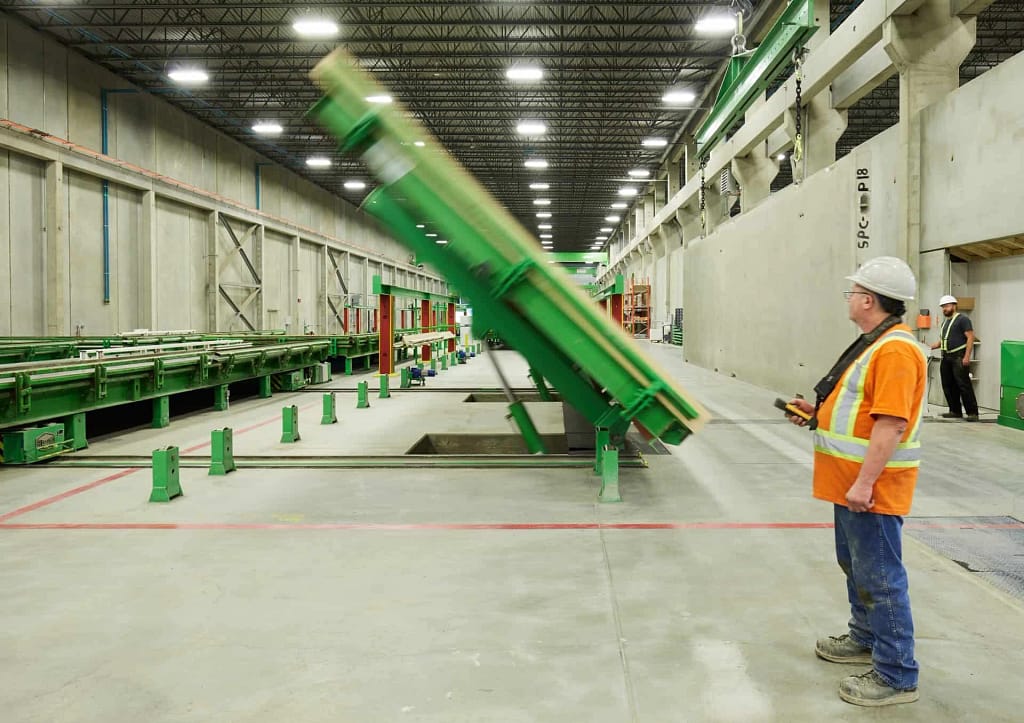
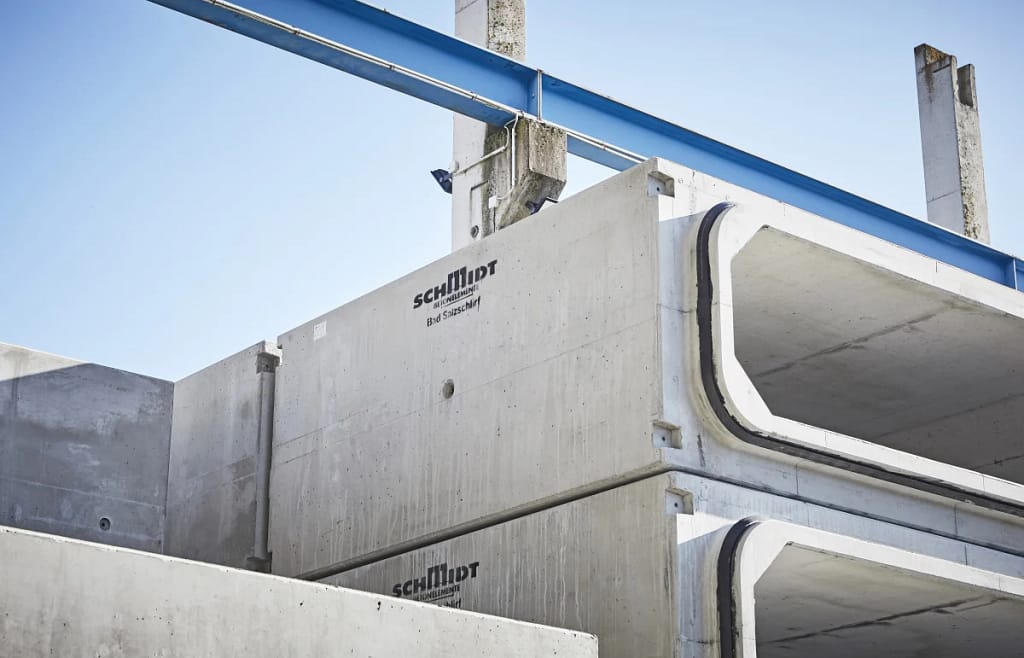
Precast concrete refers to concrete elements that are manufactured in a controlled factory environment and then transported to the job site for installation. Unlike cast-in-place concrete, which is poured and cured on site, precast components are produced using reusable forms, precise reinforcement layouts, and controlled curing conditions.
This approach allows manufacturers to achieve consistent quality, tighter tolerances, and predictable strength development—key advantages in Alberta’s variable climate.
Common Precast Products in Alberta
Precast concrete is used across nearly every construction sector in Alberta. Common applications include:
- Precast stairs and landings for residential and commercial buildings
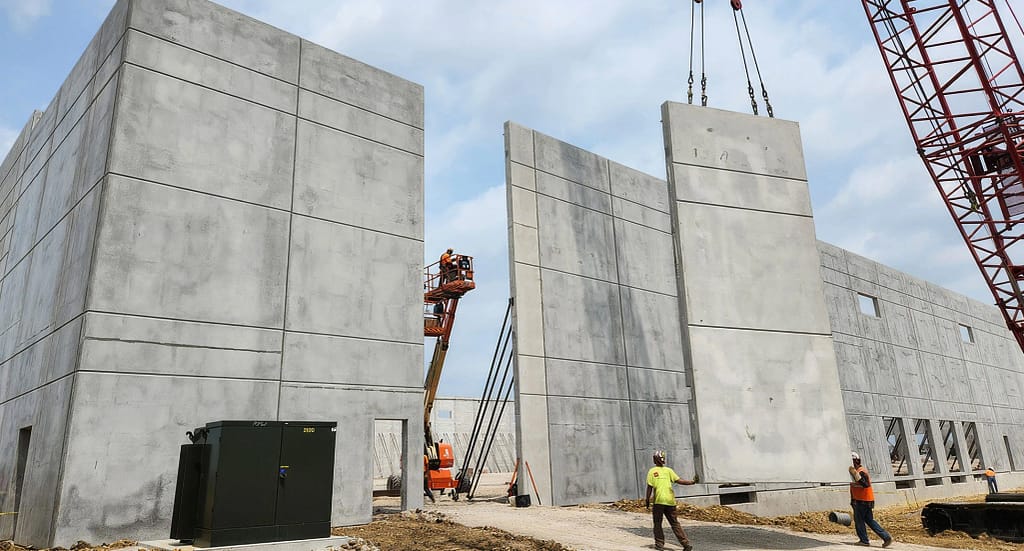
- Structural wall panels for warehouses, offices, and multi-family projects
- Beams, columns, and hollow-core slabs for commercial and industrial structures
- Architectural precast with custom finishes, reveals, or textures
- Municipal and infrastructure components such as barriers and utility structures
Why Alberta Builders Are Shifting to Precast
In Alberta, weather is one of the biggest cost variables in construction. Precast concrete minimizes weather-related delays by moving most of the concrete work indoors. This has led to a noticeable shift toward precast solutions, especially on schedule-sensitive projects.
Other reasons precast is gaining traction include:
- Reduced on-site labour requirements
- Improved jobsite safety
- Consistent quality control
- Faster enclosure of buildings
Average Precast Concrete Cost in Alberta (2026 Overview)
Average precast concrete cost in Alberta varies significantly by product type, project scale, and logistics rather than raw material pricing alone. Precast concrete pricing in Alberta varies widely depending on product type, size, volume, and project complexity. There is no single “per square foot” or “per unit” number that applies to every job, but realistic ranges can help with early budgeting.
Typical Price Ranges
As a general guideline for 2026:
- Small residential precast elements (stairs, window wells): lower four figures per unit
- Mid-size commercial precast components: mid four figures to low five figures per piece
- Large structural or architectural panels: priced per project, often reaching six figures for full building envelopes
These ranges typically include manufacturing but may exclude delivery, crane services, and installation.
Cost per Unit vs Cost per Project
One of the most common mistakes when evaluating precast concrete cost in Alberta is focusing only on unit price. While unit pricing is useful for comparison, precast is best evaluated on a total project basis.
For example, a precast stair may cost more than a site-formed stair in isolation. However, when you factor in reduced formwork labour, faster installation, and minimal finishing work, the total installed cost is often comparable—or lower.
| Cost Consideration | Precast Concrete | Cast-in-Place Concrete |
|---|---|---|
| Manufacturing | Factory-controlled, predictable | On-site, labour intensive |
| Schedule Risk | Low | High (weather dependent) |
| Quality Consistency | High | Variable |
Alberta vs Other Canadian Provinces
Compared to provinces like Ontario or British Columbia, Alberta precast pricing benefits from shorter transportation distances between plants and job sites, as well as strong local manufacturing capacity. However, remote or northern projects may see higher logistics costs.
In most cases, Alberta remains one of the more cost-effective regions in Canada for precast concrete manufacturing—especially for repeatable or high-volume components.
Precast Concrete Pricing by Product Type
Precast Concrete Stairs Cost
Precast concrete stairs are among the most commonly requested products. Pricing depends on width, number of risers, reinforcement requirements, and whether the stair is designed for interior or exterior use.
Standard residential stairs are generally more affordable, while custom commercial or fire-rated stairs require additional engineering and reinforcement, increasing cost.
Precast Concrete Wall Panels Cost
Wall panels vary significantly in price depending on whether they are structural, architectural, or insulated. Structural panels designed to carry building loads typically cost more due to reinforcement and connection hardware.
Architectural finishes, reveals, or integrated insulation layers also add to manufacturing time and cost—but can eliminate the need for additional exterior cladding.
Precast Columns, Beams, and Slabs
Structural precast elements such as beams and columns are often priced as part of a complete structural system. Projects with repetition and standardized dimensions benefit from lower per-unit costs due to reusable forms and streamlined production.
Custom and Architectural Precast Pricing
Custom precast is where pricing varies the most. Unique shapes, curved forms, specialty finishes, or embedded features increase both formwork and labour requirements. That said, custom precast can replace multiple construction trades, often offsetting its higher manufacturing cost.
Summary So Far
Precast concrete cost in Alberta is influenced by far more than just material prices. Product type, design complexity, volume, and logistics all play major roles. When evaluated holistically, precast often delivers strong value through speed, reliability, and long-term performance.
In the next section, we’ll break down the key factors that drive precast pricing, compare precast to cast-in-place concrete in more detail, and share real-world Alberta project examples.
Get a Precast Cost Estimate for Your Project
If you’re planning a residential, commercial, or infrastructure project in Alberta, early pricing input can save significant time and cost. Speak with an experienced precast manufacturer to review your design and identify the most efficient solution.
Contact Omega Precast today to request a detailed precast concrete quote tailored to your project.
Key Factors That Affect Precast Concrete Cost in Alberta
While average price ranges are helpful, accurate precast concrete pricing in Alberta always comes down to project-specific variables. Understanding these factors allows builders and developers to make informed design and budgeting decisions early in the process.
Design Complexity
Simple, repeatable shapes are the most cost-efficient to produce. As designs become more complex, costs increase due to custom formwork, additional labour, and longer production times.
- Curves, angles, and non-standard dimensions
- Integrated stair landings or cantilevers
- Special connection or anchoring requirements
Designing with precast in mind—often called “design for manufacturing”—can significantly reduce costs without sacrificing performance.
Material Specifications
Concrete strength, reinforcement density, and embedded components all influence cost. Higher-strength mixes (measured in MPa) require more cement and tighter quality control, which increases manufacturing expense.
Additional cost drivers include:
- Corrosion-resistant or epoxy-coated rebar
- Fire-rating or durability requirements
- Architectural finishes or color additives
Production Volume
Volume is one of the biggest cost advantages of precast concrete. Projects with multiple identical components benefit from reusable forms, efficient batching, and streamlined production workflows.
As a general rule, unit costs decrease as quantity increases—making precast especially attractive for multi-unit residential, commercial, and industrial developments.
Transportation and Logistics in Alberta
Precast components must be transported from the manufacturing facility to the job site, and logistics can significantly impact final cost. Distance, component size, and load restrictions all play a role.
In Alberta, most urban and regional projects benefit from relatively efficient transport routes. However, oversized components or remote locations may require:
- Specialized trailers
- Pilot vehicles
- Staged deliveries
Installation and Crane Costs
Unlike cast-in-place concrete, precast elements are installed using cranes. While this adds an equipment cost, installation is typically fast—often measured in hours rather than days.
In many cases, reduced site labour and shorter schedules offset crane expenses, especially on commercial projects.
Precast vs Cast-in-Place Concrete Cost Comparison
When comparing systems, precast concrete cost in Alberta is often offset by reduced on-site labour, faster installation, and lower weather-related risk. One of the most common questions Alberta builders ask is whether precast concrete is more expensive than cast-in-place. The answer depends on how cost is measured.
Upfront Cost Differences
Cast-in-place concrete often appears cheaper at first glance because material costs are lower and production happens on site. However, this approach relies heavily on skilled labour, formwork, and favourable weather conditions.
Precast concrete shifts much of that labour into a controlled factory environment, resulting in higher upfront manufacturing costs—but fewer on-site variables.
Lifecycle Cost Analysis
When evaluated over the life of a structure, precast concrete frequently outperforms cast-in-place in terms of durability and maintenance.
- Higher-quality curing improves long-term strength
- Reduced cracking and surface defects
- Lower repair and maintenance costs
For many owners, these long-term savings justify the initial investment.
Schedule and Risk Reduction
Time is money in construction. Precast concrete significantly reduces weather-related delays and compresses project timelines. Earlier building enclosure can lead to faster interior work and earlier occupancy—an important financial advantage.
Real-World Alberta Cost Examples
To better understand how precast pricing works in practice, consider the following typical Alberta scenarios.
Residential Project Example
A multi-family residential development required precast exterior stairs and landings. By standardizing stair dimensions across units, the developer reduced per-unit costs and shortened installation time to a single day per building.
The result was a predictable budget, consistent quality, and minimal site disruption.
Commercial Building Example
A light industrial building used structural precast wall panels to enclose the building quickly. While the panel cost was higher than traditional framing, the project saved weeks on schedule and avoided winter heating and hoarding costs.
Municipal and Infrastructure Example
For infrastructure applications, repeatable precast components provided long-term durability with minimal maintenance. Standardized production reduced unit costs over multiple phases of work.
How to Reduce Precast Concrete Cost in Alberta
There are several proven strategies to keep precast concrete pricing competitive without compromising performance.
Design Optimization
Early collaboration between designers and precast manufacturers allows for efficient component sizing, simplified connections, and reduced form complexity.
Early Manufacturer Involvement
Engaging a precast manufacturer during the design phase helps identify cost-saving opportunities before drawings are finalized. This approach often eliminates costly revisions later.
Ordering in Volume
Consolidating orders and standardizing components across phases or buildings can significantly reduce per-unit costs through production efficiencies.
Why Choose Omega Precast for Alberta Projects
Choosing the right precast partner is just as important as choosing the right material. Experience, capacity, and quality control all directly impact cost and project success.
In-House Manufacturing Advantages
Omega Precast operates modern manufacturing facilities with strict quality control processes. In-house production ensures consistency, accurate scheduling, and reliable pricing.
Experience Across Canada
With projects delivered across Alberta and throughout Canada, Omega Precast understands regional codes, logistics, and construction challenges—helping clients avoid costly surprises.
Custom Precast Solutions
From standard components to complex architectural elements, Omega Precast provides tailored solutions supported by engineering coordination and practical manufacturing expertise.
Precast Concrete Cost FAQs
How much does precast concrete cost in Alberta in 2026?
Costs vary by product and project size, but precast pricing typically reflects manufacturing quality, logistics, and installation efficiency rather than raw material alone.
Is precast concrete cheaper than cast-in-place?
While precast may have higher upfront costs, many projects find it more economical when considering schedule savings, reduced labour, and long-term durability.
What affects precast pricing the most?
Design complexity, volume, transportation distance, and installation requirements are the biggest cost drivers.
How long does precast manufacturing take?
Production timelines depend on project size and complexity, but factory-controlled manufacturing allows for predictable scheduling.
Does Omega Precast handle delivery and installation?
Yes. Omega Precast coordinates delivery logistics and works with experienced installation partners to ensure smooth execution.
Conclusion: Is Precast Concrete Worth the Cost in Alberta?
For many Alberta projects, precast concrete delivers strong value through speed, reliability, and long-term performance. While pricing varies, understanding the full cost picture—beyond material alone—reveals why precast continues to gain popularity across residential, commercial, and infrastructure sectors.
When designed and executed properly, precast concrete is not just a construction method—it’s a strategic investment.
Request a Custom Precast Concrete Quote
If you’re planning a project in Alberta or anywhere in Canada, accurate early pricing can make all the difference. Partnering with an experienced precast manufacturer ensures your design, budget, and schedule are aligned from day one.
Contact Omega Precast today to request a customized precast concrete cost in Alberta estimate for your project.