
In modern construction, structural decisions made early in a project can determine everything from build speed and budget control to long-term durability and safety. Developers, engineers, and contractors across Canada are increasingly turning to precast concrete beams and columns as a reliable alternative to traditional cast-in-place systems. These structural components offer predictable performance, accelerated schedules, and factory-controlled quality—critical advantages in today’s fast-paced and cost-sensitive building environment.
This structural guide is designed to provide a clear, practical understanding of how precast concrete beams and columns work, how they are designed and manufactured, and why they are widely used in industrial, commercial, and institutional projects. Drawing on real-world precast production and installation experience, this article explains both the engineering fundamentals and the on-site realities that decision-makers need to know.
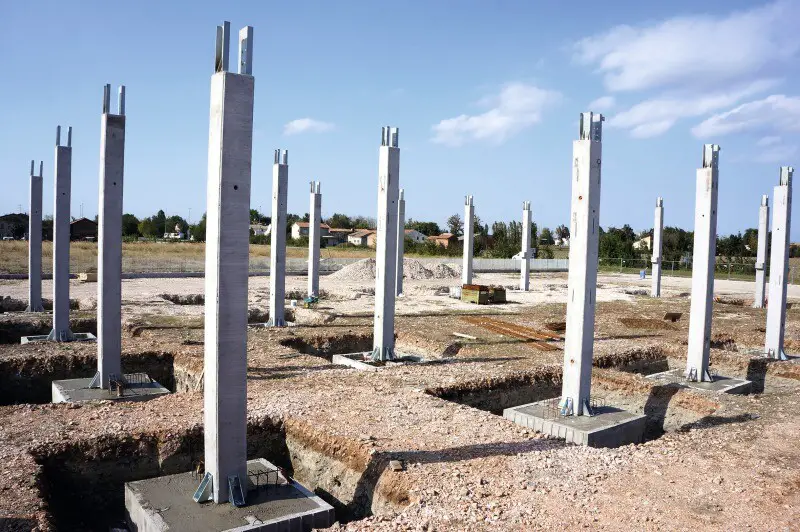
For readers new to industrialized construction methods, this precast concrete overview explains how factory-produced components differ from traditional cast-in-place systems.
What Are Precast Concrete Beams and Columns?
Definition of Precast Structural Components
Precast concrete beams and columns are structural elements that are cast, cured, and quality-tested in a controlled manufacturing facility before being transported to the job site for installation. Unlike cast-in-place concrete, which is poured and cured on-site, precast components are produced using engineered molds, consistent materials, and standardized quality control procedures.
Beams and columns form the primary load-resisting framework of many buildings. Columns transfer vertical loads from floors and roofs down to foundations, while beams span horizontally between columns, supporting slabs, walls, and other structural elements. When these components are precast, their structural properties are precisely engineered long before construction begins.
Role in Structural Load-Bearing Systems
In a typical precast structural system, columns carry axial loads and resist buckling, while beams manage bending and shear forces created by gravity and live loads. Together, they create a stable load path that transfers forces safely to the foundation.
Because precast concrete beams and columns are manufactured under controlled conditions, engineers can accurately predict strength, stiffness, and performance. This predictability reduces design uncertainty and allows for tighter construction tolerances—especially important in large-scale commercial and industrial buildings.
Structural Function of Beams vs Columns
Precast Concrete Beams
Precast concrete beams are horizontal structural members designed to carry loads from slabs, walls, or roof systems and transfer them to columns or load-bearing walls. Their design must account for bending moments, shear forces, and deflection limits under both service and ultimate load conditions.
In precast construction, beams are often engineered to span longer distances than cast-in-place alternatives, reducing the number of columns required and creating more open, flexible floor layouts. This is especially valuable in warehouses, manufacturing facilities, and parking structures.
Precast Concrete Columns
Precast concrete columns are vertical members primarily designed to resist axial compression, although they may also experience bending from wind, seismic forces, or eccentric loading. Their structural performance depends on cross-sectional geometry, reinforcement detailing, and effective length.
Factory-produced columns offer consistent strength and dimensional accuracy, which helps ensure proper alignment during erection. This consistency reduces on-site adjustments and minimizes cumulative construction tolerances across multi-storey structures.

Structural Design Principles for Precast Beams and Columns
Load Considerations
The design of precast concrete beams and columns begins with a thorough evaluation of applied loads. These typically include:
- Dead loads – the self-weight of structural components and permanent building elements
- Live loads – occupants, equipment, vehicles, or stored materials
- Environmental loads – wind, snow, and seismic forces
- Construction loads – temporary loads during lifting and erection
Canadian building codes require structural elements to be designed with appropriate safety factors and load combinations. Precast systems benefit from accurate material properties, which allow engineers to optimize member sizes without compromising safety.
Reinforcement Strategies
Reinforcement in precast beams and columns typically consists of longitudinal steel bars, shear reinforcement (stirrups or ties), and embedded hardware for lifting and connections. In some applications, prestressing strands are introduced to improve load capacity and control deflection.
Prestressed precast beams are particularly effective for long spans, as the applied prestress counteracts tensile stresses caused by bending. This allows for slimmer profiles, reduced cracking, and improved serviceability over the life of the structure.
Manufacturing Process of Precast Concrete Beams and Columns
Engineering and Shop Drawings
Every precast beam and column begins with detailed engineering and shop drawings. These documents define dimensions, reinforcement layouts, connection details, and lifting points. Close coordination between engineers, fabricators, and project teams ensures that components meet both structural and constructability requirements.
According to the Canadian Precast/Prestressed Concrete Institute, early involvement of precast manufacturers can reduce design conflicts and improve overall project efficiency by as much as 15–20%.
Formwork, Casting, and Curing
Once designs are finalized, reusable steel or custom molds are prepared to exact specifications. Concrete is placed using controlled batching and vibration techniques to ensure proper consolidation and surface quality. Components are then cured under monitored conditions to achieve target strength and durability.
This factory-controlled environment is a key reason why precast concrete beams and columns consistently achieve higher quality and longer service life compared to site-poured alternatives.

Precast Connections and Structural Integration
Beam-to-Column Connections
One of the most critical aspects of any precast concrete beam and column system is the connection design. Connections must safely transfer loads while accommodating tolerances, thermal movement, and long-term serviceability. Common connection methods include welded steel plates, bolted assemblies, grouted sleeves, and hybrid mechanical systems.
In practice, engineers often design connections to be stronger than the members themselves, ensuring that structural performance is governed by predictable material behavior rather than connection failure. This approach aligns with modern performance-based design principles used across Canada.
Column-to-Foundation Connections
Precast columns are typically connected to foundations using pocket foundations, base plates with anchor bolts, or grouted dowel systems. The choice depends on load demands, erection sequence, and project schedule.
For example, pocket foundations allow columns to be set quickly and plumbed accurately before being locked in place with high-strength grout. This method is widely used in industrial and commercial buildings due to its speed and reliability.
Installation and Erection Process
Site Preparation and Logistics
Successful precast installation begins long before the first component arrives on site. Foundations must be accurately placed within tight tolerances, crane access must be planned, and delivery sequencing must align with erection schedules.
Because precast components arrive ready to install, delays caused by weather or site congestion are significantly reduced compared to cast-in-place construction.
Lifting, Placement, and Alignment
Precast concrete beams and columns are lifted using engineered lifting points cast into each element. Cranes place components directly into their final position, where temporary bracing ensures stability until permanent connections are completed.
This process allows large structural frames to be erected in days rather than weeks—an advantage that can dramatically shorten overall project timelines.
Advantages of Precast Concrete Beams and Columns
Structural Performance and Durability
Precast concrete offers high compressive strength, excellent fire resistance, and long-term durability. Factory-controlled curing improves resistance to freeze-thaw cycles—an essential consideration for Canadian climates.
Studies show that properly designed precast structures can exceed 50–75 years of service life with minimal maintenance, making them a strong investment for owners focused on lifecycle value.
Construction Speed and Cost Control
By shifting labor from the job site to the manufacturing facility, precast systems reduce on-site manpower requirements and schedule risk. Parallel production and site preparation can reduce total construction time by 20–40% on structural scopes.
Quality and Consistency
Every precast beam and column is produced under strict quality control, including material testing, dimensional checks, and visual inspection. This consistency reduces rework, improves fit-up, and enhances overall project reliability.
Many of the advantages discussed here align with the broader benefits of precast concrete for commercial construction, including schedule certainty, durability, and reduced site risk.
Precast vs Cast-in-Place Structural Systems
| Criteria | Precast Concrete | Cast-in-Place Concrete |
|---|---|---|
| Quality Control | Factory-controlled | Weather-dependent |
| Construction Speed | Fast erection | Longer curing time |
| Labor Requirements | Reduced on-site labor | Labor-intensive |
| Schedule Predictability | High | Variable |
Applications Across Canadian Construction
Industrial and Commercial Buildings
Precast concrete beams and columns are widely used in warehouses, manufacturing plants, data centers, and retail developments. Their ability to support heavy loads and long spans makes them ideal for high-demand environments.
Institutional and Infrastructure Projects
Schools, hospitals, and municipal facilities benefit from precast systems due to their durability, fire resistance, and predictable construction timelines. These advantages help meet strict public-sector budget and schedule requirements.
Canadian Codes and Standards
Building Code Compliance
Precast concrete beams and columns in Canada are designed in accordance with CSA A23.3 and the National Building Code of Canada. These standards govern load combinations, reinforcement detailing, durability requirements, and quality assurance procedures.
Climate and Environmental Considerations
Designers must account for snow loads, wind exposure, seismic activity, and freeze-thaw cycles. Precast systems perform exceptionally well in these conditions due to dense concrete mixes and controlled curing processes.
In many projects, precast beams and columns are paired with precast concrete wall panels to form a complete structural and enclosure system.
Frequently Asked Questions
Are precast concrete beams and columns load-bearing?
Yes. Precast beams and columns are fully load-bearing structural elements designed to carry gravity, lateral, and environmental loads.
Can precast components be customized?
Absolutely. Dimensions, reinforcement, finishes, and connection details can all be tailored to meet project-specific requirements.
Is precast suitable for seismic regions?
When properly engineered, precast systems perform well in seismic zones and are commonly used in regions with elevated seismic risk.
Conclusion: Why Precast Concrete Makes Structural Sense
Precast concrete beams and columns combine structural reliability, construction efficiency, and long-term durability into a single, proven solution. By manufacturing critical structural components in a controlled environment, projects benefit from predictable performance, faster schedules, and reduced risk.
For developers and builders seeking a modern structural system that aligns with Canada’s demanding building standards and climate conditions, precast concrete offers exceptional value from design through completion.
Work With Omega Precast
Omega Precast provides engineered precast concrete beams and columns for projects across Canada. With a professional team, modern production facilities, and a commitment to quality, we support commercial, industrial, and institutional builds from concept to installation.
Contact Omega Precast today to discuss your structural precast requirements and discover how our solutions can streamline your next project.