
Precast concrete has become a cornerstone of modern construction across Canada. From commercial buildings and industrial facilities to infrastructure and multi-residential developments, precast offers speed, consistency, and durability that traditional cast-in-place methods often struggle to match. However, like any construction system, precast concrete is not without its risks, limitations, and common pitfalls.
The challenge is not that precast concrete is inherently risky—but that its success depends heavily on planning, coordination, quality control, and experience. When things go wrong, it is usually due to poor decisions made early in the process, not the material itself. Understanding these risks upfront allows developers, engineers, and contractors to avoid costly mistakes and unlock the full value precast can deliver.
This guide explores the real-world risks of precast concrete, its structural and logistical limitations, and the most common mistakes seen on projects. More importantly, it explains how experienced precast manufacturers mitigate these risks through proven systems, rigorous quality control, and collaborative project delivery.
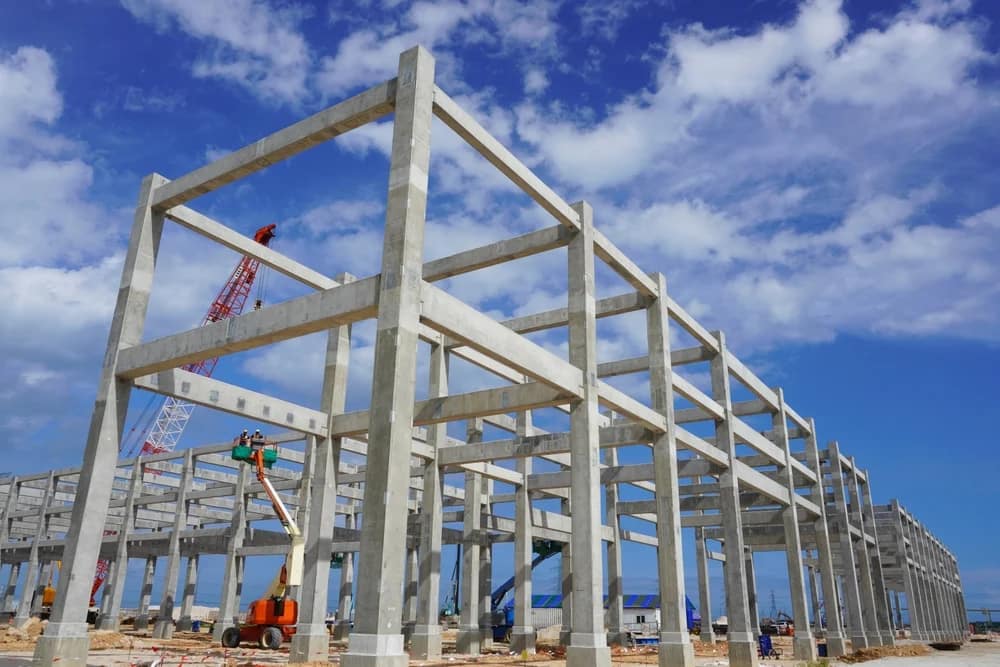
Why Understanding Precast Concrete Risks Matters
Precast concrete is often selected for its predictability—controlled manufacturing environments, repeatable results, and accelerated schedules. Yet this predictability only holds when risks are identified and managed correctly. When precast is treated as a “plug-and-play” solution without sufficient forethought, problems can surface quickly.
Unlike cast-in-place concrete, where many decisions are made in the field, precast requires critical choices to be finalized early. Design assumptions, connection details, lifting strategies, and logistics plans must all be resolved before production begins. This front-loaded decision-making is both a strength and a potential weakness.
- Unaddressed risks can lead to redesigns, delays, and added cost.
- Misaligned expectations between designers and fabricators can compromise performance.
- Inexperienced suppliers can introduce hidden quality and safety issues.
According to industry studies, construction rework can account for 5–15% of total project cost, with coordination errors and design omissions being leading contributors. In precast projects, these risks are amplified if early collaboration is missing.
These risks must also be understood within the broader context of Canadian precast concrete, where long transport distances, regional regulations, labour shortages, and climate conditions all shape how precast systems are designed, delivered, and installed.
Oversized precast deliveries must also comply with Canadian transport regulations for heavy loads, which govern routing, escort requirements, and seasonal restrictions.
Understanding the Inherent Risks of Precast Concrete
Every construction system carries risk. With precast concrete, those risks tend to fall into three main categories: design-stage risks, manufacturing and quality risks, and transportation and logistics risks. Each must be addressed systematically to ensure long-term performance.
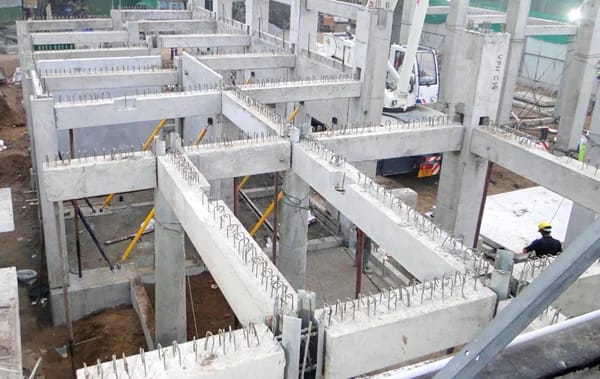
Design-Stage Risks in Precast Construction
The design phase is where most precast-related issues originate. Because precast elements are fabricated off-site, design decisions must be finalized earlier than with cast-in-place systems. This creates efficiency—but also reduces flexibility later in the project.
Common design-stage risks include insufficient coordination between disciplines, underdeveloped connection details, and unrealistic tolerance assumptions. Once shop drawings are approved and forms are built, changes become costly.
Common Design Oversights
- Failure to account for erection sequencing and crane access
- Overlooking tolerances between precast, structural steel, and foundations
- Inadequate allowance for thermal movement and shrinkage
- Connection details that are difficult or unsafe to install
For example, a precast wall panel may be structurally sound on paper but impossible to erect safely due to site constraints. These issues are rarely material failures—they are planning failures.
Who Is Responsible for Design Risk?
Design responsibility in precast projects is often shared. The engineer of record defines structural intent, while the precast manufacturer develops detailed shop drawings and connection designs. When roles are unclear or collaboration is delayed, gaps emerge.
Best-in-class projects involve precast manufacturers early through design-assist or integrated delivery models. This allows constructability issues to be resolved before they become liabilities.
Manufacturing & Quality Control Risks
One of precast concrete’s biggest advantages is factory-controlled production. However, not all precast plants operate at the same standard. Variability in processes, training, and quality control systems can introduce significant risk.
Unlike site-poured concrete, defects in precast elements are embedded into the product before it ever reaches the site. If quality issues are not caught early, they can multiply across dozens or hundreds of units.

Typical Production-Related Failures
- Honeycombing caused by improper consolidation
- Surface defects from poor form preparation
- Incorrect reinforcement placement or cover
- Dimensional inaccuracies affecting fit-up
While many of these issues may appear cosmetic, some can compromise durability, corrosion resistance, or structural performance if left unaddressed.
How Quality Control Systems Reduce Manufacturing Risk
Experienced precast manufacturers invest heavily in quality assurance. This includes standardized mix designs, calibrated batching systems, controlled curing environments, and documented inspection checkpoints.
Effective QC programs typically include:
- Pre-pour inspections for forms, embeds, and reinforcement
- Batch tracking and material traceability
- Post-pour dimensional and surface inspections
- Strength verification through cylinder or maturity testing
These controls transform precast production from a variable process into a repeatable, reliable system.
Transportation & Logistics Risks
Once precast elements leave the plant, they enter one of the most vulnerable stages of the process. Transportation risks are often underestimated—especially in a country as geographically large and climate-diverse as Canada.
Long haul distances, extreme temperatures, and challenging site access all increase the likelihood of damage if logistics are not carefully planned.
Transportation-Related Damage Scenarios
- Edge spalling caused by improper load support
- Cracking due to inadequate bracing during transport
- Damage to lifting anchors or embedded hardware
These issues rarely stem from material weakness. Instead, they result from insufficient understanding of how precast behaves under dynamic loads during transport.
Risk Mitigation Through Logistics Planning
Professional precast suppliers develop transportation strategies alongside production. This includes designing lifting points, specifying custom rigging, sequencing deliveries, and selecting appropriate routes.
In practice, proper logistics planning can reduce damage rates to near zero—even on long-distance deliveries.
Many of the most costly precast failures occur not in design or production, but during transporting precast concrete. Without engineered lifting points, proper bracing, and route planning, even well-manufactured elements can suffer damage before they ever reach the site.
Key Takeaways So Far
- Most precast concrete risks originate in early planning, not material failure.
- Design-stage coordination is critical due to early decision lock-in.
- Manufacturing quality depends on plant systems and experience.
- Transportation risk is real but highly manageable with proper planning.
In the next section, we will examine the structural and performance limitations of precast concrete—and where it may not be the best solution—before diving into the most common mistakes made on real-world projects.
Considering a precast project? Engaging an experienced manufacturer early is the most effective way to reduce risk, control cost, and protect long-term performance.
Structural & Performance Limitations of Precast Concrete
While precast concrete offers impressive strength and durability, it is not a universal solution for every project. Understanding its structural and performance limitations helps teams make informed decisions and avoid forcing precast into situations where other systems may perform better.
Structural Design Constraints
Precast elements are manufactured as discrete components, which introduces practical limits related to size, weight, and handling. These constraints influence span lengths, panel dimensions, and overall structural layout.
- Weight limitations: Element size is constrained by crane capacity and transport regulations.
- Span restrictions: Extremely long spans may require deeper sections or hybrid systems.
- Connection dependency: Structural performance relies heavily on well-designed joints.
For example, in tight urban infill sites with limited crane access, cast-in-place systems may offer greater flexibility. Precast performs best when projects are designed around its strengths rather than retrofitted late in the process.
In projects where element weight becomes a limiting factor, lightweight precast concrete can help address both structural and logistical constraints. By reducing dead load while maintaining structural integrity, lightweight systems can expand crane options, simplify transport, and reduce stress on foundations—particularly in retrofit or long-span applications.
When Precast May Not Be the Best Choice
- Highly irregular or organic architectural forms
- Projects with constantly changing layouts
- Small, one-off structures where form reuse is minimal
Recognizing these limitations early prevents unrealistic expectations and costly redesigns.
Thermal, Acoustic & Moisture Performance Limits
From an enclosure standpoint, precast concrete panels can deliver excellent durability, but performance depends heavily on detailing and installation. The panels themselves are robust; the joints between them are where most issues arise.
Common Envelope-Related Challenges
- Thermal bridging at panel connections
- Air and water leakage due to poor joint sealing
- Sound transmission through improperly detailed assemblies
In cold Canadian climates, these issues become even more critical. Without proper insulation strategies and joint design, energy performance can suffer.
Performance Depends on Installation, Not Just Product
It is important to understand that precast performance is a system outcome. Even the highest-quality panels will underperform if installed incorrectly or without proper inspection. Skilled installation crews, clear tolerances, and post-installation checks are essential.

Common Mistakes in Precast Concrete Projects
Most precast failures are not technical—they are procedural. Below are the most common mistakes seen across commercial and industrial precast projects.
Mistake #1 – Choosing the Lowest Bid Supplier
Price-only selection often leads to hidden costs. Underqualified suppliers may lack robust QC systems, experienced staff, or proper documentation. The result is higher risk, more rework, and increased liability.
Mistake #2 – Late Involvement of the Precast Manufacturer
Bringing the precast supplier in after designs are finalized eliminates opportunities for optimization. Early involvement can reduce material usage, simplify connections, and improve constructability.
Mistake #3 – Poor Coordination Between Trades
Conflicts between precast elements, structural steel, mechanical systems, and foundations are a leading cause of delays. Coordination through BIM or detailed shop drawings is essential.
Mistake #4 – Underestimating Installation Complexity
Improper bracing, incorrect sequencing, or rushed erection can compromise safety and performance. Installation should be treated as a specialized operation, not a commodity service.
Mistake #5 – Inadequate Inspection & Documentation
Skipping inspections—both at the plant and on site—allows small issues to become major problems. Documentation protects owners, contractors, and manufacturers alike.
Precast vs Cast-in-Place: A Risk Comparison
| Risk Factor | Precast Concrete | Cast-in-Place Concrete |
|---|---|---|
| Schedule Risk | Low (parallel fabrication) | High (weather dependent) |
| Weather Exposure | Minimal | Significant |
| Quality Consistency | High (controlled environment) | Variable |
| Design Flexibility Late in Project | Limited | Higher |
| Cost Certainty | High when planned early | Lower due to site variables |
This comparison highlights a key truth: precast shifts risk earlier in the project. When managed properly, this reduces overall uncertainty rather than increasing it.
How Professional Precast Manufacturers Reduce Risk
Experienced precast manufacturers do not eliminate risk—they manage it systematically. Their value lies in processes, not just production.
Early Design Collaboration
Design-assist models allow manufacturers to contribute practical insight on connections, tolerances, and erection sequencing before issues arise.
Advanced Manufacturing Controls
Automated batching, controlled curing, and standardized procedures ensure repeatable quality across every unit.
Logistics & Installation Planning
Detailed lift plans, delivery sequencing, and site coordination reduce handling damage and improve safety.
Quality Assurance & Documentation
Inspection records, material traceability, and compliance documentation provide transparency and accountability.
Frequently Asked Questions (FAQ)
Is precast concrete riskier than cast-in-place?
No. Precast concentrates risk earlier in the process, but reduces site-related uncertainty when properly planned.
What is the biggest mistake with precast concrete?
Late involvement of the precast manufacturer is the most common and costly mistake.
Can precast crack during transport?
Yes, but proper design of lifting points and transport methods makes this highly unlikely.
How do I choose a reliable precast manufacturer?
Look for proven experience, documented QC systems, and willingness to collaborate early.
Is precast suitable for Canadian climates?
Yes—when designed with proper insulation, joint detailing, and moisture control.
Risk Is Manageable with the Right Partner
Precast concrete carries real risks and limitations—but none of them are deal-breakers. The majority stem from planning, coordination, and execution, not from the material itself.
When paired with an experienced precast manufacturer, these risks become manageable, predictable, and often lower than traditional construction methods. The key is early engagement, transparent processes, and a commitment to quality at every stage.
Planning a precast project? Working with a professional team from the start can protect your schedule, budget, and long-term performance.
If you are considering precast concrete for your next project, consult with a qualified manufacturer early. Contact us to identify risks, avoid common mistakes, and deliver a durable, high-performing structure with confidence.