
Every infrastructure team wants the same thing: build it fast, build it right, and keep it working for decades. The challenge is that bridges, tunnels, and rail corridors rarely cooperate—tight closures, heavy live loads, winter weather, short construction seasons, and public pressure to “just get it open.”
That’s exactly why precast concrete infrastructure keeps gaining ground across Canada. By manufacturing critical components in a controlled facility—then delivering and installing them in planned windows—precast can reduce on-site time, improve quality consistency, and help owners avoid long disruptions.
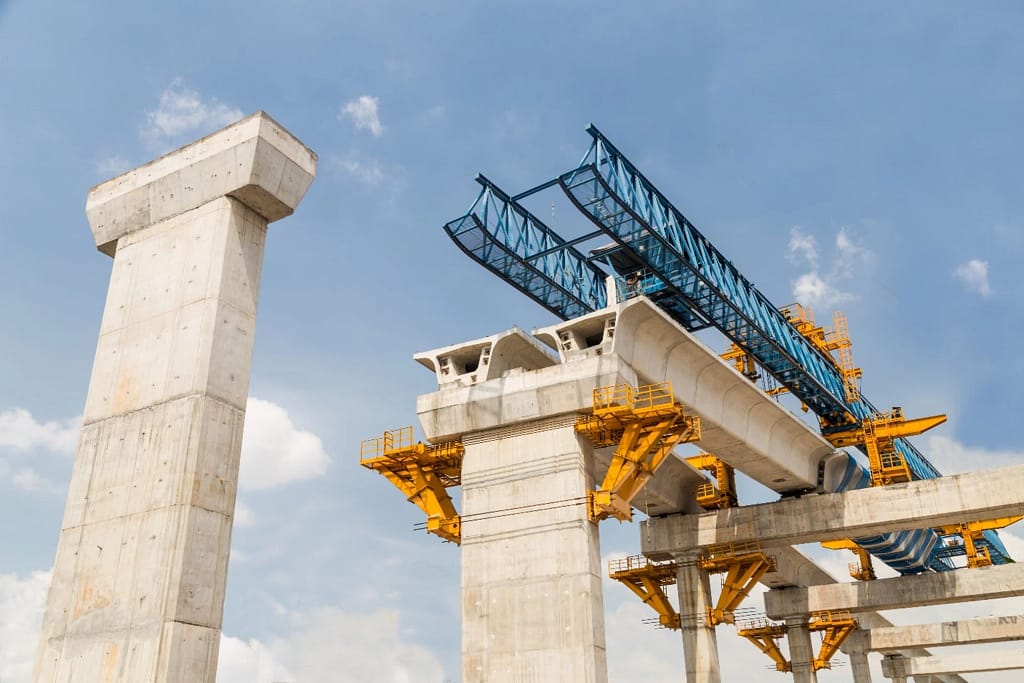
Why Infrastructure Projects Are Moving Toward Precast
Whether you’re replacing a bridge deck, building a tunnel, or installing rail culverts, the most expensive part of construction is often time—time with lanes closed, time with rail possessions booked, time paying for traffic control, and time exposed to weather risk. Precast solves many of these issues by shifting labor-intensive activities off-site.
Transportation agencies have formalized this idea for bridges through prefabricated bridge elements and systems (PBES), defined as bridge components built off-site (or near-site) that include features designed to reduce on-site construction and mobility impacts (Federal Highway Administration, PBES program). The same logic translates to tunnels and rail: build consistent parts in a plant, then assemble them quickly in the field.
- Owners want fewer disruptions and lower lifecycle cost.
- Contractors want reliable installs and less rework.
- Engineers want predictable tolerances, traceability, and durable performance.
In Canada, there’s also a macro reality: infrastructure funding and delivery programs are massive, and timelines matter. For example, the Government of Canada’s Investing in Canada Plan describes long-term commitments and progress across tens of thousands of projects (Infrastructure Canada, Investing in Canada Plan overview). The more predictable your construction method is, the easier it becomes to deliver within public expectations and funding windows.
According to the Federal Highway Administration’s Prefabricated Bridge Elements and Systems (PBES) program, off-site fabrication of bridge components significantly reduces on-site construction time and “mobility impact time” compared to traditional cast-in-place methods.
What “Precast” Means in Civil Infrastructure (Beyond Basic Panels)
In simple terms, precast concrete is cast and cured in a controlled manufacturing environment, then transported to site for installation. But in modern precast concrete infrastructure, the word “precast” covers a wide range of engineered components—many of them designed to fit together with tight tolerances and fast connection details.
Key Precast Product Categories Used in Infrastructure
Here are the most common families of components used across bridges, tunnels, and rail. (Exact product selection depends on geometry, loads, access, and owner specifications.)
- Bridge components: prestressed girders, deck panels, parapets/barriers, approach slabs, pier caps, and modular wall/abutment elements.
- Tunnel systems: segmental tunnel lining rings (precast segments), inverts, portals, and special utility corridor elements.
- Rail infrastructure: precast box culverts and underpasses, retaining walls, platform edge units, cable troughs, duct banks, and barrier/sound wall systems (project-dependent).
What ties these together is repeatability. Once a form system and reinforcement layout are proven, production becomes consistent—and that consistency is often what reduces installation risk.
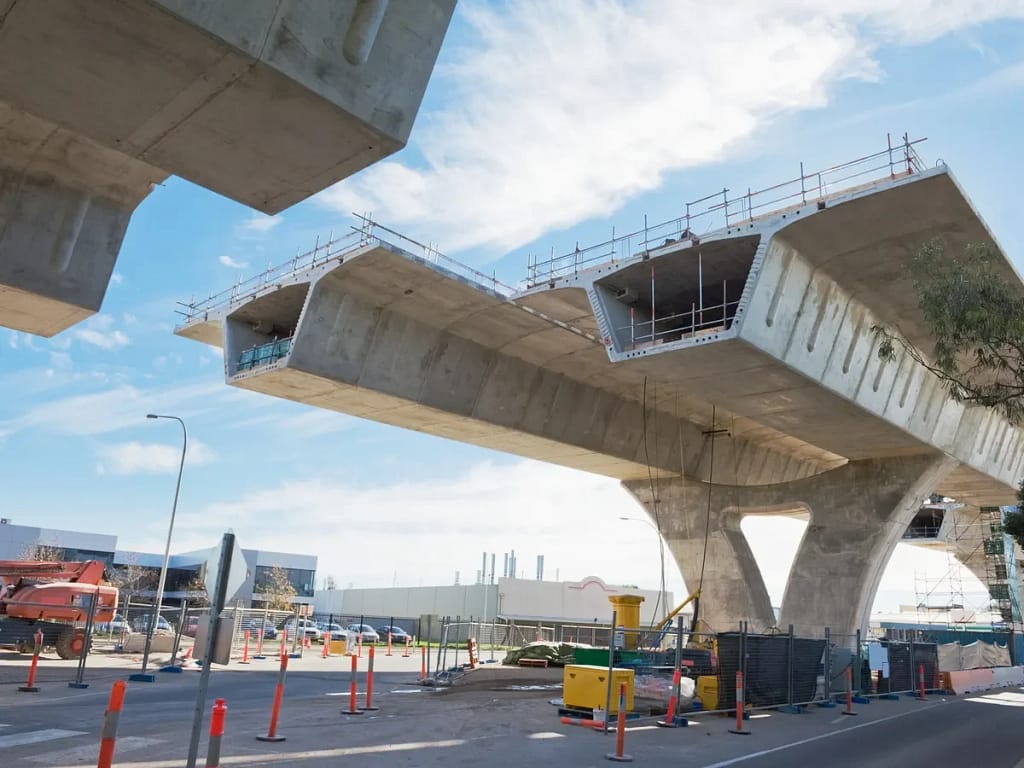
How Precast Differs From Cast-in-Place in Real Jobsites
On paper, cast-in-place and precast can both meet structural requirements. On-site reality is where differences show up:
- Quality control: Plant casting allows controlled batching, consolidation, curing, finishing, and dimensional checks—reducing variability.
- Schedule stacking: While your site team builds foundations, prepares subgrade, or relocates utilities, your precast components can be manufactured in parallel.
- Shorter critical closures: Instead of forming and curing on site for days (or longer in cold weather), installation can happen in planned lifts and closures.
- Less site congestion: Reduced formwork, fewer on-site pours, and fewer weather-sensitive activities can simplify logistics.
For bridges specifically, FHWA highlights that PBES reduce on-site construction time and the “mobility impact time” compared to conventional construction methods (FHWA PBES definition and guidance). That same mobility impact logic is just as relevant for rail possessions and tunnel work zones.
For context on national infrastructure commitments, Infrastructure Canada’s Investing in Canada Plan outlines federal priorities and long-term funding strategies for major infrastructure projects across the country.
Where Precast Doesn’t Fit (So You Can Decide Honestly)
Precast isn’t a magic wand. It’s a method—excellent in many situations, but not always the best fit.
- Severely limited access: If transport routes, crane setup, or staging space are impossible, precast may require redesign or smaller modular pieces.
- Ultra-custom one-offs: When geometry is highly unique and repetition is low, casting on site can sometimes be simpler—unless speed is the top priority.
- Unplanned coordination: Precast rewards early coordination; late design changes can be costly once production is underway.
The practical takeaway: precast concrete infrastructure performs best when the project team plans connections, tolerances, logistics, and install sequencing early—then uses the plant environment to reduce field uncertainty.
Why Owners Choose Precast for Bridges, Tunnels, and Rail
When owners and engineers evaluate precast concrete infrastructure, they’re usually balancing five big priorities: schedule, durability, safety, lifecycle cost, and public disruption. Here’s how precast addresses each one.
Speed & Schedule Certainty (Accelerated Construction)
Precast components are produced while site prep is happening. That parallel workflow can compress the overall schedule and reduce the number of “weather-dependent days” on the critical path.
- Bridges: Prefabricated elements can reduce on-site time and traveler impacts compared with conventional methods (FHWA PBES program).
- Rail: Precast culverts and retaining walls can be installed during limited possessions, reducing the time track is out of service.
- Tunnels: Segmental lining production can run continuously, supporting TBM progress with consistent deliveries.
“Prefabricating bridge elements and systems (PBES) offers major time savings, cost savings, safety advantages, and convenience for travelers.” — Federal Highway Administration (Every Day Counts / PBES)
Quality Control, Durability, and Long-Term Performance
Durability is not just about strength—it’s about resisting the environment for decades. In freeze-thaw climates and de-icing conditions, durability details matter. Concrete guidance commonly requires air-entrainment for concrete exposed to freezing and thawing cycles (ACI durability exposure guidance summarized in industry durability selection guides).
Plant production supports durability because it enables tighter control over:
- Mix consistency (cementitious content, air content targets, admixture control)
- Curing (temperature and moisture management)
- Consolidation and finishing (reducing honeycombing and surface defects)
- Dimensional tolerances (critical for fit-up and watertight joints)
For prestressed bridge elements, industry training materials often emphasize benefits like crack control, high-quality production, and low maintenance—reasons prestressed precast is widely used for bridge structures (PCI educational materials on prestressed concrete benefits).
These benefits are maximized when key design considerations for precast concrete structures—including tolerances, connections, and erection sequencing—are addressed early.
Safety and Worksite Risk Reduction
Infrastructure sites are high-risk environments: live traffic, active rail corridors, confined spaces, and heavy lifting. Precast can reduce exposure time because fewer hours are spent forming, placing, and curing concrete on site.
In bridge work, FHWA specifically notes safety advantages tied to PBES adoption (FHWA PBES / Every Day Counts). In practical terms, fewer on-site operations can mean:
- Shorter work-zone durations
- Less time working adjacent to live traffic or rail operations
- More predictable lifts with engineered pick points and rigging plans
Sustainability & Lifecycle Cost (Not Just “Green Claims”)
Precast can support sustainability goals when it reduces rework, minimizes waste, and extends service life. But the biggest “green” win is often fewer future repairs and fewer closures. In other words: build it right once, and the public pays less in disruption over time.
It also supports lifecycle cost thinking because owners can reduce:
- User delay costs (traffic congestion and detours during construction)
- Maintenance closures (through improved durability and consistent detailing)
- Field variability that can lead to premature defects
Improved durability also reduces future closures by simplifying the maintenance and repair of precast concrete structures over the asset’s lifecycle.
Precast Concrete in Bridges
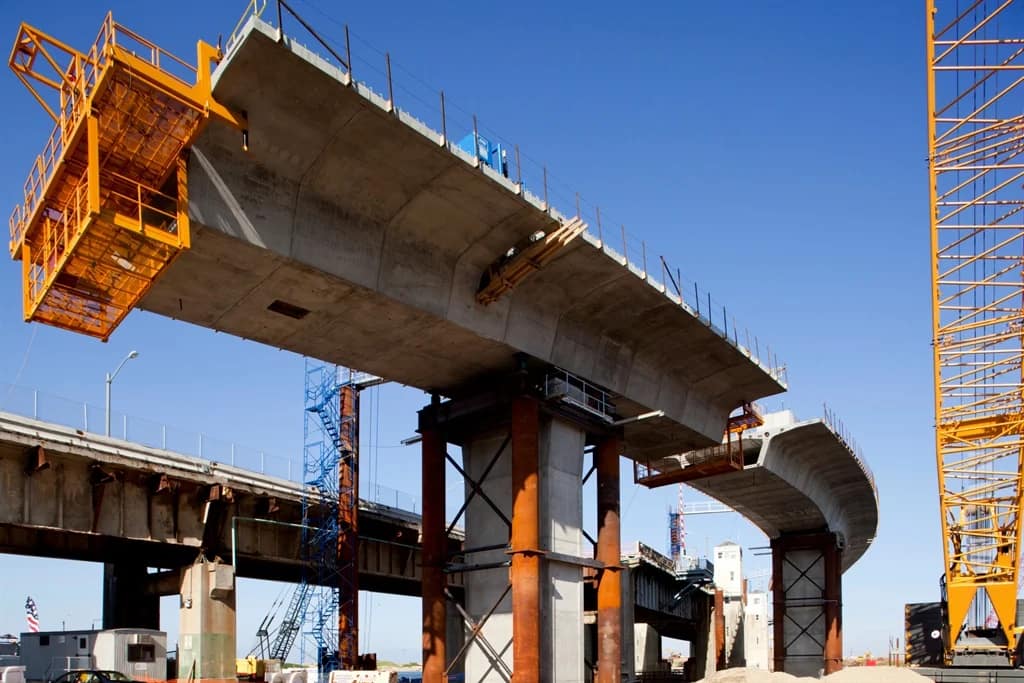
Bridge construction is one of the clearest success stories for precast concrete infrastructure. Owners want minimal closures, contractors want predictable installs, and engineers want repeatable performance. Precast delivers all three—especially when paired with accelerated bridge construction strategies.
Best-Fit Bridge Applications for Precast
Precast is often a strong option when the project has any of the following characteristics:
- Short-to-medium spans where prestressed girders can be delivered and erected efficiently
- Bridge replacements or rehabs that must be completed within tight closure windows
- Deck replacement projects where precast deck panels speed installation
- Remote or weather-sensitive locations where on-site curing risk is high
- Urban corridors where traffic impacts have major public and economic costs
Real-world example: A weekend overpass deck replacement may use precast deck panels with planned closure pours, allowing the road to reopen quickly. Instead of forming and waiting on field curing across multiple cold nights, the team installs engineered panels and completes connections in a controlled sequence.
Common Precast Bridge Elements (What They Do)
Girders (Prestressed I-girders, bulb tees, NU/PCI shapes)
Prestressed girders efficiently carry loads over longer spans by placing concrete in compression where it performs best. For many bridges, girders are the structural backbone—supporting the deck and transferring loads to piers and abutments.
Key advantages in precast concrete infrastructure bridge girders include:
- High strength and structural efficiency from prestressing
- Plant-controlled production supporting consistency and repeatability
- Rapid erection once foundations and bearings are ready
Precast Deck Panels & Full-Depth Deck Systems
Precast deck panels are used to reduce on-site deck forming and to speed installation. Panels can be set quickly, aligned to tolerances, and then tied together through engineered joints and closure pours.
Why owners like them:
- Shorter lane closures and reduced on-site labor
- More predictable deck thickness and cover
- Better schedule control during temperature swings
Barriers, Parapets, Approach Slabs, and Modular Wall Elements
Many “supporting” bridge pieces are also ideal for precast: barriers/parapets, approach slabs, wingwalls, and retaining systems. These elements reduce on-site forming time and help the project team maintain consistent geometry at the bridge approaches—often a key driver of ride quality and drainage performance.
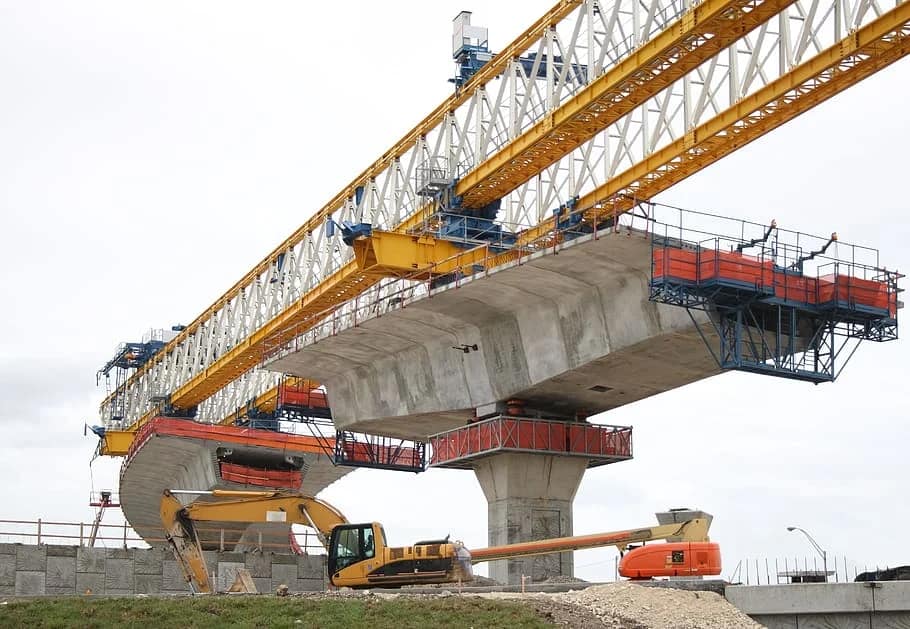
Design Considerations for Bridge Precast
Bearings, Camber, and Tolerances
Precast bridge work succeeds when tolerances are treated as a design feature—not an afterthought. Girders camber, bearings seat elevations, and deck panel alignment all need coordinated detailing so field fit-up is smooth.
Practical coordination checkpoints include:
- Confirming bearing types, elevations, and installation tolerances early
- Coordinating girder camber expectations with deck geometry
- Planning erection sequencing so adjustments are manageable
Durability Detailing (Especially in Freeze-Thaw + De-Icing Exposure)
Durability is the quiet factor that determines whether a bridge stays low-maintenance or becomes a recurring repair project. Good durability detailing typically focuses on:
- Drainage: keeping water moving and preventing ponding
- Joints: detailing to minimize chloride-laden water intrusion
- Cover and concrete quality: matching exposure conditions (freeze-thaw and de-icing environments commonly require air-entrained concrete per durability guidance)
When these details are paired with plant-controlled production, precast concrete infrastructure bridge components can help owners reduce long-term maintenance closures—one of the biggest hidden costs in public corridors.
Contact us to discuss your infrastructure project, review preliminary designs, or get guidance on precast system selection, connection detailing, and constructability planning. Early collaboration helps avoid delays, minimize closures, and deliver durable precast solutions that perform for decades.