
Choosing the right concrete construction method can make or break the success of your project. Beyond speed and upfront cost, factors such as long-term durability, environmental impact, and working with a reliable precast concrete supplier directly influence performance and lifecycle value.
While precast concrete and cast-in-place concrete may appear similar at first glance, they differ significantly in construction speed, quality control, durability, and long-term performance—especially in a climate as demanding as Canada’s.
In this in-depth guide, we break down the strengths, weaknesses, and ideal use cases of both systems. By the end, you’ll know exactly which option is best suited for your timeline, budget, and project requirements.
Introduction — Why the Concrete Method You Choose Matters

Concrete is one of the most important materials in modern construction, but the way it is formed and installed plays an equally crucial role in the overall performance of a structure. Contractors, engineers, and developers often face a key question early in the planning stage: Should we use precast concrete or cast-in-place concrete?
The choice impacts everything—from the construction schedule and durability to overall cost and long-term maintenance. Canadian projects, in particular, must consider factors such as:
- Extreme temperature variations
- Freeze-thaw cycles
- Weather restrictions on installation
- Labour availability and skill levels
- Site accessibility and environmental constraints
To help you make an informed decision, this article dives deep into each method, offering technical insights, real-world examples, comparison tables, and industry-backed expertise.
What Is Precast Concrete?
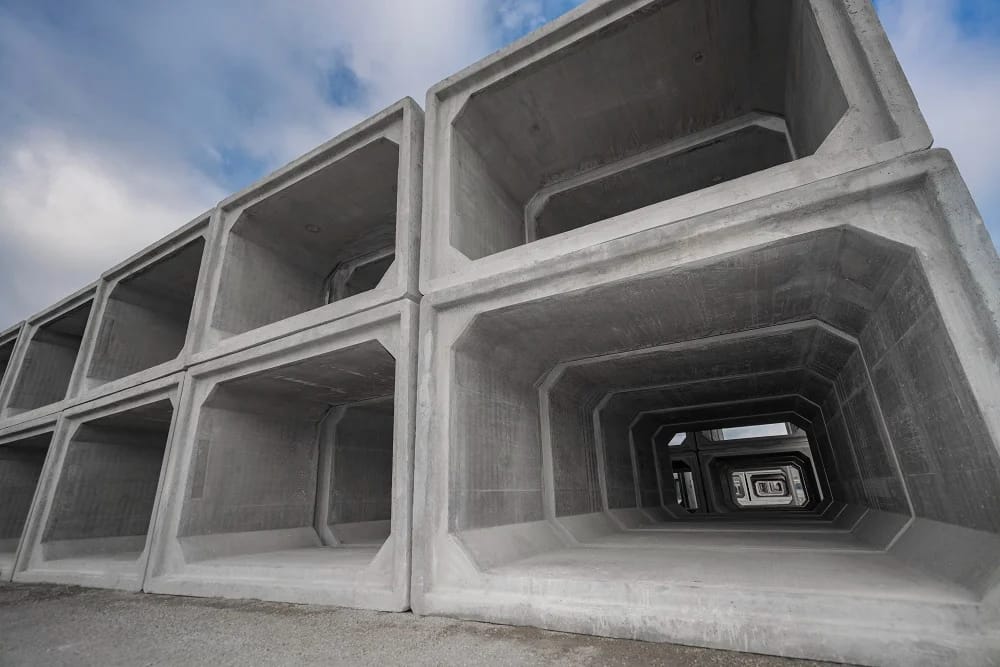
Factory-produced concrete elements is manufactured in a controlled factory environment before being transported to the job site for installation. This method minimizes weather-related delays, ensures consistent quality, and speeds up the overall construction timeline.
This factory-controlled process not only improves structural performance, but also supports modern sustainability goals by reducing waste and optimizing material use — making precast a key solution in sustainable concrete construction.
How Precast Concrete Is Manufactured
Unlike traditional pouring technique—which is mixed, formed, and cured at the job site—factory-produced components is produced offsite in highly controlled facilities. Here’s how the process works:
- Precision Molds: Engineers design custom molds to exact specifications.
- Controlled Environment: Temperature, humidity, and curing conditions are optimized for maximum strength.
- Quality Assurance: Technicians use advanced testing methods to verify compressive strength and durability.
- Rapid Curing: Specialized curing chambers accelerate hardening without compromising structural integrity.
- Transportation & Installation: Finished components are delivered to the job site ready for assembly.
This level of control ensures durability, consistency, and performance—key reasons factory-produced components is widely used in commercial, industrial, and municipal projects across Canada.
Common Uses of Precast Concrete
Precast concrete is incredibly versatile and suitable for a wide range of applications, including:
- Commercial buildings and parking structures
- Industrial warehouses and plants
- Utility structures (manholes, vaults, chambers)
- Bridges and transportation infrastructure
- Retaining walls and boundary systems
Because components are fabricated to exact measurements, precast structures often achieve superior precision and faster assembly than traditional cast-in-place systems.
Key Features of Precast Systems
- Exceptional consistency due to factory-controlled production
- Modular design makes installation fast and straightforward
- Improved aesthetics with smooth finishes and uniform surfaces
- Reduced labour requirements at the job site
- Enhanced durability ideal for Canada’s freeze-thaw conditions
With modern equipment and high standards, precast concrete manufacturers like Omega Precast deliver components that exceed traditional quality benchmarks.
What Is Cast-In-Place Concrete?
Cast-in-place concrete—also called poured-in-place or cast-in-situ—is mixed, poured, and cured directly at the construction site. This method offers excellent flexibility but is heavily influenced by site conditions, weather, and labour availability.
How Cast-In-Place Concrete Works
Poured-in-place concrete requires several steps that must occur sequentially at the job site:
- Formwork Construction: Wood or metal frames are built to shape the concrete.
- Onsite Mixing: Concrete is batched and mixed on the ground or delivered ready-mix.
- Pouring & Vibrating: Concrete is poured and compacted to remove air pockets.
- Curing: The structure must remain undisturbed for 7–28 days, depending on strength requirements.
This method is widely used for foundations, slabs, sidewalks, driveways, and projects requiring continuous pours. However, performance can vary based on weather, onsite labour skill, and formwork accuracy. For more on best practices, the Canada Precast/Prestressed Concrete Institute (CPCI) provides valuable guidelines
Typical Applications
You’ll commonly find cast-in-place concrete used in:
- Residential foundations and basements
- Sidewalks, driveways, and patio slabs
- Large monolithic structures
- High-rise building cores
- Custom architectural forms
Key Characteristics of Cast-In-Place
- High design flexibility allowing custom shapes and monolithic structures
- Potentially lower initial material cost
- Dependent on onsite labour quality and consistency
- Influenced by weather, which can delay curing or reduce performance
- Requires extensive formwork and longer construction timelines
While cast-in-place provides unbeatable versatility, it often brings unpredictability—especially in regions with harsh weather or labour shortages.
The two techniques: Side-by-Side Comparison
To help you quickly evaluate the strengths of each method, here’s a clear and comprehensive comparison of these two primary construction techniques across the most important factors:
Comparison Table — Quick Overview
| Category | Precast Concrete | Cast-In-Place Concrete |
|---|---|---|
| Manufacturing Environment | Factory-controlled, consistent quality | Jobsite conditions, variable quality |
| Installation Speed | Fast — components arrive ready to install | Slow — forming + pouring + curing required |
| Weather Dependency | Minimal | High — rain, snow, and temperature impact progress |
| Labour Requirements | Low onsite labour | High onsite labour |
| Durability | High — uniform curing ensures strong results | Good — but dependent on site conditions |
| Customization | Limited once molds are set | Highly flexible and customizable |
Strength & Durability Differences
Durability is one of the most important factors for Canadian construction. Factory-cured components performs exceptionally well in cold climates due to controlled curing, which reduces internal flaws and improves resistance to freeze-thaw cycles.
The poured-in-situ alternative can also achieve high durability, but results vary depending on:
- Weather during pouring
- Quality of formwork
- Mixing consistency
- Skill level of onsite labour
In general, factory-produced components offers more predictable performance and reliability.
Installation Speed
One of the most significant advantages of offsite-manufactured concrete is speed. With components manufactured ahead of time, installation can begin immediately when the site is prepared. This can reduce construction schedules by weeks—or even months—on large projects.
Cast-in-place, however, requires sequential tasks:
- Formwork construction
- Pouring and finishing
- Long curing times
- Inspections and corrections
This makes cast-in-place more time-consuming and subject to delays. This growing preference aligns with broader industry trends, as highlighted by the rapid expansion of the precast concrete market in Canada and globally.
Quality & Precision
Factory-produced components offers unmatched precision due to factory-level controls. Every component—from panels to beams to utility products—is produced with the same level of accuracy.
Cast-in-place often faces challenges such as:
- Slight deviations in formwork
- Temperature fluctuations
- Inconsistent curing
- Human error
These can lead to quality variations that may require additional repairs or refinishing.
Cost Comparison: Which Is More Affordable?
The cost difference between the offsite method and onsite pouring method depends on several variables such as project size, labour availability, site access, design complexity, and timeline. While many assume cast-in-place concrete is cheaper, the long-term financial picture tells a different story.
One often-overlooked factor in total project cost is long-term upkeep. Thanks to controlled curing and consistent quality, precast systems typically require less ongoing work, resulting in lower long-term maintenance and repair costs
Precast Concrete Cost Breakdown
The offsite method usually has a higher upfront manufacturing cost because it requires specialized equipment, molds, and transportation. However, these costs are often offset by significant savings in other areas:
- Reduced onsite labour — fewer workers are needed during installation.
- Faster construction schedule — shorter timelines reduce labour hours and overhead.
- Lower long-term maintenance — factory-controlled production reduces defects and repairs.
- Minimal risk of weather delays — predictable timelines help avoid costly setbacks.
For medium to large-scale commercial or industrial projects, precast often becomes the more economical choice.
Cast-In-Place Cost Breakdown
Onsite pouring method concrete may offer a lower initial price point due to fewer manufacturing steps. But the total cost can increase dramatically due to:
- Extensive labour requirements for forming, pouring, vibrating, and curing.
- Weather-related delays which add labour hours and rescheduling costs.
- Material waste from mistakes, inconsistent mixing, or formwork failures.
- Longer timelines that increase equipment rental and supervision costs.
Cast-in-place is usually cost-efficient for smaller residential projects or simple pours, but it can become expensive for large or repetitive structures.
When Each Option Is More Cost-Effective
- Offsite-manufactured is more cost-effective for large-scale, repetitive, or time-sensitive projects.
- Onsite pouring method is more cost-effective for small, custom, or simple flatwork projects.
Advantages of Precast Concrete
Offsite-manufactured concrete brings several performance and operational benefits that make it a preferred choice for modern construction.
Superior Quality Control
Because precast components are produced in a controlled facility, factors such as temperature, curing time, and material mixture are strictly monitored. This results in:
- Consistent strength
- Minimal cracking
- Even surfaces and precise dimensions
Faster Construction Timeline
The offsite method structures can be installed immediately after delivery. This allows multiple activities to run in parallel at the job site, significantly speeding up the project.
Less Site Labour
With most work completed at the factory, the job site requires fewer workers, reducing risk, coordination challenges, and labour costs—especially valuable during Canada’s ongoing labour shortages.
Weather Resistance
The offsite method construction is not heavily affected by weather conditions. Whether it’s snow, rain, or freezing temperatures, precast components remain unaffected because they are manufactured indoors.
Eco-Friendly & Reduced Waste
Factory environments reduce material waste through repeatable molds and precision batching. Many precast facilities also reuse water, scrap concrete, and steel reinforcement offcuts.
Ideal for Canadian Climate
Canada’s extreme freeze-thaw cycles can be harsh on concrete. The offsite method, with its controlled curing process, often achieves higher durability and frost resistance than cast-in-place alternatives.
Advantages of Cast-In-Place Concrete
Despite the growing popularity of the offsite method solutions, cast-in-place concrete still holds important advantages in specific applications.
Unlimited Design Flexibility
Site-cast concrete offers unmatched freedom when architects require unique or irregular shapes. This flexibility is ideal for artistic projects, curved surfaces, or highly customized structural designs.
Great for Monolithic Structures
Site-cast concrete is used when a single continuous pour is required, creating a seamless, unified structure with excellent load-transfer performance.
Easier for Small or On-Demand Projects
When only a small section needs to be poured—such as a repair patch, stair landing, or small basement wall—onsite pouring method is often the simplest option.
Lower Transportation Requirements
Because site-cast concrete is mixed on-site, there is no need for transporting large precast components or arranging cranes for installation.
Disadvantages of Both Methods
Limitations of Precast Concrete
- Transportation costs for large or heavy components.
- Cranes required for lifting and placement.
- Less flexibility for last-minute design changes once molds are created.
Limitations of Cast-In-Place Concrete
- Highly weather dependent — rain, snow, and temperature impact curing.
- More labour-intensive, increasing cost and risk.
- Higher chance of cracking due to inconsistent curing or formwork issues.
- Longer project durations, especially for large-scale work.
Which Method Is Better for Your Project?
The decision between the offsite method and onsite pouring method ultimately depends on your project’s size, complexity, budget, timeline, and environmental conditions.
Best for Speed
The offsite method is the clear winner when the goal is rapid construction.
Best for Complex Designs
The onsite pouring method concrete allows for greater flexibility when forming unique shapes or architectural features.
Best for Large-Scale Commercial Projects
Offsite-manufactured concrete is preferred for office buildings, industrial facilities, parking structures, and utility infrastructure.
Best for Small Residential Projects
Site-cast concrete often makes sense for driveways, sidewalks, footings, and basements.
Best for Harsh Canadian Weather
Offsite-manufactured concrete generally offers better resistance to freeze-thaw cycles, moisture intrusion, and cold-weather curing issues.
Expert Opinions & Industry Insights
Quotes from Structural Engineers
“The offsite method provides unmatched consistency and long-term performance, especially in climates with harsh freeze-thaw cycles.” — Structural Engineer, 15+ years experience
“Onsite pouring method can achieve excellent results, but success depends heavily on site conditions and the skill of the construction team.” — Civil Engineering Consultant
Relevant Data & Industry Statistics
- Offsite-manufactured concrete installation can reduce project timelines by up to 40%.
- Factory-cured precast components achieve strength ratings up to 6000+ PSI more consistently than site-cured alternatives.
- Weather delays impact approximately 20–30% of cast-in-place projects in Canada.
- Labour costs for cast-in-place can be 2–3× higher for complex structures.
Why Precast Is Becoming More Popular in Canada
The construction industry in Canada is rapidly shifting toward precast solutions due to several structural trends.
Demand for Faster Construction
Developers want to reduce project schedules, minimize site disruptions, and accelerate occupancy. The offsite method offers a fast-track path.
Skilled Labour Shortages
Canada faces ongoing shortages in experienced concrete workers. The offsite method reduces reliance on large onsite crews.
Sustainability Requirements
The offsite method production supports eco-friendly practices, including reduced waste, lower carbon output, and energy-efficient curing methods.
Omega Precast’s Role in Modern Construction
With modern equipment, strict quality standards, and a dedicated team, Omega Precast supports developers, municipalities, and contractors across Canada with reliable precast solutions built for longevity and performance.
How to Choose the Right Concrete Method
Key Evaluation Factors
- Project size and complexity
- Budget and long-term cost considerations
- Construction timeline
- Weather conditions and season
- Site accessibility
- Required durability and lifespan
When to Consult a Precast Manufacturer
If your project requires superior durability, speed, or repetitive structural components, consulting an offsite-manufactured specialist early in the planning phase can help reduce costs and optimize design.
How Omega Precast Helps Evaluate Your Project
Omega Precast provides expert consultation, engineering support, custom design recommendations, and fast turnaround times across Canada.
Conclusion
Both construction systems concrete play essential roles in modern construction. While the traditional pouring method offers flexibility and simplicity for smaller or custom projects, the factory-produced alternative delivers unmatched quality, speed, and durability—especially in Canada’s challenging climate.
Understanding your project’s specific requirements is the key to choosing the right method. For large-scale, time-sensitive, or high-performance projects, precast concrete is often the superior choice.
Frequently Asked Questions (FAQ)
Is precast system stronger than poured-in-place concrete?
Generally yes. The offsite manufacturing process benefits from factory-controlled curing, which leads to higher and more consistent strength.
Is precast more expensive than cast-in-place?
Upfront costs may be higher, but precast often reduces total project costs due to faster installation and reduced labour.
What are the disadvantages of the offsite method
Transportation, crane requirements, and limited flexibility for last-minute changes.
What type of concrete lasts longer in cold climates?
The offsite method typically performs better due to controlled curing and reduced moisture penetration.
Does precast require maintenance?
Offsite-manufactured components require minimal maintenance compared to onsite pouring method, thanks to their durable and consistent production.
For large or time-sensitive projects, consulting with an experienced manufacturer early can significantly reduce risks. Following a structured precast supplier evaluation checklist helps ensure quality, timelines, and long-term performance.
Call to Action
Looking for high-quality precast concrete solutions for your next project? Omega Precast offers durable, reliable, and cost-effective products across Canada. Contact our team today to get expert guidance and a free project quote.