
Last updated: August 5, 2026
Precast concrete cost per square foot in Alberta varies by element type, finish, and project size, and shifts with material and labour rates. Beyond the per-sqft figure, total cost depends on installation speed, site labour, and delivery — so comparing full installed cost gives a more accurate budget than material price alone.
Whether you’re planning a new garage in Brentwood or budgeting for a retaining wall in McKenzie Lake, understanding precast concrete costs is the first step to a successful project. The numbers have shifted as we look toward 2026, influenced by everything from global material trends to Calgary’s specific soil conditions and climate.
This guide breaks down the latest pricing data, so you can budget confidently for your residential or commercial build. As a local Calgary authority, we at OmegaPrecast know that an informed client is our best partner, and we’re here to demystify the cost per square foot for your project.
How Much Does Precast Concrete Cost per Square Foot?
In Alberta, precast concrete costs are typically calculated per panel, piece, or cubic meter for raw material, but breaking it down to a square foot basis helps with direct project comparisons. For 2026, expect a foundational range that reflects our unique provincial market.
The final price you pay per square foot is rarely a single number. It’s a culmination of product type, engineering requirements, and the logistics of getting it to your site in Springbank Hill or the industrial parks of Balzac.
For readers looking to understand national construction cost benchmarks, you can review industry insights published by the Canadian Construction Association.
Average Cost Ranges in Alberta and Canada
Nationally, the average price for standard precast wall panels or structural components can range from $15 to $40 per square foot. In Alberta, we sit on the higher end of that spectrum, generally between $20 and $45 per square foot installed.
This premium accounts for Alberta’s stringent building codes designed for our climate, the transportation costs across vast distances, and the skilled labor required for precise installation. Projects in central urban areas like the Beltline often see efficiencies, while remote or complex sites carry a premium.
Cost per Cubic Yard and Linear Foot
For raw precast material, thinking in cubic yards or meters is often more accurate. In 2026, standard precast concrete in Alberta ranges from $180 to $250 per cubic yard ($235 to $330 per cubic meter). This raw material cost forms the base before shaping, finishing, and engineering.
Linear foot pricing is king for products like beams, lintels, and edge forms. Here, you might see costs from $30 to $100 per linear foot, heavily dependent on the cross-sectional size and reinforcement. A small garden retaining wall block is one thing; a 40-foot-long structural beam for a Quarry Park commercial building is another entirely.
Remember: the quoted ‘per square foot’ price should include supply, delivery, and installation—never just the product cost alone.
Precast Concrete Pricing by Product Type
Precast isn’t a one-size-fits-all product. The specific application dramatically shifts the cost equation, as each type requires different molds, reinforcement, and handling.
Wall Panels and Insulated Panels
Basic architectural or structural wall panels are a common starting point, typically ranging from $25 to $35 per square foot installed. The price climbs when you add insulation, as with sandwich panels, which integrate rigid foam between two concrete wythes.
These insulated precast panels are a popular choice for Alberta’s energy code compliance, costing between $40 and $55 per square foot. The long-term savings on heating bills across a Calgary winter make this a compelling investment for many builders and homeowners.
Retaining Walls and Fence Blocks
Gravity retaining wall systems and decorative fence blocks offer a more modular approach. Per square foot of wall face, these systems often range from $30 to $50 installed, depending on the system’s complexity and height.
The cost here isn’t just the block; it includes the crucial granular backfill and proper drainage—a must for Calgary’s clay-heavy soils to prevent hydrostatic pressure and frost heave damage.
Hollowcore Slabs and Structural Beams
Hollowcore slabs provide long-span flooring and roofing solutions, priced primarily by depth and span. Installed costs typically run from $18 to $30 per square foot of floor area. Their lightweight nature and quick installation are major cost-saving advantages on large floor plates.
Structural precast beams (like girders, spandrels, and ledger beams) are priced per linear foot, as mentioned, but when translated to the square footage they support, they add $5 to $15 per square foot to the overall structural package.
Foundations, Steps, and Other Products
Precast foundation walls (sometimes called “crawl space” or “basement” panels) are a fast, weather-independent alternative to poured walls. Installed, these can range from $45 to $65 per square foot of wall area, highly competitive with complex formed pours.
Precast steps, curbs, and other small products are usually sold as complete pieces. A set of standard porch steps might cost $800-$1,500, while a specialty curb for a Deer Run driveway could be $200-$400 per linear foot.
Choosing the right product type is the single biggest lever you have to control your project’s budget from the outset.
Factors Affecting Precast Concrete Costs
Two identical-looking precast panels can have very different price tags. The devil—and the dollars—are in the details of how each piece is specified and built.
Materials, Reinforcement, and Mix Design
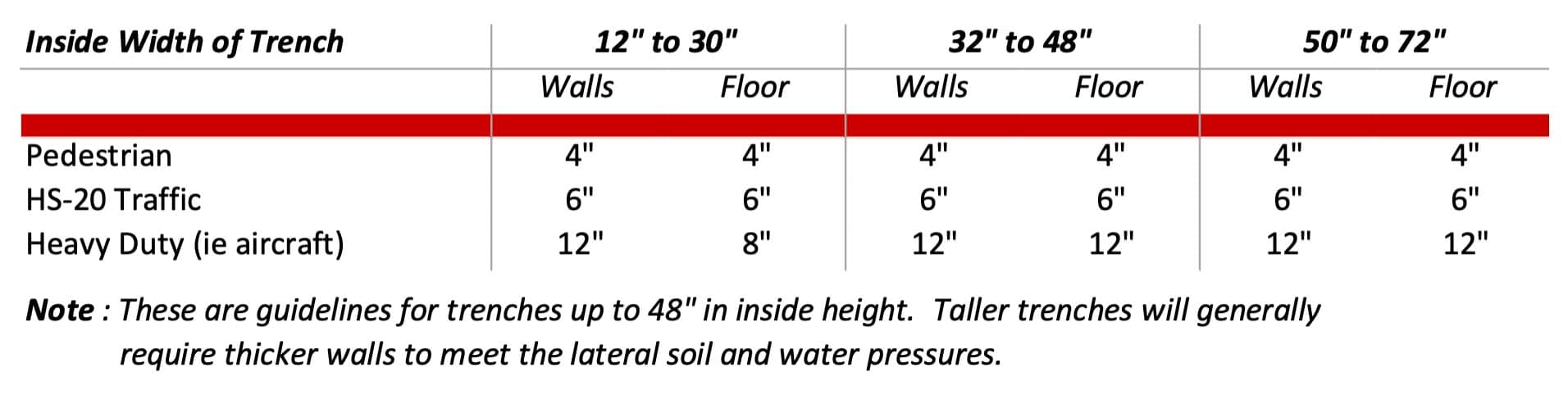
The concrete mix itself is a primary cost driver. Standard 30 MPa mix is economical, but special exposures require higher strengths or additives. A 40 MPa mix for a heavy industrial slab or sulfate-resistant concrete for certain Alberta soils can increase material costs by 15-25%.
Reinforcement is another key factor. Standard welded wire mesh is cost-effective, but high seismic zones or long spans may require extensive rebar cages or post-tensioning tendons, adding significantly to both material and labor costs.
Size, Dimensions, and Project Complexity
Larger panels are more efficient per square foot of concrete but require heavier cranes and more complex logistics. The sweet spot for cost efficiency is often in the 100-200 square foot panel size.
Complexity is a major cost multiplier. Unique shapes, non-standard thicknesses, or intricate architectural finishes require custom molds and more hands-on labor in the plant, pushing the price per piece upward.
Transportation, Installation, and Labor
Distance from the precast plant to your site is a direct line item. Hauling a load of panels from a plant in Airdrie to a site in Chestermere is far cheaper than delivering to a remote acreage near Bragg Creek.
Installation complexity drives labor costs. A simple, accessible ground-level install is quick. A tight downtown Calgary site with limited crane access and precise tolerances requires more crew time and specialized equipment, increasing the per-square-foot install cost.
Finishes, Additives, and Regional Variations in Alberta
Surface finish adds character and cost. A standard as-cast finish is most affordable. Sandblasted, exposed aggregate, or formliner patterns add $5-$15 per square foot. Integral color pigments or special sealants also contribute to the final price.
Regional variation within Alberta is real. Labour and operational costs in the Fort McMurray region historically run higher than in the Edmonton or Calgary corridors. Always get quotes based on your specific project location.
2026 Concrete Pricing Updates for Alberta
Looking ahead to 2026, we’re forecasting moderate price increases of 3-5% annually for precast concrete in Alberta. This is driven by sustained energy costs, carbon pricing mechanisms, and steady demand in both residential and commercial sectors.

Ready-Mix and Precast Concrete per Cubic Meter
As a benchmark, ready-mix concrete (the poured alternative) is expected to sit at $200-$280 per cubic meter in 2026. Precast concrete, which includes the value of forming, curing, and finishing in a controlled plant environment, commands a premium at $235-$330 per cubic meter for the raw material before shaping.
This premium is justified by reduced waste, faster on-site construction, and consistent quality unaffected by Alberta’s unpredictable on-site weather—a huge factor in our short build season.
MPa Strength Pricing Breakdown
Concrete strength, measured in Megapascals (MPa), directly influences price. A standard 30 MPa mix is the baseline. Upgrading to 35 MPa adds roughly 5-8% to the material cost, while a high-strength 40 MPa or 50 MPa mix can be 15-30% more expensive.
For most residential applications in communities like Tuscany or Shawnessy, 30-35 MPa is perfectly adequate. High-rise cores in the East Village or industrial foundations will require the higher-strength—and higher-cost—mixes.
Cost Comparison: Precast vs. Poured Concrete
The age-old question for any Alberta builder: precast or poured-in-place? The answer isn’t universal; it depends entirely on your project’s scale, timeline, and site constraints.
Precast often wins on speed and quality control, while poured concrete can be more flexible for unique forms. Let’s compare the dollars and cents.
| Factor | Precast Concrete | Poured-in-Place Concrete |
|---|---|---|
| Cost per sq ft (Installed) | $20 – $45+ | $15 – $35+ |
| Durability | Consistently High (Plant-cured) | Variable (Site-dependent) |
| Best For | Repetitive elements, tight schedules, weather-sensitive sites | Complex, one-of-a-kind shapes, sites with easy access |
| Calgary Climate Suitability | Excellent (Not weather-delayed) | Good (Seasonal limitations) |
| Maintenance Required | Low (High-quality finish) | Medium (Potential for curing issues) |
Slab and Foundation Cost Examples
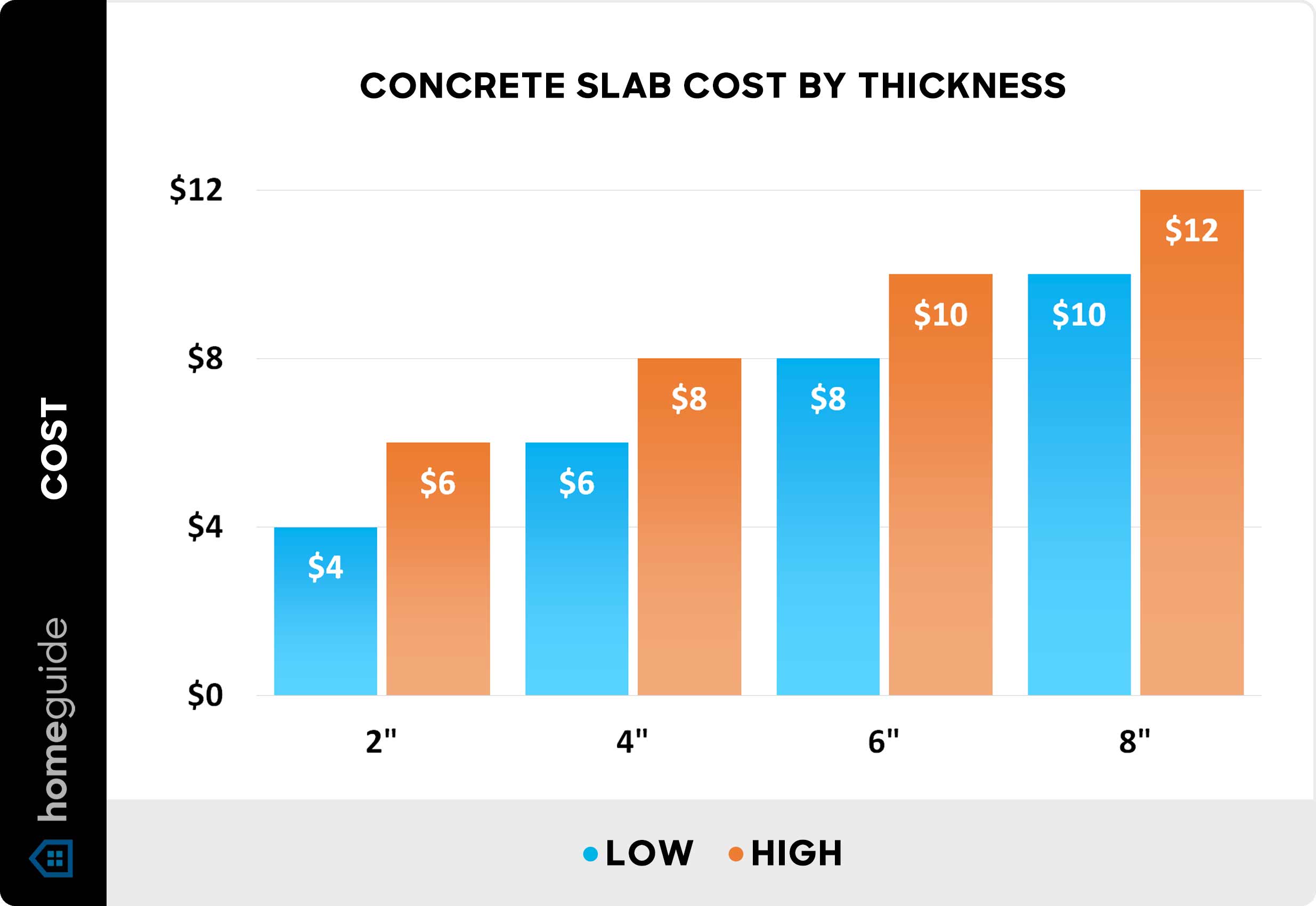
For a standard 4-inch thick garage slab (400 sq ft), a poured slab might cost $4,000-$6,000 ($10-$15/sq ft). A precast slab system for the same area could be $5,200-$7,200 ($13-$18/sq ft), but it can be installed in a day, ready for load immediately, with zero curing time.
For foundation walls, the gap narrows. A poured 8-foot high basement wall might run $45-$60 per linear foot. A precast foundation wall panel might be $50-$65 per linear foot installed, but it goes up in hours, not days, and is backfilled immediately, shaving weeks off the schedule.
The upfront price difference often shrinks when you factor in speed, reduced labour, and elimination of weather delays.
Alberta Precast Products and Applications
From the Rocky View County shop you’re planning to the multi-family project in University District, precast solutions are versatile. Understanding the applications helps match the product to the need.
Commercial, Residential, and Industrial Uses
Commercial projects heavily utilize precast for parking garages, office building facades, and retail big-box stores. The speed of erection is a massive financial advantage, getting the building enclosed faster.
Residential uses are growing. Beyond foundations, homeowners are choosing precast for garages, garden walls, and even entire wall systems for modern, efficient homes. Industrial applications, like the massive panels for warehouse walls around the Calgary Airport, rely on precast for its durability and rapid construction.
Estimating Total Project Costs
Translating square foot costs into a full project budget requires a few more calculations. It’s about more than just the concrete; it’s the full site-ready package.
Slab Size Cost Tables (e.g., 30×30, 20×20)
Let’s look at some common slab sizes using an average installed precast cost of $30 per square foot for a standard application. Remember, this is for the slab system itself, not including site excavation or granular base.
| Slab Size (ft) | Total Area (sq ft) | Estimated Slab Cost Range (CAD) | Notes |
|---|---|---|---|
| 20×20 | 400 | $12,000 – $14,000 | Typical double garage |
| 30×30 | 900 | $27,000 – $31,500 | Small workshop or large garage |
| 40×60 | 2,400 | $72,000 – $84,000 | Agricultural or light industrial building |
These ranges illustrate how scale affects budget. The unit cost often decreases slightly for larger projects due to efficiencies, but the total sum obviously grows.
Always factor in access: a 30×30 slab in an open backyard in Sundance is simpler than the same slab in a tight inner-city infill with limited crane access.
Permit Fees and Additional Expenses
In Calgary, building permits are mandatory for most structural precast work. Permit fees are typically calculated based on the project’s valuation, often ranging from 0.5% to 2% of the total construction cost.
Additional expenses can sneak up on you. These include site excavation and grading, a compacted granular base, crane rental and setup (if not included), engineering stamps for drawings, and any required landscaping or restoration after installation.
A detailed quote from a provider like OmegaPrecast will include a breakdown of these ancillary costs, so there are no surprises.
Key Takeaways and Savings Benefits
Navigating precast concrete costs in Alberta for 2026 comes down to a few core principles. First, always compare total installed costs, not just product prices. A slightly higher per-square-foot quote might include critical items another has omitted.
The major savings with precast aren’t always in the initial invoice. They’re in the schedule certainty, the reduced on-site labour, the superior finish quality, and the resilience against our climate. Getting your building enclosed before the first snowfall in November has immense value.
Finally, partner with a local expert who understands both the product and the prairie context. They can help you optimize the design for cost-efficiency without compromising strength or aesthetics. For a precise quote tailored to your Calgary project, reach out to OmegaPrecast today.