
Last updated: August 6, 2026
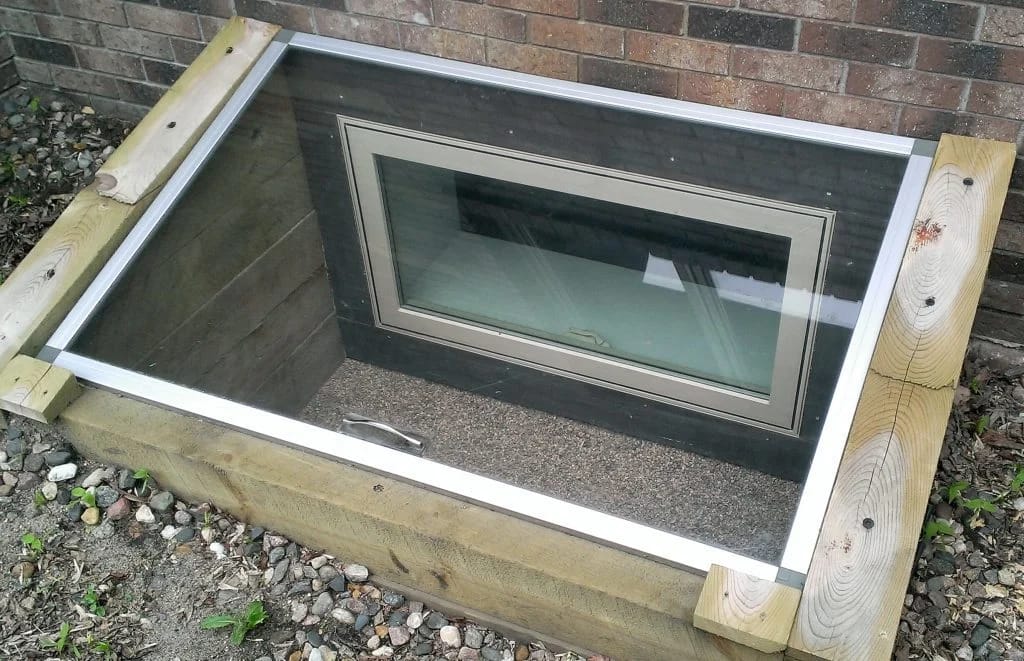
Window wells come in three materials: precast concrete, galvanized steel, and plastic. Precast is the only one where the finish is also the structure: molded stone-look faces and integral colour over a wall that takes soil load and shrugs off a Calgary winter, while steel rusts and bows and plastic cracks in freeze-thaw.
If you are shopping window wells for a basement bedroom, an egress upgrade, or a curb-appeal refresh, the material you pick decides two things at once: how the well looks from your yard, and whether it is still holding back your soil in ten winters. Here is how the three options actually behave in Calgary ground.
1. The three materials, honestly
There are three window well materials on the Calgary market, and they are not close substitutes. They differ in how they are built, what they cost up front, and how they age against frost.
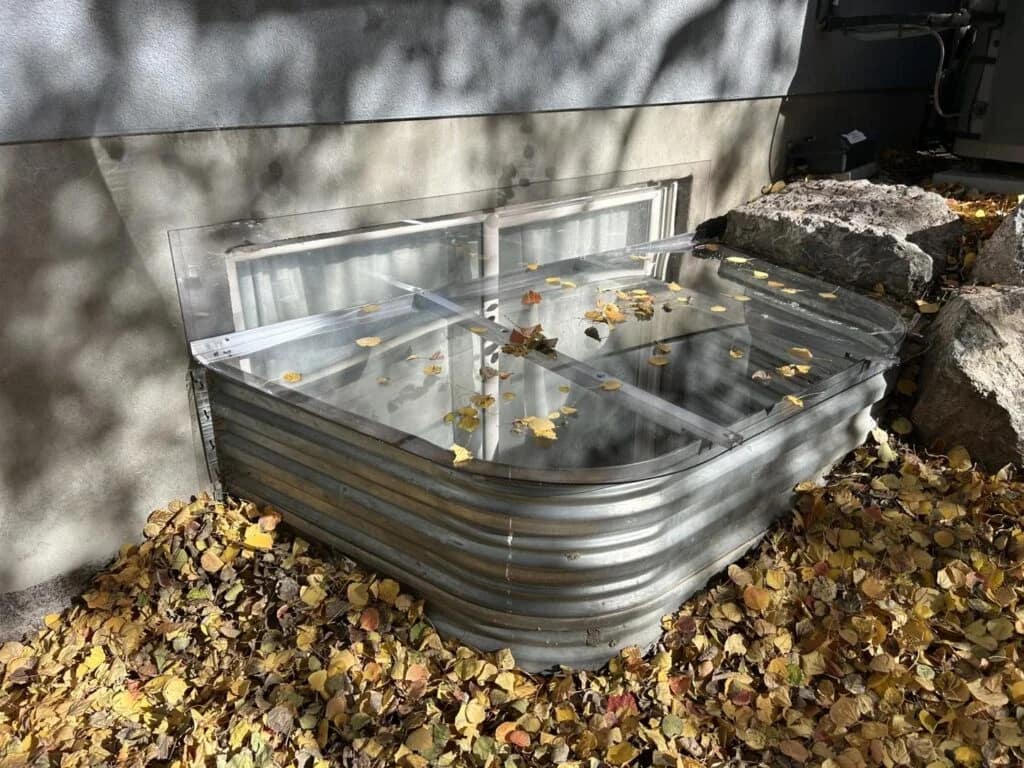
Corrugated galvanized steel is the ribbed metal well most people picture. It arrives light, installs fast, and is usually the cheapest option on the shelf. The zinc coating buys it years before rust starts, and the finish menu is narrow: bare galvanized, painted white, or a printed stacked-stone face. It is a real product with a real place, but it is a sheet-metal part sitting in wet, salted, freezing soil.
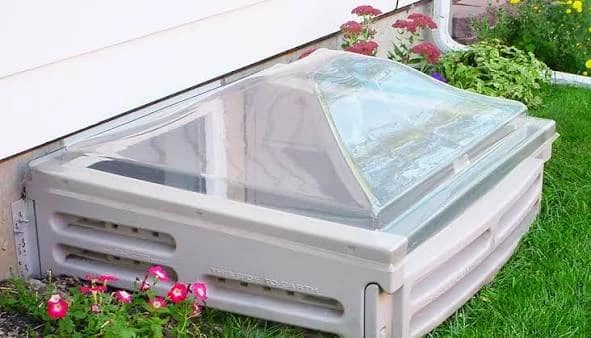
Plastic (polyethylene) wells are the moulded one-piece tubs, often sold with a decorative rock or terraced pattern pressed in. They are the lightest and easiest to carry, and colour is moulded through so it will not peel. The trade-off is structure: polyethylene is a thin plastic shell, and it is the least durable of the three when the ground loads it and the temperature swings.
Precast concrete is a cast wall, typically a semicircular or rectangular unit, made in a plant and delivered to site. It is the heaviest of the three and needs equipment to set. In exchange, the wall itself carries the soil load, the face can be cast as a stone-look texture, and the colour is mixed into the concrete rather than painted on. Precast concrete is governed by CSA A23.4-16 (R2021), Precast concrete: materials and construction, the Canadian standard for how these units are made and finished. In plain terms, that standard is the reason a precast well is a manufactured structural product, not a decorative liner.
The honest summary: steel wins on price and weight, plastic wins on weight and ease, and precast wins on structure, finish, and how it ages. For a permanent basement window in Calgary ground, those last three are the ones that cost you later.
2. Precast finishes: the molded stone look and colour
The reason precast stands out in a yard is that the good-looking part and the load-bearing part are the same piece of concrete. The finish is not a wrap, a paint, or a printed panel clipped to the front. It is cast into the face of the wall.
Precast window wells are made against a form, so a patterned form-liner presses a stone texture straight into the concrete surface while it cures. The common looks are chiseled-granite, stacked-stone, and ledgestone faces, and because the relief is moulded into the wall, it does not fade, flake, or delaminate the way a surface-applied finish can. The wider precast industry documents this whole menu of colours, forms, and textures (see the PCI reference in Sources); Omega Precast keeps residential window wells in the molded-stone-texture band rather than the architectural panel finishes.
Colour works the same honest way. Precast is coloured with integral iron-oxide pigment batched into the mix, so the tone runs all the way through the wall instead of sitting on top. Iron oxide is UV-stable and permanent, which is why coloured precast holds its tone for years rather than chalking off like a dye. The natural palette is earth tones: greys, charcoals, tans, browns, and reds. That is a real limit worth knowing before you shop.
A cured precast piece almost always reads more muted than the little colour card, a “true black” is realistically a deep charcoal, and bright blues or greens are not what this product does. None of that is a defect; it is how mineral pigment in grey cement behaves, and a supplier who tells you that up front is setting you up to be happy with the well you actually receive.
Two practical notes carry into any colour choice. First, batch-to-batch consistency is the producer’s job, not yours: one cement source, one aggregate source, and a controlled mix are what keep two wells looking like a matched pair. Second, a UV-resistant penetrating sealer is a legitimate maintenance step, not an upsell. It deepens and protects the colour and cuts down efflorescence, the faint white mineral bloom that shows most on dark surfaces and is often mistaken for fading.
3. Why steel and plastic struggle in Calgary
Calgary ground is a hard test for a window well. Soil freezes and thaws repeatedly through the season, meltwater and de-icing salt run down beside the foundation, and the backfill leans on the well the entire time. Each material fails that test in its own way.
Steel rusts and bows. Galvanized steel is protected by its zinc layer, and that layer is finite. Once it is scratched, cut at the ends, or simply worn down by years of wet salted soil, the steel underneath begins to corrode, streak, and thin. As it thins it loses stiffness, and a corrugated steel well can bow inward under steady soil pressure, distorting the shape and pulling at its fasteners. Repainting slows the cosmetic side but does not restore the structure, and paint on the inside of a soil-loaded well is a maintenance chore that recurs.
Plastic cracks in freeze-thaw. Polyethylene does not rust, which is a genuine advantage over steel. Its weakness is the cold and the load. A thin plastic shell has limited stiffness against backfill pressure, and repeated Calgary freeze-thaw cycling makes rigid plastic more brittle over time. Frost-heaved soil, a dropped tool, or a footstep on the rim can crack or split a plastic well, and a cracked structural well is no longer doing its job.
Precast concrete meets the same three stresses differently. It does not rust, because there is no exposed structural steel to corrode. It is built for freeze-thaw resistance, so the wall does not go brittle the way plastic can. And it takes the soil load in compression, which is what concrete is best at, so it holds its shape under backfill that would bow steel or crack plastic. One more Calgary-specific point: because these wells sit in ground contact, sulphate-resistant Type HS cement is the durable choice for Alberta’s sulphate-bearing soils, the same logic that governs any buried concrete here.
4. The real job: egress and soil load
It is easy to shop window wells as a landscaping accessory. Structurally, they are doing two jobs at once, and both matter for a basement bedroom.
Job one is holding back soil. A window well is a small retaining wall. It keeps the backfill from collapsing against the glass and gives the below-grade window an open pocket of air and light. That backfill exerts real, continuous pressure, and it is exactly the load that bows corrugated steel inward and cracks a thin plastic shell over time. A precast wall is designed to take that lateral soil pressure without deforming, which is the whole point of using a structural material for a structural job.
Job two is escape. If the basement has a bedroom, the code treats that window as an emergency exit and rescue opening, and the well has to be sized and shaped so a person can actually get out and a firefighter can get in. The well cannot be so shallow, so narrow, or so obstructed that it defeats the window it protects. A material that bows, cracks, or distorts over the years is not just cosmetic damage, it can compromise the clear opening you are relying on in an emergency.
That is a strong argument for a well whose shape does not change under load. Confirm the exact egress dimensions and any cover or ladder requirements with the City of Calgary or your permit authority, because those numbers govern whether the window well is legal for a bedroom, not the finish on its face.
Put together, the two jobs explain why “which looks nicest” is the wrong first question. The first question is which material still holds its shape and its opening after a decade of Calgary frost, and then, among the ones that do, which finish you like.
Choosing the right material is only half of the equation. Proper drainage, egress clearance, and long-term rust prevention determine whether a window well continues performing after years of Calgary freeze-thaw cycles. Read our Window Wells 101: Drainage, Egress, and Rust-Proofing Your Basement guide to understand installation best practices, drainage design, code considerations, and maintenance tips before making your final decision.
5. Choosing a precast well for your basement
If precast is the material, here is how to shop it without guessing, in the order the decisions actually matter.
Start with the opening, not the finish. Measure your window and confirm the egress requirement for the room before you fall in love with a stone texture. Get the well sized to the window and to code first; the face pattern is the last decision, not the first.
Pick a finish and colour you have seen in daylight. Choose from the moulded stone looks (chiseled-granite, stacked-stone, ledgestone) and the earth-tone palette, and set your expectation from a cured sample outdoors rather than a screen or a printed swatch. Remember the honest limits: the real piece reads more muted than the card, and a true black is a deep charcoal. Ask about a UV-resistant sealer if you want the colour to stay rich and the efflorescence to stay quiet.
Ask the supplier the questions that separate producers. Is the mix using sulphate-resistant Type HS cement for our soils? How do you keep colour consistent batch to batch? What sealer and maintenance do you recommend, and how is the well set and drained on site? A producer who answers those plainly is showing you the discipline behind the wall. On verification, you can check a producer’s quality credentials independently: the Canadian Precast Concrete Quality Assurance (CPCQA) program is a buyer-verification framework, so treat it as something you confirm about any producer rather than something you take on faith.
Treat price honestly. Across the three materials, precast is generally the higher up-front number and steel or plastic the lower one, but the ownership math runs the other way once rust, repainting, bowing, and cracking enter the picture. Window well pricing moves with size, finish, and site access, so validate any figure against current Calgary quotes rather than a number off the internet.
Choose on the ten-winter view, not the delivery-day view. The material that still holds its shape, its colour, and its clear opening after a decade of Calgary frost is the one that was actually the cheaper decision.
FAQ
Q1: Are plastic window wells any good? Plastic (polyethylene) wells are the lightest and easiest to install, and their moulded-through colour will not peel, so for a shallow, low-load spot they can be serviceable. Their weakness is structure in cold ground: a thin plastic shell has limited stiffness against soil pressure, and repeated Calgary freeze-thaw makes rigid plastic more brittle, so it can crack or split under backfill, frost heave, or impact. For a deep or egress window carrying real soil load, they are the least durable of the three materials.
Q2: How is a precast window well different from a steel one? The core difference is that in precast the finish and the structure are the same wall of concrete, while a steel well is a sheet-metal part with a separate coating. Precast takes soil load in compression without deforming, does not rust, and carries a moulded stone-look face with integral colour. Galvanized steel is lighter and cheaper up front, but its zinc coating is finite, so over years in wet salted soil it can rust, streak, and bow inward under backfill.
Q3: What finishes and colours do precast window wells come in? Precast wells are cast against a patterned form-liner, so a stone texture is moulded straight into the face; common looks are chiseled-granite, stacked-stone, and ledgestone. Colour comes from integral iron-oxide pigment batched into the mix, so it runs through the wall and does not fade like a surface dye. The natural palette is earth tones: greys, charcoals, tans, browns, and reds.
Q4: Why does my precast well look more muted than the colour sample? Precast is coloured with mineral iron-oxide pigment in a grey-cement base, so the cured piece almost always reads more muted than the small colour card, and a “true black” is realistically a deep charcoal. That is normal behaviour for integral pigment, not a defect. A faint white bloom that looks like fading is usually efflorescence, a surface mineral deposit that a UV-resistant penetrating sealer helps control while it protects the colour.
Q5: Will a precast window well survive Calgary winters? Yes, that is where precast has the clearest edge. It does not rust because there is no exposed structural steel, it is built for freeze-thaw resistance so it does not go brittle the way plastic can, and it carries soil load in compression, which is what concrete does best. For Alberta’s sulphate-bearing soils, sulphate-resistant Type HS cement is the durable choice for a buried, ground-contact unit like a window well.
Q6: Does the material affect basement egress requirements? The code sets the required clear opening for an emergency escape and rescue window regardless of material, but the material affects whether that opening stays intact over time. A well that bows, cracks, or distorts under years of soil load can compromise the clearance you rely on in an emergency, which is an argument for a well whose shape does not change. Confirm the exact egress dimensions and any cover or ladder rules with the City of Calgary or your permit authority.
Sources
- CSA A23.4-16 (R2021), Precast concrete: materials and construction — CSA Group — https://www.csagroup.org/store/
- PCI — Architectural finishes: colors, forms, and textures — Precast/Prestressed Concrete Institute — https://www.pci.org/PCI/Design_Resources/Architectural_Resources/Finishes_-_Colors__Forms__and_Textures.aspx
- City of Calgary — building permits and egress window requirements — https://www.calgary.ca/
- CPCQA — Canadian Precast Concrete Quality Assurance (buyer-verification framework) — https://www.precastcertification.ca/en/certification_specification/
About Omega Precast
Omega Precast launched in late 2025 as the precast arm of the Omega Group, supplying residential precast concrete stairs and steps, window wells, and septic tanks to the Calgary region. We build to CSA A23.4-16 (R2021) and speak plainly about finish, colour, and how a precast unit ages in Alberta ground.