
Last updated: August 6, 2026
Underground municipal infrastructure — manholes, utility vaults, catch basins, and box culverts — is precast by default for four reasons. Speed: precast units install fast, so trenches and roadways reopen sooner instead of waiting on forming, casting, and curing in the ground. Quality control: factory production gives a high degree of quality and uniformity, with superior strength and durability that a cast-in-place pour in a wet, cold trench can’t reliably match.
Standards: precast underground products are made to documented specifications (ASTM C478 and CSA A257 for manholes, ASTM C1433 and AASHTO M259 for box culverts, ASTM C857 and C858 for utility structures) and produced in certified plants with regular audits, so the buyer gets a repeatable, verifiable product. Durability and reduced backfill dependence: high-strength precast is highly resistant to chlorides, sulphates, and freeze-thaw, and is less dependent on backfill and can withstand more aggressive compacting. In a Chinook climate with sulphate soils and short construction seasons, those four advantages make precast the structural default underground.
This is widely assumed and rarely assembled into one sourced thesis localized to Calgary’s frost, sulphate ground, and road-closure economics. Meeting ASTM and CSA standards is only one step. Before municipalities specify a product, manufacturers must also complete a formal approval process. Read How Precast Gets Onto a Municipal Approved-Products List to see how testing, documentation, certification, and municipal review determine whether a product can be specified on public infrastructure projects.
Reason 1: Speed and road-closure economics
The first reason is time, and underneath it is money the municipality cares about: how long the trench and the road stay open.
Precast culverts “install fast, provide the highest level of strength and durability, are less dependent on backfill, require little to no maintenance, can withstand more aggressive compacting and are manufactured locally.” Precast manhole systems “install quickly with no field welds,” providing “long-lasting, corrosion-free service in nearly all wastewater environments,” which “reduce[s] project timelines and on-site disruption.”
(Sources: NPCA, Box & 3-Sided Culverts, https://precast.org/precast-product/box-culverts/ ; NPCA, Manholes, https://precast.org/products/manholes/ .)
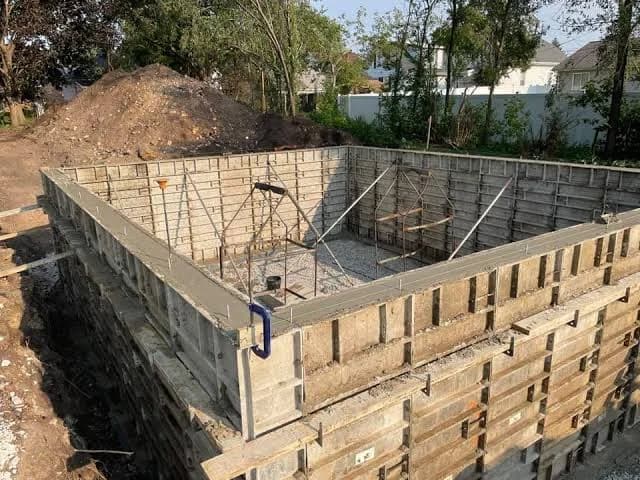
A cast-in-place structure has to be formed, poured, and cured in the trench, which keeps the excavation and often the roadway open for days. A precast unit arrives cured and gets set in hours. That difference is the municipal metric that matters most: shorter open-trench duration, shorter lane and road closures, less public disruption on a busy Calgary arterial. Speed underground is a closure-time and public-cost saving, not a convenience.
Reason 2: Factory quality control and uniformity
The second reason is that a factory makes a better buried structure than a trench does.
NPCA puts it directly: precast concrete culverts offer “a high degree of quality and uniformity, design flexibility, superior strength and durability, reduced weather dependency during installation, and reduced impact to the job site.” (Source: NPCA, Box & 3-Sided Culverts, URL above.)
The reason is the environment. Casting a structure in a cold, wet, open trench introduces variables a plant controls: temperature, mix consistency, curing, dimensional accuracy. A precast plant casts in repeatable conditions, so every manhole barrel and every box section comes out to the same strength and the same dimensions. For a buyer, that uniformity is what makes the product predictable: you know what you’re installing because it was made the same way every time. (Note: the manufacturer language here, “superior” and “highest level,” is NPCA’s claim, cited as such.)
Reason 3: Documented standards and certified plants
The third reason is that precast underground products are backed by documented, verifiable standards. That there’s a dedicated standard for each buried product is itself evidence that precast is the default.
The stack is specific. Manholes are made to ASTM C478/C478M-22 or, in Canada, CSA A257.4:24. Box and three-sided culverts go to ASTM C1433 / AASHTO M259 (and C1577 for HL-93 box sections). Underground utility structures use ASTM C857 for design loads plus C858 for the product.
(Sources: ASTM C478/C478M-22, https://store.astm.org/c0478_c0478m-22.html ; CSA A257 Series:24, https://www.csagroup.org/store/product/2427206/ ; NPCA box culverts (C1433/M259), https://precast.org/precast-product/box-culverts/ ; ASTM C857, https://store.astm.org/c0857-07.html ; C858, https://store.astm.org/c0858-19.html .) For a plain-English decoder of these, see the load-ratings piece.
On top of the product standards is plant certification. “All fabrication assures quality control and dependable structural integrity that exceeds concrete strength requirements and governing standards.” In the US, NPCA certifies plants with annual inspections, and a large share of state Departments of Transportation require that plant certification on projects using precast. The Canadian counterpart is CPCQA, which certifies plants for the concrete-pipe-and-drainage-product category among others.
(Sources: NPCA, Manholes, URL above; CPCQA Certification Program, https://www.precastcertification.ca/en/certification_program/ .)
The takeaway for a buyer: you get a repeatable, verifiable product. Confirm the plant’s certification for the right category and confirm the product meets the referenced standard, the mechanics of which are in the municipal-approval piece. For a Calgary project, cite CPCQA and CSA A257 as the Canadian equivalents; NPCA certification is the US program.
Reason 4: Durability and reduced backfill dependence
The fourth reason is that buried structures live in a hostile environment, and high-strength precast is built for it.
The Canadian authority is blunt. High-strength factory precast is “highly resistant to attack by chloride ions” and gives “great resistance to ground waters, freeze and thaw cycles, salts, and other chemicals to which these structures are usually exposed.”
(Sources: CPCI, durability, https://wsmtp.cpci.ca/en/precast_solutions/parking_garages/ ; CPCI, Infrastructure, https://www.cpci.ca/en/precast_solutions/products_systems/infrastructure .) Those are exactly the conditions in the ground: salty runoff, sulphate groundwater, and repeated freezing.
There’s also an installation-durability point. Precast is “less dependent on backfill” and “can withstand more aggressive compacting” than many alternatives. A flexible pipe or a weaker structure relies on near-perfect backfill to perform; a high-strength precast structure carries more of its own load, which makes the installation more forgiving and the long-term performance more reliable.
And under a road, concrete is simply the material for the job. As one supplier notes, “there are few construction materials designed to withstand these types of [H-20/HS-20] loadings other than concrete and cast iron / ductile iron.”
(Source: Locke Solutions, “Translating HS-20 Traffic Lingo,” https://lockesolutions.com/translating-hs-20-traffic-lingo/ .) Buried structures under traffic have to carry vehicle loads, and precast concrete is the standard answer.
The default spans the whole buried-product family
“Precast-by-default” isn’t one product. It’s the whole family. Precast box and three-sided culverts “convey stormwater or wastewater, create short-span bridges and access ways, or [provide] rainwater retention or detention,” manufactured “in a wide range of sizes and configurations.” Manholes, catch basins, vaults, box culverts, barriers, and lock-blocks are all precast. The breadth is part of the point: across nearly every buried municipal product, precast is the form the work takes.
The Calgary layer
Calgary’s ground and climate don’t just allow precast underground. They make it more clearly the default than in milder places.
Sulphate and frost are concrete’s home turf. Calgary’s S-2 sulphate soils, frost depth past 1.2 m, and roughly 128 freeze-thaw cycles a year are exactly the conditions CPCI says precast resists. So “precast-by-default” is more true in Calgary than in a mild climate, because the durability the structure needs is precisely what high-strength precast provides.
The short season favours arrive-cured precast. Calgary’s roughly six-month cold-weather pour window punishes casting in a trench, where curing and heating fight the cold. Precast arrives cured and installs year-round, the weather-independence NPCA describes.
Road-closure economics on Calgary arterials. Faster installation means shorter lane and road closures on busy roads, a tangible municipal and public-impact win that grows with traffic volume.
The spec library is written around precast. The City of Calgary’s sewer and manhole specs and Alberta Transportation’s standard manhole drawings (such as CB6-2.10M9) assume precast. The spec library itself is evidence of the default.
(Source: City of Calgary and AT specs, per the municipal-approval piece.)
Omega Precast enters this category as a Calgary solid-concrete precast manufacturer. The durability, strength, and standards points here are industry and standards data for what precast can do, framed as category education, not asserted Omega product results or a claim of completed infrastructure work. We position the capability to supply to the referenced standards and the climb up the municipal-approval ladder.
When cast-in-place still has a place underground
The honest counterpoint. Cast-in-place still gets used underground for large, one-off structures with geometry no standard precast section fits, for tie-ins and transitions that have to be formed in place, and where a structure is so unusual that no catalogued precast product applies. For the standard, repeatable buried products (manholes, catch basins, vaults, box culverts), precast is the default precisely because those products are standardized, and Calgary’s ground and climate make that default stronger.
FAQ
Why are manholes and utility vaults almost always precast, not poured in place? Four reasons: speed (and the shorter road closures it brings), factory quality control and uniformity, documented standards and certified-plant production, and superior durability, none of which a wet-trench pour can reliably match.
Is precast faster than cast-in-place for underground infrastructure? Yes. Units arrive cured and install fast, with no field welds on manhole systems, which shortens open-trench time and road closures.
Why is factory-made precast higher quality for buried structures? Controlled factory conditions give consistent strength and dimensional uniformity, versus casting in a cold, wet, open trench where temperature, mix, and curing all vary.
What standards make precast underground products reliable? ASTM C478 or CSA A257 for manholes, ASTM C1433 / AASHTO M259 for box culverts, and ASTM C857 / C858 for utility structures, plus certified-plant production (CPCQA in Canada).
Is precast durable enough for Calgary’s ground? Yes. High-strength precast resists chlorides, sulphates, groundwater, and freeze-thaw, the exact conditions in Calgary’s S-2 sulphate soils and freeze-thaw climate.
Does precast really reduce backfill problems? Yes. Precast is less dependent on perfect backfill and can withstand more aggressive compaction than many alternatives, which makes the installation more forgiving.
Is cast-in-place ever the right call underground? For large one-off structures with non-standard geometry or for tie-ins formed in place. For the standard repeatable buried products, precast is the default.
Building municipal infrastructure in Calgary?
Whether you’re supplying a subdivision, utility upgrade, commercial development, or municipal tender, the right precast supplier should offer more than products—they should understand standards, certification, scheduling, and approval requirements.
Talk with Omega Precast about precast manholes, utility vaults, catch basins, box culverts, and other underground concrete products built to Canadian specifications. We’ll help you determine the right solution for your project, explain applicable ASTM and CSA standards, and discuss how our products fit into municipal approval requirements.
Contact Omega Precast today to discuss your upcoming infrastructure project.