
Last updated: August 6, 2026
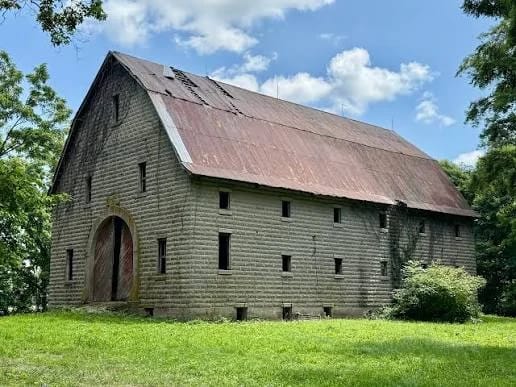
A typical farm mortgage runs 20 to 30 years. A solid, well-built concrete structure can deliver an 80-to-100-plus-year service life. That mismatch is the whole point: a concrete barn keeps earning for two to four mortgage cycles after the loan that built it is paid off, so it becomes an asset the next generation inherits rather than rebuilds. The precast industry documents a 100-year service life for precast and prestressed concrete, and the catch worth stating plainly is that the long life depends on doing the basic maintenance; the industry maintenance manuals recommend periodic inspection.
It is “build it once,” not “build it and ignore it.” For a family farm planning past the current operator, that durability is the argument, and it is why a 25-year-old Western-Canadian precaster built its business on the promise of “a structure that will meet your needs for generations to come.”
This article is about permanence as a value, not about price or chemistry. (For the dollars-over-30-years math, see “Precast vs Post-Frame: The 30-Year Cost of a Farm Shop”; for why concrete survives the barn environment chemically, see “Why Dairy Barns Are Going Concrete”.) The case here is simpler and longer-range: you finance a building over a loan, but the right building keeps producing value long after the loan is gone. One clarification first. The lifespan figures below are for solid concrete, which is what Omega Precast supplies.
The mortgage and the building are on two different clocks
Most farm buildings get financed and thought about on the loan’s clock. You borrow, you amortize over 20 or 30 years, you pay it off, and somewhere in there the building is supposed to have earned its keep. That framing quietly assumes the building and the loan retire together.
They do not, if you build in concrete. A well-built concrete structure runs on a far longer clock than any mortgage. Independent building sources put well-built concrete foundations at “100+ years” and “80 to 150+ years.”
(Source: DIY Pole Barns, “How Long Do Pole Barns Last,” https://www.diypolebarns.com/learn/how-long-do-pole-barns-last/ .)
The precast industry is more specific: “Precast, prestressed concrete can deliver a 100-year service life,” and it “requires less future maintenance and has a longer lifespan than traditional construction.”
(Source: Precast/Prestressed Concrete Institute, “DURABLE,” https://www.pci.org/PCIMS/PCIMS/News_Events/forTomorrow/Durable.aspx .)
Set the two clocks side by side and the picture is stark. The loan is gone in 20 to 30 years. The building is barely a third of the way through its life. That gap, the decades of service after the debt is retired, is where a concrete barn quietly becomes one of the better investments on the farm.
Two to four mortgage cycles of earning
Here is the arithmetic that makes the headline real.
A concrete asset with an 80-to-100-year service life spans roughly two to four typical 20-to-30-year mortgage cycles. That is not a financing claim; it is a ratio between a documented service life and a common loan term. The first cycle is the one you pay for. Every cycle after that is the building working for free, structurally speaking, while the next operator runs it without a building loan against it.
Think about what that means for the farm’s balance sheet across a generation. A building you might re-post, re-skin, or replace inside 30 years carries a recurring capital cost. A concrete building you specify once and maintain carries that cost a single time and then keeps producing. Over the life of a family operation, “built once” versus “rebuilt every couple of decades” is one of the larger structural decisions an owner makes, and it almost never shows up on the day-one quote that drives most building decisions.
The point is not that concrete is free after year 30. It is that the expensive part, the structure, is done. That is what “outlives the mortgage” actually buys you.
The catch, stated plainly
A page that promises a 100-year building and skips the conditions is selling, not informing. So here is the condition, in full.
The long service life assumes upkeep. The precast maintenance guidance is explicit: with periodic inspection per the maintenance-manual schedule, “precast structures can last longer and for lower cost, without ever needing an expensive overhaul.”
(Source: CPCI Maintenance & Inspection Manual, via RDH, https://www.rdh.com/resource/cpci-maintenance-and-inspection-manual-for-precast-concrete-building-enclosures/ ; PCI “DURABLE,” URL above.) The industry manuals recommend annual or semi-annual inspections.
So “build it once” does not mean “build it and forget it.” It means the maintenance is light, predictable, and cheap relative to the asset, not that it is zero. Check the structure on a schedule, address small things while they are small, and the 100-year figure is realistic. Ignore it for decades and you are running a risk no material removes. That honesty is the version of the durability claim an experienced operator can actually trust, because it matches how every real building behaves.
Why this is the strongest case for a building you will pass on
For a farm that plans past the current operator, permanence is not a feature; it is the entire decision. The building you put up is something the next generation either inherits or has to rebuild, and that is a different question than “what is cheapest this season.”
This is exactly the frame the established concrete-ag category uses. The Western Canadian precast-agriculture sector has marketed concrete-ag buildings on the same generational frame for 25+ years: an 80+ year service life, minimal maintenance, and a structure the next operator runs instead of rebuilds. The precast-concrete industry’s documented service-life for properly-built concrete structures sits in the 80–100+ year range.
(Source: PCI “DURABLE” service-life documentation, https://www.pci.org/PCIMS/PCIMS/News_Events/forTomorrow/Durable.aspx ; Concrete Alberta industry-category overview.)
We use the generational frame here because it is the real frame in this category, not a tagline anyone invented. The reason it lands is structural: a building that lasts a century is, by definition, a building the next operator runs instead of replaces. For a generational owner, succession is often the underused lens on a building decision, and it is the one that fits concrete best.
A note on what this article deliberately does not lead with: speed. A concrete building can go up efficiently, but the generational buyer cares more about permanence than about a crane day. The argument for this reader is the 100-year horizon, not the install schedule.
Where Omega fits, honestly
Omega Precast is a Calgary solid-concrete precast manufacturer that launched in late 2025 and is entering the agricultural category. The right way to read everything above is as the documented potential of the material and the established record of the category, not as a tally of barns Omega has already delivered. Our value is the capability to supply solid precast elements built to the durability spec that earns the long service life; the century-long category itself is what proves the approach works.
If you are weighing a generational building, the honest summary is this. The 100-year service life is documented by the industry, it is real, and it is conditional on light, regular maintenance. Built and maintained that way, a concrete barn is the rare farm asset that outlives the loan that paid for it, and then keeps working for the people who come after you.
The Alberta angle
Three local facts sharpen the generational case.
The family farm is the Alberta archetype. The Calgary and Central-Alberta orbit is full of capital-disciplined, multi-generational operations, the exact owner for whom “build once, pass it on” is the deciding frame rather than a slogan.
Alberta ground tests the longevity claim, and concrete is built to pass. Calgary sees roughly 128 freeze-thaw cycles a year. The 80-to-100-year figure holds up here because the right concrete is air-entrained and low-water, engineered for exactly that cycling.
Longevity is your choice, not the code’s. Most low-occupancy Alberta farm buildings are exempt from the building, energy, and fire codes, and Alberta has not adopted the National Farm Building Code, which is a non-mandatory model code.
(Sources: Alberta Farmer Express, “Farm building rules getting a rethink,” https://www.albertafarmexpress.ca/news/farm-building-rules-getting-a-rethink/ ; Rural Municipalities of Alberta resolution 26-99F, https://rmalberta.com/resolutions/26-99f-definition-of-a-farm-building-under-the-alberta-building-code/ .)
So “build it once for the next generation” is a deliberate investment decision an owner makes, not a requirement the building code imposes. The freedom is exactly why the long view is worth taking on purpose.
FAQ
How long does a concrete barn last? A solid, well-built concrete structure can deliver 80 to 100-plus years. The precast industry documents a 100-year service life for precast and prestressed concrete, and independent building sources put well-built concrete at 80 to 150-plus years.
Does a concrete building really last 100 years? Yes, with basic upkeep. The precast maintenance manuals recommend periodic inspection, and on that schedule the structure can reach a century without an expensive overhaul. It is “build it once,” not “build it and ignore it.”
Will a concrete barn outlast its mortgage? A typical farm mortgage runs 20 to 30 years. A concrete asset with an 80-to-100-year life spans two to four such cycles, so it keeps earning long after the loan that built it is paid off.
Is concrete worth it for a building I’ll pass to my kids? That is its strongest case. A century-scale building is one the next operator inherits and runs rather than rebuilds, which makes it a generational asset rather than a recurring capital cost.
What maintenance does a concrete ag building need? Periodic inspection per the precast maintenance-manual guidance, typically annual or semi-annual. The upkeep is light and predictable relative to the asset, but it is not zero.
Is this lifespan figure for those insulated wall panels? No. The figures here are for solid concrete, which is what Omega Precast supplies, not for a composite or insulated panel system.
Build Once. Pass It On.
A farm building should outlast the loan that paid for it. Omega Precast manufactures solid precast concrete building components designed for Alberta’s demanding agricultural conditions, giving owners a structure built for decades of dependable service.
Talk with Omega Precast about your next livestock barn, machinery shop, or agricultural building.