
Last updated: July 6, 2026
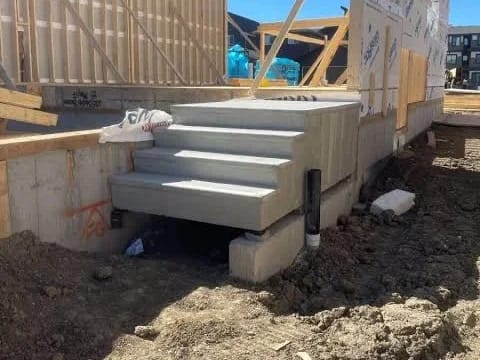
A Calgary precast specification is built on one core reference, CSA A23.4, “Precast concrete — Materials and construction,” layered with the local durability requirements of CSA A23.1:24. A drop-in spec block should do four things. First, reference CSA A23.4 for the precast work and require the plant be certified under the CPCQA program for the relevant product category.
Second, reference CSA A23.1:24 for concrete materials and set the Calgary exposure classes, typically S-2 (severe sulphate) requiring Type HS, HSb, or HSe cementing materials at a maximum 0.45 water-to-cement ratio and a minimum 32 MPa at 56 days, plus the applicable F-class freeze-thaw and, for agricultural work, the A-class exposure.
Third, specify the 1.2 m design frost depth and Category-1 air entrainment. Fourth, require the precaster’s engineering be authenticated by a P.Eng. under an APEGA Permit to Practice. The goal is to name the standard, the certification, the Calgary exposure classes, and the engineering authority explicitly, so the certification and engineering chain is effortless to verify.
This is the most directly useful page in the specifier set: a drafting tool, not a chemistry lesson. (For what the CPCQA categories mean and how to verify a plant, see “A Specifier’s Guide to CPCQA Categories”. The clauses below are annotated drafting guidance you can adapt into a project manual, with every requirement tied to its standard. Confirm editions and your site conditions at the time of writing.

The anchor: CSA A23.4
Every precast spec starts here. CSA A23.4 (current edition A23.4-16) governs the “manufacture, transportation, and installation of architectural, structural, and specialty precast.” It requires production by a CPCQA-prequalified plant, references the PCI MNL-116 and MNL-117 quality manuals, and defers to CSA A23.1 for materials and methods and to CSA A23.3 for structural design.
(Sources: CSA A23.4-16 via ANSI ; Codes and Standards.)
So the anchor clause names A23.4, ties the plant to CPCQA, and points to A23.1 and A23.3 for the layers underneath.
Anchor clause (drafting guidance). “Precast concrete shall conform to CSA A23.4, latest edition, and shall be produced by a plant certified under the Canadian Precast Concrete Quality Assurance (CPCQA) program for the [insert product group/category, e.g., Group C — Commercial/Structural] applicable to the work of this Section. Materials and methods shall conform to CSA A23.1; structural design shall conform to CSA A23.3.”
Fill the bracket with the right CPCQA category for your element.
The Calgary sulphate clause
This is the clause that localizes any precast spec to Calgary ground, and it is the one a generic master spec will not give you. Calgary soil is commonly S-2, a severe sulphate exposure (0.20 to 2.0% soluble sulphate in soil). The S-2 requirement is sulphate-resistant cementing materials, Type HS, HSL, HSb, HSLb, or HSe, at a maximum 0.45 water-to-cement ratio and a minimum 32 MPa at 56 days.
(Source: RMCAO, “Classes of Exposure” TS03 © 2025)
Sulphate-exposure clause (drafting guidance). “Where concrete is in contact with sulphate-bearing soil or groundwater, provide exposure class S-2 in accordance with CSA A23.1:24: cementing materials Type HS, HSb, or HSe; maximum water-to-cementing-materials ratio 0.45; minimum compressive strength 32 MPa at 56 days. Confirm site sulphate concentration by geotechnical testing; adjust the S-class if testing indicates S-1 or S-3.”
The caveat in that last sentence is not boilerplate. Calgary is commonly S-2, but you should require a site soil test rather than assume the class universally. A geotechnical sulphate result governs the actual exposure class for the project.
The Type HSe equivalency clause
A small Alberta drafting reality that prevents a spec from being accidentally restrictive. In Alberta, sulphate-resistant cement is often supplied as Type HSe, an HS-equivalent: Type GU or GUL blended with supplementary cementing materials, validated to CSA A3004-C8. If a spec demands “Type HS” narrowly, it can rule out the HSe blends that are the normal Alberta supply.
(Source: Concrete Alberta Technical Bulletin)
Cement-equivalency clause (drafting guidance). “Sulphate-resistant performance may be achieved using Type HS, HSb, or HSe cementing materials, where HSe denotes an HS-equivalent blend validated in accordance with CSA A3004-C8. Blended SCM mixes meeting the HS-equivalent requirement are acceptable.”
Allowing HSe keeps the spec aligned with what Alberta plants actually run, without lowering the durability bar.
The freeze-thaw and air clause
Calgary sees roughly 128 freeze-thaw cycles a year, so most exterior precast faces freeze-thaw alongside sulphate. The relevant F-class (F-1 for above-grade unsaturated, F-2 for saturated) and Category-1 air content apply.
Freeze-thaw clause (drafting guidance). “Concrete subject to freezing and thawing shall meet the applicable F-class of CSA A23.1:24 (F-1 above-grade unsaturated; F-2 saturated) with Category-1 air entrainment appropriate to the nominal maximum aggregate size.”
Pair this with the S-2 clause; in Calgary, most exterior precast carries both exposures, and one air-entrained, low-water, sulphate-resistant mix can satisfy them together.
The frost-depth clause
For precast foundation and footing elements, name the local design frost depth so bearing elevations are set correctly. Calgary’s design frost depth is approximately 1.2 m.
(Source: Calgary Concrete Knowledge Base)
Frost-depth clause (drafting guidance). “Foundation and footing elements shall bear below the local design frost depth (approximately 1.2 m for Calgary) or be otherwise protected against frost action in accordance with the geotechnical report and applicable building code provisions.”
Even the best specification is only valuable if it’s built correctly. Before excavation is backfilled, use our Calgary pre-backfill inspection checklist to verify waterproofing, drainage, reinforcement, and engineering sign-offs.
The agricultural A-class clause (when the precast is for a barn)
If the precast is for an agricultural building exposed to manure or silage, add the A-class agricultural exposure on top of the local clauses: A-1 at 35 MPa and a 0.40 water-to-cement ratio for severe gas exposure, up to A-XL at 50 MPa. And note that A-class elements may also require the S-class. (Source: CSA A23.1:24 Tables 1 and 2 via RMCAO TS03, URL above.)
Agricultural-exposure clause (drafting guidance). “Concrete exposed to manure and/or silage gases shall meet the applicable A-class of CSA A23.1:24 (e.g., A-1: minimum 35 MPa at 56 days, maximum water-to-cementing-materials ratio 0.40; up to A-XL: 50 MPa). Where the element is also in contact with sulphate-bearing soil, the more stringent of the A-class and S-class requirements shall govern.”
The engineering-authentication clause
The last clause names the Alberta engineering authority so the responsibility chain is explicit. The precaster’s design and shop-drawing engineering should be authenticated by a P.Eng. under an APEGA Permit to Practice, per APEGA’s Authenticating Professional Work Products standard (effective November 1, 2024), with the structural engineer of record specifying the design loads and criteria. (Source: APEGA, Authenticating Professional Work Products, https://www.apega.ca/about-apega/publications/standards-guidelines/authenticating-professional-work-products ; Omega Calgary Concrete Knowledge Base, APEGA.)
Engineering-authentication clause (drafting guidance). “The precaster’s design and shop drawings shall be authenticated by a Professional Engineer licensed in Alberta, working under an APEGA Permit to Practice, in accordance with APEGA’s Authenticating Professional Work Products standard. The structural engineer of record shall specify the applicable code, design loads, and performance criteria in the contract documents.”
The depth of who owns a connection or fit variance is the subject of the P.Eng.-chain article; this clause simply makes the authority and the criteria-setting role explicit in the manual.
Where the block goes
So the specifier can place these clauses, precast structural concrete lives at MasterFormat Section 03 41 00 (Precast Structural Concrete), and precast architectural at 03 45 00 (Precast Architectural Concrete); the National Master Specification aligns to this structure. (This is standard MasterFormat numbering; verify the exact National Master Specification section title at write time.)
Assembled, the clauses above give a Calgary specifier a complete, annotated precast block: the A23.4 anchor and CPCQA category, the S-2 sulphate and HSe equivalency, the freeze-thaw and air, the frost depth, the optional A-class for ag work, and the APEGA authentication, each tied to its standard with the Alberta-specific caveats built in.
FAQ
What standard governs precast concrete in Canada? CSA A23.4, “Precast concrete — Materials and construction” (current edition A23.4-16), which references CSA A23.1 and A23.3 and the CPCQA program with the PCI MNL-116 and MNL-117 manuals.
What concrete exposure class should a Calgary precast spec use? Commonly S-2 severe sulphate, requiring Type HS, HSb, or HSe at a maximum 0.45 water-to-cement ratio and minimum 32 MPa at 56 days, plus the applicable F-class freeze-thaw. Confirm the sulphate class by geotechnical testing.
What cement type should a Calgary precast spec call for? Type HS, HSb, or HSe, where HSe is an HS-equivalent blend of GU or GUL with supplementary cementing materials validated to CSA A3004-C8. Allowing HSe keeps the spec aligned with Alberta supply.
How do I reference CPCQA in a spec? Require the precast plant be CPCQA-certified for the relevant product group and category applicable to the work, naming the category in the clause. See the CPCQA category guide for how to choose it.
What should the spec require about the engineering? That the precaster’s design and shop drawings be authenticated by a P.Eng. under an APEGA Permit to Practice, with the structural engineer of record specifying the code, loads, and criteria.
What MasterFormat section is precast? 03 41 00 Precast Structural Concrete and 03 45 00 Precast Architectural Concrete. Verify the exact National Master Specification section title.
Do I need the A-class for an agricultural precast element? Yes, where the element is exposed to manure or silage gases. Add the applicable A-class (A-1 up to A-XL), and where the element also contacts sulphate-bearing soil, the more stringent of the A-class and S-class governs.
Don’t let a generic master specification become a costly field issue.
Whether you’re specifying a commercial building, parkade, industrial facility, or agricultural structure, every Calgary precast project should reflect the site’s actual sulphate exposure, freeze-thaw conditions, CPCQA certification requirements, and engineering responsibilities—not generic national defaults.
Omega Precast works with architects, structural engineers, consultants, and general contractors to review precast requirements before tender, helping identify specification gaps before they become RFIs, substitutions, or site delays.
Need another set of eyes on your precast specification?
Contact Omega Precast to discuss your project, review your specification, or confirm the appropriate CPCQA certification, exposure class, and engineering requirements before tender.
Phone: 403-217-4888
Email: info@omega2000.ca