
Last updated: August 5, 2026
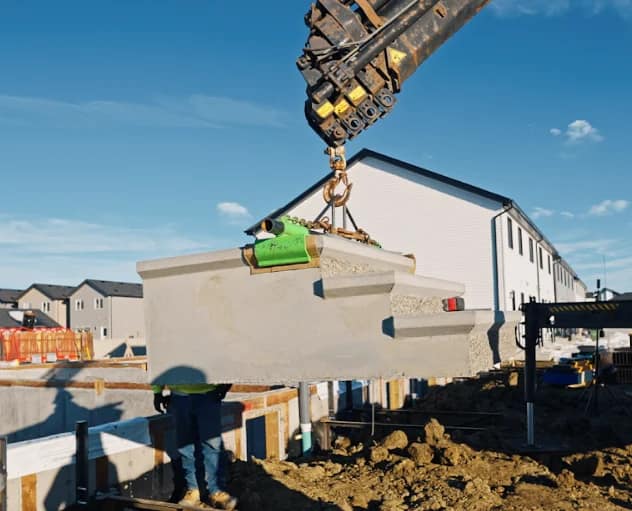
CPCQA, the Canadian Precast Concrete Quality Assurance certification program, run jointly by the Canadian Precast/Prestressed Concrete Institute (CPCI) and the Canadian Concrete Pipe and Precast Association (CCPPA), certifies precast plants against CSA A23.4 and the PCI MNL-116 (structural) and MNL-117 (architectural) quality manuals.
The single most important thing for a specifier to understand is that certification is granted per product group and category, not as a blanket “certified plant” status. The program has groups for Architectural (A), Bridge (B and BA), Commercial/Structural (C and CA), Drainage (D), and Standard (S) products, and a plant prequalifies in “any or all” of them independently.
So a plant certified to make architectural wall panels (Group A) is not automatically certified to make structural beams (Group C) or bridge girders (Group B). When you read a CPCQA certificate, match the certified category to the product you are specifying, and verify it yourself in the live Certified Plants directory at precastcertification.ca, where each plant’s categories, certification dates, and expiry are listed.
This is a buyer-education page. Its job is to help you, the specifier, require the right certification for your product and confirm a plant actually holds it. A quick word on us before we start: Omega Precast is a Calgary solid-concrete precast manufacturer that launched in late 2025. We wrote this guide to teach you how to verify any plant, and the honest part of that is that you should verify any plant against the live directory, including ours, rather than take a marketing claim at face value.
At Omega Precast, we regularly receive specification questions from Calgary architects, engineers, municipalities, and general contractors about CPCQA certification. One misconception comes up more than any other:
“If a precast plant is CPCQA-certified, can it manufacture any type of precast product?”
The answer is no.
Certification is granted by product category, not by plant as a whole. A manufacturer may be certified for architectural products but not structural members, or for drainage products but not bridge components.
Because Omega Precast is a newer Calgary manufacturer, we believe buyers should verify every supplier—including us—through the official CPCQA Certified Plants Directory instead of relying on marketing claims. This guide explains exactly how to do that and what the certification actually means when you’re writing specifications for an Alberta project.
What CPCQA actually is
CPCQA is a certification program for precast plants. It is run jointly by CPCI (the Canadian Precast/Prestressed Concrete Institute) and CCPPA (the Canadian Concrete Pipe and Precast Association), and it mandates compliance with CSA A23.4 and the PCI MNL-116 and MNL-117 quality manuals, “with the more stringent requirements being the governing criteria,” along with CSA A23.1, A23.2, A23.3, S6, and B66. (Sources: CPCQA, Certification Program, https://www.precastcertification.ca/en/certification_program/ ; CCPPA, https://ccppa.ca/cpcqa/ .)
In plain terms, CPCQA is the trust object a specifier names when they want assurance that a precast plant runs a real, audited quality system tied to the Canadian standard. It is the precast equivalent of a credential you can look up rather than a brochure you have to believe.
One naming clarification that trips people up: CPCI is the institute and a co-founder of the program; CPCQA is the certification program; and the certified-plant list lives at precastcertification.ca.
(Source: CPCI, Precast Plant Certification, https://www.cpci.ca/en/resources/precast_plant_certification .)

The one idea that matters most: certification is per category
Here is the insight that makes this whole article worth reading. A CPCQA certificate is not a blanket “this plant is certified” stamp. It certifies a plant for specific product groups and categories, and only those.
Plants prequalify “in any or all of the product group classifications,” independently. A plant gets “separate certifications for each product category,” and “a manufacturer certified for one cannot transfer certification to another category.”
(Sources: CPCQA, Product Groups and Categories, https://www.precastcertification.ca/en/certified_plants/product_groups/ ; Omega Calgary Concrete Knowledge Base, CPCQA per-category note, corroborated by the per-group prequalification language on the CPCQA page.)
The practical consequence is sharp. A plant certified to make architectural cladding (Group A) is not thereby certified to make structural beams (Group C) or bridge girders (Group B). “Certified” means nothing on its own. The only question that protects you is “certified for what?” A specifier who accepts a certificate without checking the category against the product they are specifying has not actually verified anything.
The seven groups and what they cover
Here is the full map. Plants certify by group, and the categories within each group are the granular codes you will see on a certificate.
| Group | Name | Categories | What it covers |
|---|---|---|---|
| A | Architectural | AT, A1 | Architectural trim units (sills, bollards); architectural cladding and load-bearing units (wall panels, columns, spandrels, column covers) |
| B | Bridge | B1–B4 | Conventionally-reinforced and prestressed bridge elements (box beams, I-girders, bulb tees, deck slabs) |
| BA | Bridge with architectural finishes | BA1–BA4 | The B1–B4 elements “with the additional requirements for architectural finishes” |
| C | Commercial (Structural) | C1–C4 | Piling, pile caps, retaining-wall units, slabs, joists, stairs, columns, beams, walls, tunnel segments; prestressed hollow-core; structural prestressed members |
| CA | Commercial with architectural finishes | CA1–CA4 | The C1–C4 structural elements with architectural-finish capability |
| D | Drainage | D1 | Reinforced non-prestressed drainage elements (box culverts and similar) |
| S | Standard | S | Plain or reinforced elements “not included in Groups A, B, BA, C, or CA” |
(Source: CPCQA, Product Groups and Categories, https://www.precastcertification.ca/en/certified_plants/product_groups/ . Re-verify the exact category list against the live page at write time; the live page is the authority.)
Read the table with your project in your hand. A Calgary parkade needs Group C (structural), possibly with CA if the elements carry an architectural finish. A civic stormwater job needs Group D. An architectural façade needs Group A. Bridge work needs Group B or BA. Matching the certified category to the element is the specifier’s job, and it is the entire value of reading the certificate carefully.
Once you’ve confirmed a manufacturer holds the correct CPCQA certification for your product category, the next decision is whether precast is the right construction method in the first place. Our guide Precast vs Cast-in-Place for Calgary Multi-Family compares schedule, labour, financing, weather risk and total project economics for Alberta developers.
What the certificate represents
It helps to know what a plant actually does to earn and keep the certificate, because that tells you how much weight the credential carries.
Audits are done by an Accredited Certification Organization whose auditors “are licensed Professional Engineers, or a Certified Engineering Technologist under the supervision of a Professional Engineer.” Structural and architectural plants receive “a minimum of two regular audits in each full calendar year,” two days each, and the program describes the first audit as occurring “within 45 days from the pre-certification evaluation.” Industry guidance adds that these audits are unannounced and that initial certification takes at least three months.
(Sources: CPCQA, Certification Program, https://www.precastcertification.ca/en/certification_program/ ; Omega Calgary Concrete Knowledge Base / CCPPA framing for the “unannounced” and “three-month” detail.)
So a current CPCQA certificate in the right category represents ongoing, engineer-led, twice-yearly scrutiny, not a one-time checkbox a plant ticked years ago. That is what makes it worth requiring, and worth verifying.
How to verify any plant (do this yourself)
This is the actionable part. Do not take a plant’s word, including a marketing line on a website. Verify it directly. Here is the workflow.
- Open the live Certified Plants directory at precastcertification.ca. (Source: CPCQA, Certified Plants, https://www.precastcertification.ca/en/certified_plants/ .)
- Find the plant by name. If a plant is not listed, it does not hold current CPCQA certification, full stop. Absence from the directory is itself the answer.
- Confirm the specific category matches your product. A plant listed under Group A does not satisfy a Group C requirement.
- Check the expiry date. Certification has an expiry; confirm the certificate is current for your project timeline.
- For program questions, the directory and program contact (QACAdministrator@precastcertification.ca) are the authoritative sources.
To show what a lookup returns, here is the real result for Alberta as of this writing. The CPCQA directory lists eight certified Alberta plants in the architectural-structural category, each shown with its certification expiry so a buyer can verify a specific plant’s current status before specifying. (Source: CPCQA, Certified Plants, architectural-structural, https://www.precastcertification.ca/en/certified_plants/architectural-structural/ .)
That list is the point of the exercise, and it illustrates the discipline rather than ranking anyone. A directory lookup gives you named plants, their certified categories, and an expiry date. To be fully transparent about our own status: Omega Precast does not currently appear in that directory.
We are a new (late-2025) manufacturer, and the honest path for a new plant is to start with the products it can certify, build the reference record, and pursue certification in the relevant categories over time rather than claim a credential it does not yet hold. We would rather teach you to verify the directory and apply that same standard to us than ask you to take a claim on trust.
Why this gates Alberta projects
The reason this matters beyond good practice: the moment your specification references CSA A23.4, the certification becomes a gate. Any precast element specified on an Alberta project that references CSA A23.4 must come from a CPCQA-certified plant.
(Source: Omega Calgary Concrete Knowledge Base, CPCQA gating note.)
So reading the certificate correctly is not paperwork; it is liability protection. If your spec cites CSA A23.4 and CPCQA, and you accept a plant whose certificate does not cover your product category, the gap is on the spec. Matching the category to the product, and checking the directory, is how a specifier discharges that duty cleanly.
Certification confirms manufacturing quality—but project success also depends on installation planning. If your project will be erected during Calgary’s fall or winter construction season, read Cold-Weather Precast Realities Every Calgary Multi-Family Developer Should Plan For Before October to understand schedule impacts, crane planning, curing logistics and seasonal risk.
Omega Precast Insight
When we’re reviewing project drawings with architects and structural engineers, one of the first questions we ask is:
“Which CPCQA product category applies to this element?”
Whether it’s retaining walls, stair systems, structural walls, architectural panels, or custom precast components, confirming the required certification category early helps avoid procurement issues later in the project.
Even if Omega Precast isn’t supplying a project, we recommend every specifier verify that the selected manufacturer holds certification for the exact product being specified.
FAQ
What is CPCQA? The Canadian Precast Concrete Quality Assurance program, a joint CPCI and CCPPA certification of precast plants against CSA A23.4 and the PCI MNL-116 and MNL-117 quality manuals.
What are the CPCQA product categories? Groups for Architectural (A), Bridge (B and BA), Commercial/Structural (C and CA), Drainage (D), and Standard (S), with category codes within each group. Plants certify per group, in any or all of them.
Does a CPCQA certificate cover everything a plant makes? No. Certification is per product group and category. A plant certified for architectural panels is not certified for structural beams or bridge girders, and certification in one category cannot transfer to another.
How do I verify a precast plant is CPCQA-certified? Check the live Certified Plants directory at precastcertification.ca. Find the plant, confirm the specific category matches your product, and check the expiry. If a plant is not listed, it does not hold current certification.
How often are CPCQA plants audited? Structural and architectural plants receive a minimum of two audits per calendar year by P.Eng.-led auditors, and the program describes these as unannounced. Initial certification takes at least three months.
What is the difference between MNL-116 and MNL-117? MNL-116 is the quality-control manual for structural precast; MNL-117 is for architectural precast. CPCQA enforces both alongside CSA A23.4.
Is CPCI the same as CPCQA? No. CPCI is the institute and a co-founder of the program; CPCQA is the certification program; the certified-plant list lives at precastcertification.ca.