
Last updated: August 14, 2026
The September 30 trigger (and why it’s not a hard ban)
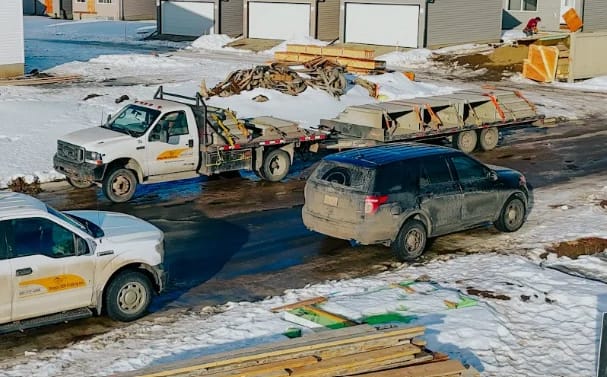
You’ll hear builders, GCs, and concrete suppliers talk about Calgary’s September 30 cold-weather cutoff for foundation pours.
The actual rule is more nuanced. Concrete Alberta’s published guidance reads:
**”Concrete Alberta does not recommend concrete pavement placement after September 30 — UNLESS proper Cold Weather Concrete procedures are followed.”**
It’s a procedural trigger, not an absolute deadline. After September 30, every cast-in-place concrete pour requires the cold-weather procedure stack: heated mix water, accelerators (calcium chloride or non-chloride), insulated forms + frost blankets, target 32 MPa minimum strength before frost exposure, continuous monitoring per CSA A23.1:24 cold-weather provisions. Concrete Alberta separately notes that curing compounds are not recommended after September 15 — an even earlier secondary trigger.
The procedural cost is real. The full cold-weather stack typically adds 10–25% per pour, plus crew overhead for the supervision. Most production builders simply schedule around the trigger rather than absorb the premium.
This piece walks through the cost stack, why precast bypasses it entirely, and what the combined three-brand Omega Group approach to year-round foundation construction looks like in practice.
The cost of cold-weather procedures
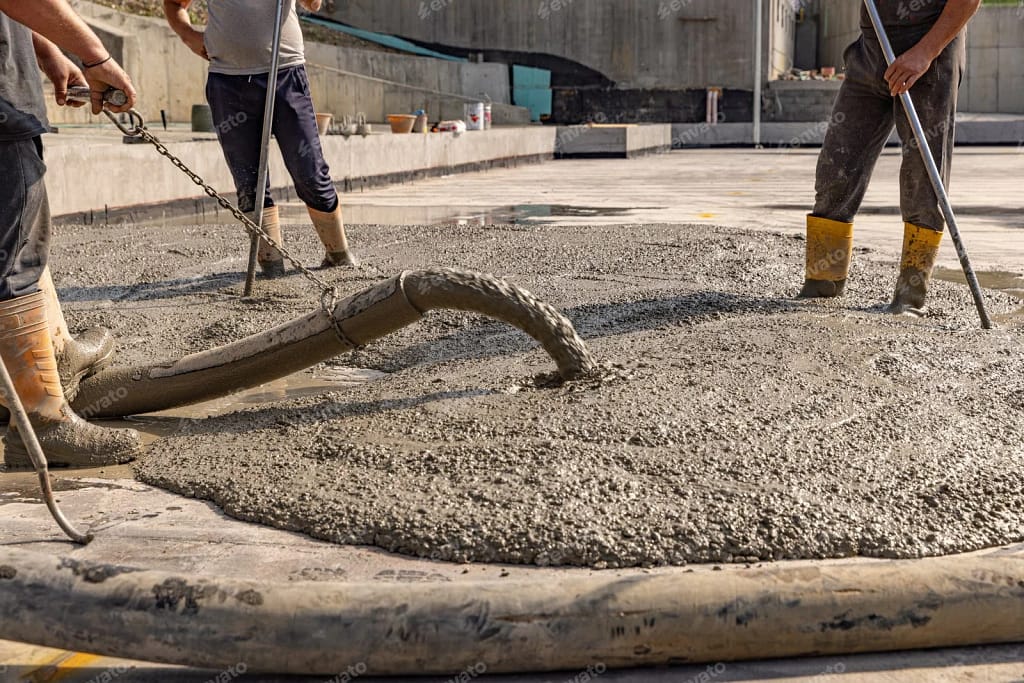
The full cast-in-place cold-weather procedure stack:
| Procedure | Typical cost per pour |
| Heated mix water + accelerators | 10–15% mix-cost premium |
| Insulated forms + blanket curing | Materials + labour overhead per pour |
| Continuous on-site monitoring | Extended supervision overhead |
| Below -10°C: heated enclosures (hoarding) | Extensive cold-weather protection costs |
| Maturity-method temperature monitoring | Documentation overhead per pour |
Builder reality: most production builders delay foundation starts to spring rather than pay the premium across multi-lot phases. The September 30 trigger effectively becomes a 4–6 month foundation-season gap on production builds.
For Net Zero builders, custom builders, infrastructure contractors, and any project with a fixed delivery date that can’t slip to spring, the cold-weather premium gets paid. For everyone else, the math says wait.
That waiting is the cost. Pause production for 4–6 months, lose lot inventory turnover, watch buyer-deposit calendars push out — the procedure premium is one number on a spreadsheet, but the season-loss compounds across an entire builder’s annual capacity.
Concrete Alberta’s cold-weather placement guidance makes it clear that September 30 is not an outright ban on concrete placement. Instead, it marks the point where proper cold-weather procedures become mandatory for compliant pours.
Why precast bypasses this entirely
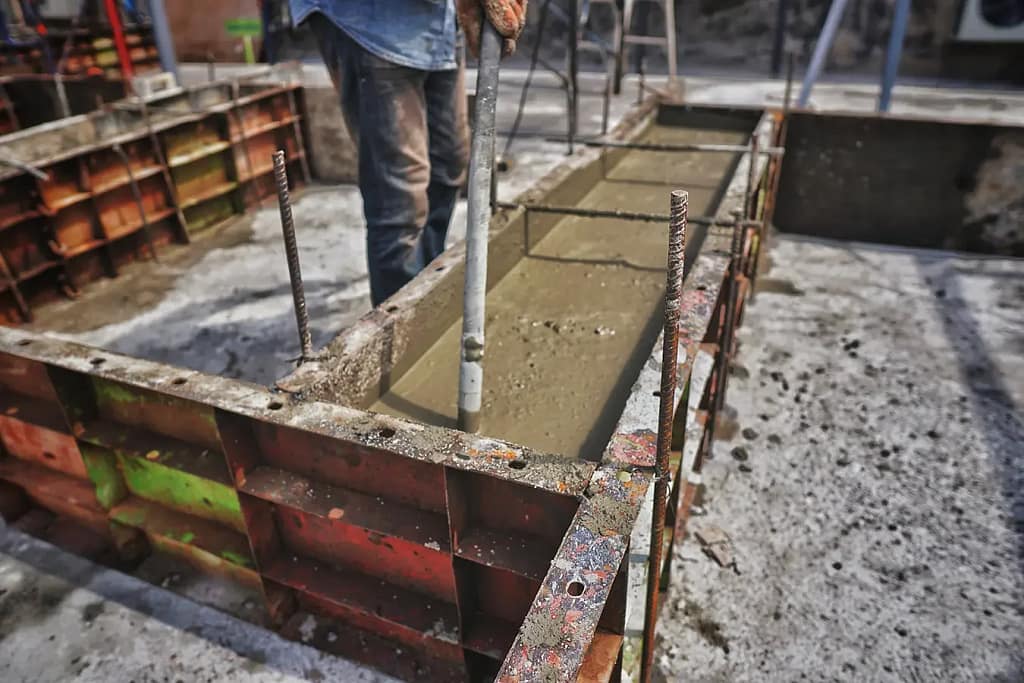
Precast walls are cured in a controlled-environment plant.
The plant runs year-round. Indoor temperature, humidity, and cure-cycle parameters stay within tight bands regardless of outdoor weather. The walls hit 35 MPa HS strength at the 56-day spec point under conditions that don’t depend on what’s happening in Calgary’s atmosphere.
Walls arrive on-site already at full strength. No on-site cure window. The truck delivers the panel; the crane sets it; the foundation phase moves to backfill. The outdoor-temperature variable that gates cast-in-place pours is no longer relevant to the wall pour.
The on-site work is reduced to lifting + connecting. A 1-day crane-and-set sequence instead of a 7–10-day form-pour-cure-strip cycle. The schedule compression compounds across multi-lot phases.
Footings still pour on-site. They’re a smaller volume (3–5 m³ vs 18–25 m³ for walls) and a faster pour. Cold-weather procedures still apply to footings on year-round builds — but the much-larger wall pour is taken off-site entirely. The single biggest cold-weather exposure point in the foundation is removed.
The combined three-brand cold-weather ecosystem
What it looks like to run a foundation year-round across the Omega Group’s three brands:
Omega Precast delivers factory-cast walls year-round. multiple Net Zero rowhouse buildings at Avalon Greystone Cochrane Net Zero rowhouses; 11+ Sterling Wedderburn Okotoks named addresses; Habitat for Humanity’s Chestermere multi-family project (Dawson’s Landing community — 24 affordable townhomes) — all delivered through Calgary winter without weather-related cure variability.
Omega Ready Mix delivers volumetric concrete with hot-mix capability for on-site footings and ancillary pours. The volumetric fleet’s per-pour mix-design tuning + on-truck heating eliminates the heat-loss-during-transit problem that constrains barrel-truck cold-weather delivery.
Omega 2000 Cribbing brings 36 years of cold-weather operating experience. Heated tarps, frost blankets, hoarding setups, accelerator dosing protocols, maturity-method monitoring documentation — the operational discipline that makes cold-weather pours actually work compliantly.
What integration enables: Calgary foundations year-round, not just May–September. The wall pour is taken off-site (precast). The footing pour gets the volumetric advantage. The crew brings 36 years of cold-weather discipline to whatever’s left on-site.
Calgary’s freeze-thaw reality
The City of Calgary Climate Hazards 2022 Year in Review documents Calgary’s actual climate exposure:
- 30-year average: ~128 freeze-thaw cycles per year
- 2022 recorded: 117 cycles
Each freeze-thaw cycle stresses curing concrete. For cast-in-place walls poured in shoulder seasons (October, March), the cure can be forced through multiple freeze-thaw cycles in its first week — placing real stress on the maturity curve.
Precast walls cured in the plant don’t see those cycles during cure. By the time they arrive on-site, they’re at design strength. Calgary’s freeze-thaw cycle count is irrelevant to their cure trajectory.
Real Calgary winter-pour examples
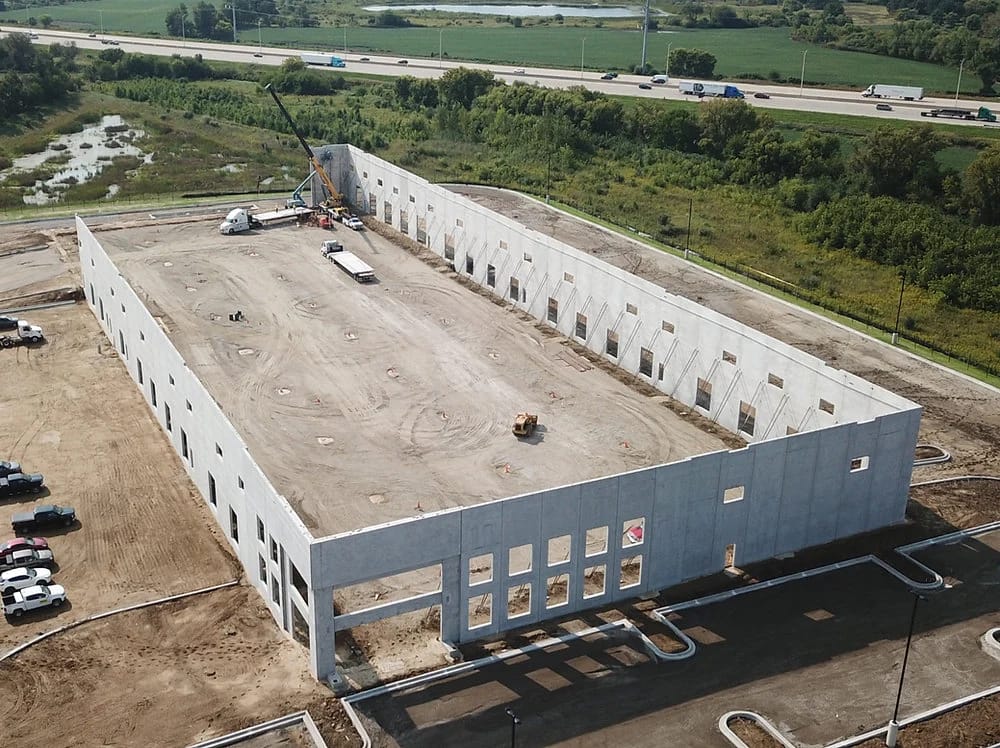
Sterling Wedderburn Okotoks (winter deliveries since our late-2025 launch): 11+ named addresses across the 2025–2026 active build window. Sterling’s value-driver: maintaining build cadence through winter without absorbing the cold-weather procedure stack on the wall pour. Foundation walls in place for spring framing without the spring-backlog crunch most production builders face.
Avalon Greystone Cochrane Net Zero rowhouses (multiple Net Zero rowhouse buildings): Net Zero envelope continuity demands tight thermal-bridge control across the foundation slab. Plant-cured precast walls eliminate the cure-related variability that can complicate Net Zero compliance on cast-in-place equivalents.
Habitat for Humanity Chestermere project (Dawson’s Landing — 24 affordable townhomes): Multi-family charity build with volunteer framing schedules that demand predictable foundation handoffs. Precast’s 1-day install gives the volunteer framing crews a deterministic schedule rather than a weather-dependent one.
The 6-month → 12-month implications
What does it actually mean to extend Calgary’s foundation season from 6 months to 12?
For the cribbing crew: 2x annual capacity per crew. Smoother labor scheduling. No 4–6 month gap to manage seasonal layoffs around. Same headcount delivers roughly 2x the project volume.
For builders: spring-start backlog reduction. Faster build-to-occupancy. Buyer-deposit calendars compress rather than stretch. Annual lot-inventory turnover compounds across a multi-year master plan.
For the supply chain: smoother labor demand on framers + electricians + plumbers + finishing trades downstream. Production builders running winter foundations means the framing crews stay busy in February rather than waiting for spring.
The compounding effect across an entire builder’s operation is much larger than the per-pour cold-weather premium suggests. Not paying the 10–25% premium per pour is the obvious savings. The unstated savings — keeping the operation running year-round — is the larger one.
FAQ
Q: Can you pour a foundation in Calgary after September 30?
Yes. Concrete Alberta’s guidance is that placement after September 30 isn’t recommended unless proper cold-weather concrete procedures are followed. With heated mix water, accelerators, insulated forms, and continuous monitoring per CSA A23.1:24 cold-weather provisions, year-round cast-in-place pours are compliant — at a 10–25% per-pour cost premium. Precast walls bypass this entirely because the wall is cured in the plant before delivery.
Q: What does “cold-weather concrete procedures” mean?
The CSA A23.1:24 cold-weather provisions procedure stack: (1) heated mix water and warmed aggregate, (2) accelerator dosing per pour, (3) insulated forms and frost blankets, (4) target 32 MPa minimum strength before frost exposure, (5) heated enclosures (hoarding) for sustained sub-zero work, (6) continuous in-place temperature monitoring via maturity method. The procedures are mandatory for any concrete placement when air or substrate temperature drops below 5°C.
Q: Does precast work in Calgary winter?
Yes — precast is structurally well-suited to Calgary winter foundation work. The walls cure in the plant under controlled conditions and arrive on-site at full strength. Crane-and-set installation is faster and weather-tolerant compared to the 7–10-day cast-in-place cure cycle.
Q: How do precast walls cure in cold weather?
They don’t cure in cold weather. They cure in the plant — controlled temperature and humidity, year-round operation. By the time they arrive on-site for installation, they’re already at the 35 MPa HS / 56-day spec point. Site-temperature variability is irrelevant to their cure trajectory.
Q: When does Calgary’s cold-weather concrete trigger start?
The CSA A23.1:24 trigger is 5°C — below that threshold, cold-weather procedures become mandatory. Concrete Alberta separately advises that placement after September 30 is not recommended without those procedures. Calgary historically hits the 5°C threshold from late September through mid-April (~6 months).
Q: Can builders pour foundations year-round with precast?
Yes. Precast walls + volumetric on-site footings + 36-year cribbing crew = a year-round foundation system that doesn’t depend on outside weather for the wall pour. Calgary’s effective foundation season extends from ~6 months (May–September) to a full 12 months when the three-brand system is deployed.
CTA
Calgary’s foundation season ends September 30 for cast-in-place. With precast it doesn’t.
Combined with our volumetric concrete supply for footings and our 36-year cribbing crew’s cold-weather expertise, you can pour foundations year-round in Calgary without absorbing the cold-weather procedure premium on the wall.
Build Foundations Year-Round in Calgary
Cast-in-place foundations slow down after September 30. Precast doesn’t.
With Omega Precast wall systems, Omega Ready Mix volumetric concrete, and Omega 2000 Cribbing’s 36 years of cold-weather experience, Calgary builders can maintain foundation schedules through winter without absorbing the full cold-weather wall-pour premium.
info@omegaprecast.ca | 403-217-4888.
Last updated: May 2026 | Methodology: cold-weather procedure framework drawn from CSA A23.1:24 cold-weather provisions + Concrete Alberta + CSA A23.4. Sept 30 trigger framed correctly per Concrete Alberta’s “without proper procedures” qualifier. ~128 freeze-thaw cycles is a 30-year average per City of Calgary Climate Hazards 2022.