
Last updated: August 6, 2026
For commercial construction, precast concrete delivers faster schedules, factory-controlled quality, long-term durability, fire resistance, and lower lifecycle costs. Because elements are produced off-site while site work proceeds, projects finish sooner with less labour and weather risk — a strong fit for retail, office, and mixed-use buildings.
Commercial construction today faces mounting pressure: tighter schedules, rising labor costs, stricter quality standards, and increasing expectations around sustainability. Developers and contractors are constantly searching for building methods that reduce risk while delivering long-term value. This is where precast concrete has emerged as a game-changing solution. The benefits of precast concrete for commercial construction go far beyond convenience—they directly impact cost control, project timelines, durability, and overall building performance.
Across Canada, from large urban centers to remote project sites, precast concrete is reshaping how commercial buildings are designed and delivered. By manufacturing structural elements in a controlled environment and installing them on-site with precision, precast systems offer reliability that traditional construction methods often struggle to match.
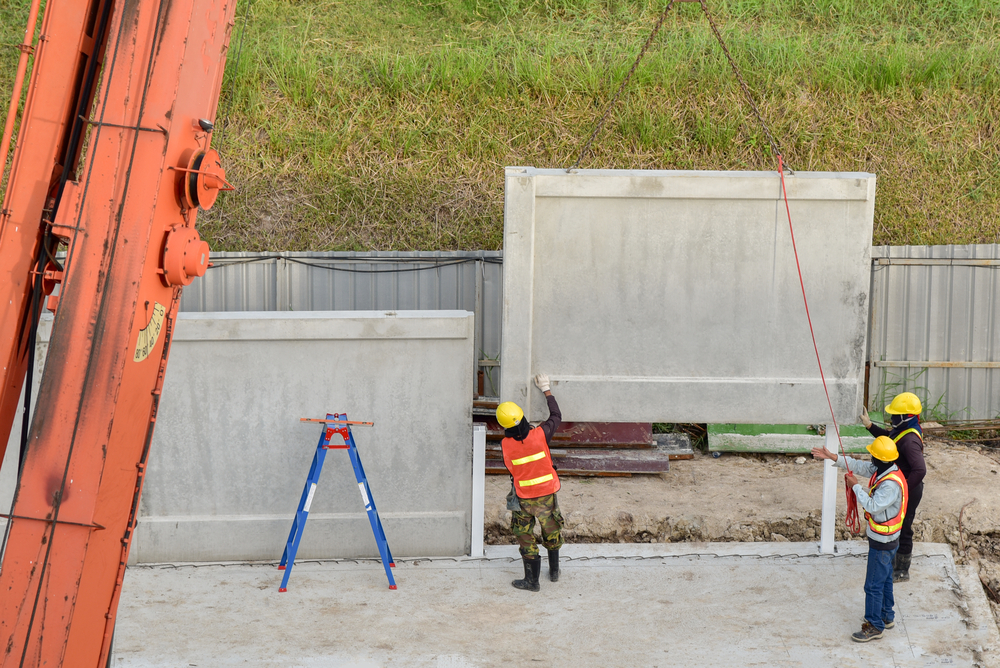
Introduction to Precast Concrete in Commercial Construction
Commercial projects demand predictability. Delays caused by weather, labor shortages, or quality issues can quickly erode profit margins. Precast concrete addresses these challenges by shifting much of the construction process off-site, where conditions are controlled and production schedules are reliable.
The growing adoption of precast concrete in commercial construction is not a trend—it is a strategic response to real-world project pressures. Office buildings, warehouses, retail centers, parking structures, and institutional facilities all benefit from the speed, consistency, and performance that precast systems deliver.
According to industry data from the Canadian precast sector, projects using precast components often see schedule reductions of 20–40% compared to traditional cast-in-place methods. For developers, this translates into earlier occupancy, faster revenue generation, and reduced financing costs.
For teams new to off-site construction, understanding precast concrete terminology builders should understand helps prevent coordination errors during design, pricing, and installation.
What Is Precast Concrete?
Definition and Manufacturing Process
Precast concrete refers to concrete elements that are cast, cured, and finished in a dedicated manufacturing facility rather than on the construction site. These components are produced using reusable molds, high-strength concrete mixes, and precise reinforcement placement, ensuring consistent quality from one piece to the next.
The typical precast manufacturing process includes:
- Engineering and shop drawing development
- Form preparation and reinforcement installation
- Concrete placement using controlled mix designs
- Monitored curing under optimal conditions
- Quality inspections before delivery
Once cured, precast elements are transported to the site and installed using cranes and specialized rigging. This process minimizes on-site labor and significantly reduces construction variability.
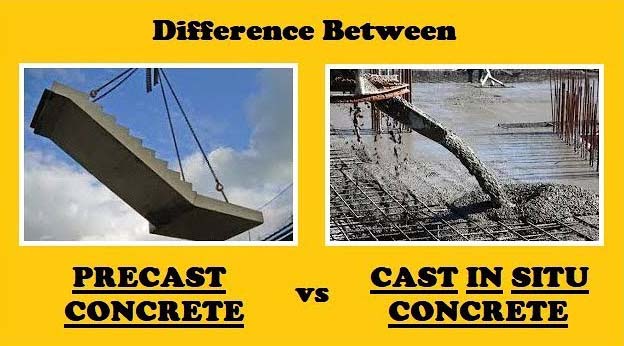
Common Precast Concrete Elements Used in Commercial Buildings
Precast concrete is highly versatile and can be used for a wide range of commercial building components, including:
- Architectural wall panels and cladding systems
- Load-bearing structural walls
- Columns, beams, and girders
- Floor and roof slabs
- Stairs, landings, and elevator shafts
This flexibility allows architects and engineers to integrate precast concrete seamlessly into both functional and aesthetic building designs.
Key Benefits of Precast Concrete for Commercial Construction
Faster Construction Timelines
One of the most compelling benefits of precast concrete for commercial construction is speed. Because components are manufactured off-site while excavation and foundation work occur simultaneously, overall project timelines are significantly compressed.
Unlike cast-in-place concrete, which is heavily dependent on weather conditions, precast production continues year-round in controlled facilities. This is especially valuable in Canada, where cold temperatures and seasonal weather can disrupt traditional construction schedules.
Once delivered to the site, precast elements are installed rapidly. Entire building envelopes can be erected in days rather than weeks, allowing interior trades to begin sooner and accelerating the entire construction sequence.
Superior Quality Control
Quality consistency is a major concern in large-scale commercial projects. Precast concrete excels in this area because every component is produced under strict quality assurance protocols.
In a manufacturing environment, variables such as temperature, moisture, and curing time are closely monitored. This results in:
- More uniform strength and durability
- Smoother finishes and tighter tolerances
- Reduced risk of cracking and surface defects
Independent studies from the precast industry show that factory-produced concrete elements achieve more consistent compressive strength compared to site-poured concrete, directly improving structural reliability.
Many of the performance advantages discussed here come from using precast concrete wall panels for commercial buildings, which combine structural strength with thermal efficiency and architectural flexibility.
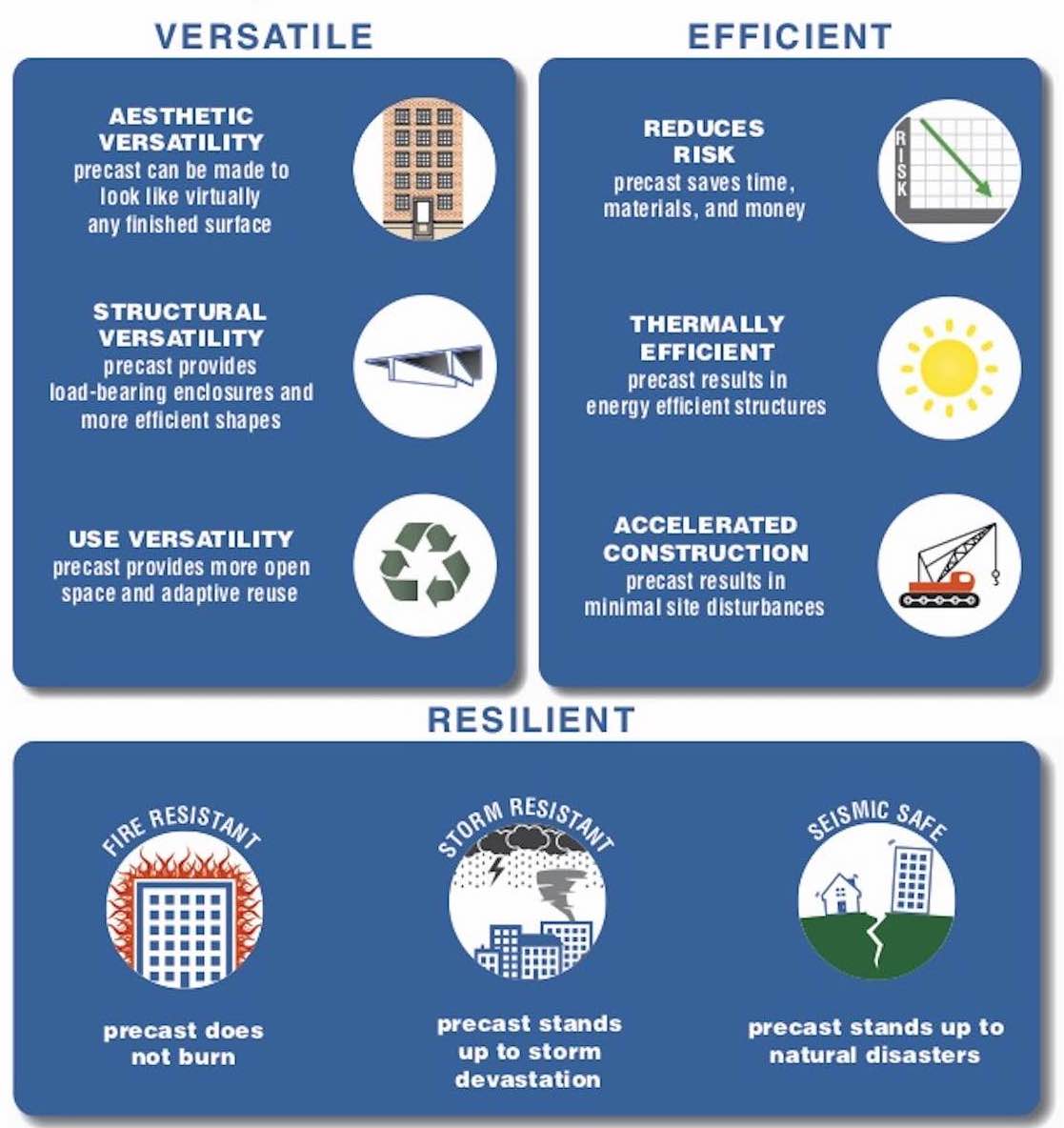
Cost Efficiency and Predictable Budgets
While initial material costs for precast concrete may appear higher than traditional methods, the total project cost often tells a different story. Precast construction reduces expenses across multiple areas of a commercial project.
Key cost-saving factors include:
- Lower on-site labor requirements
- Reduced construction waste and material loss
- Shorter project durations and financing periods
- Fewer change orders due to improved accuracy
For developers managing complex commercial builds, budget predictability is critical. Precast concrete offers fixed production costs and clear scheduling, helping stakeholders avoid unexpected overruns.
Structural Strength and Long-Term Durability
Commercial buildings are long-term assets, and durability is non-negotiable. Precast concrete delivers exceptional structural performance due to its high-density mixes and controlled curing processes.
These properties result in concrete elements that are:
- Highly resistant to fire and extreme temperatures
- Capable of withstanding heavy loads and impacts
- Durable in freeze-thaw environments
Research from North American construction authorities indicates that precast concrete structures can achieve service lives exceeding 50 to 75 years with minimal maintenance. For commercial property owners, this longevity translates into lower lifecycle costs and greater return on investment.
Design Flexibility and Architectural Freedom
A common misconception is that precast concrete limits design creativity. In reality, modern precast systems offer remarkable architectural flexibility.
Manufacturers can produce panels in a wide range of shapes, textures, colors, and finishes. Embedded features such as insulation, window openings, and connection hardware are integrated during production, reducing on-site modifications.
This allows architects to achieve bold, contemporary designs while maintaining structural efficiency—an increasingly important factor in competitive commercial developments.
Developers working in Western Canada often rely on a complete guide to precast concrete products to evaluate which systems best suit Alberta’s climate, logistics, and code requirements.

As commercial construction continues to evolve, precast concrete stands out as a proven solution that balances speed, quality, cost control, and long-term performance. In the next section, we will explore how precast concrete compares directly with cast-in-place construction and why many developers are making the switch.
Precast Concrete vs Cast-In-Place Concrete
When evaluating construction systems, developers and project managers often compare precast concrete with traditional cast-in-place concrete. While both materials share similar base ingredients, the construction approach and project outcomes differ significantly—especially for commercial buildings.
Key Differences That Impact Commercial Projects
Cast-in-place concrete is poured and cured entirely on-site, making it highly dependent on weather conditions, labor availability, and site coordination. Precast concrete, on the other hand, is manufactured off-site and delivered ready for installation, reducing uncertainty and improving control.
| Criteria | Precast Concrete | Cast-In-Place Concrete |
|---|---|---|
| Construction Speed | Rapid installation, parallel production | Slower, sequential process |
| Quality Control | Factory-controlled, consistent results | Variable, site-dependent quality |
| Weather Dependency | Minimal impact | Highly weather-sensitive |
| Labor Requirements | Reduced on-site labor | Labor-intensive on-site work |
| Budget Predictability | High cost certainty | Higher risk of overruns |
For commercial construction where schedules and budgets are closely scrutinized, these differences often make precast concrete the preferred choice.
Sustainability Benefits of Precast Concrete
Sustainability is no longer optional in commercial construction. Owners, municipalities, and tenants increasingly expect buildings to meet environmental performance standards. Precast concrete supports these goals through efficient material use and long-term performance.
Reduced Environmental Impact
Because precast concrete is produced in a controlled facility, material waste is significantly lower than on traditional job sites. Excess concrete can often be recycled, and reusable molds reduce raw material consumption over time.
Additionally, optimized mix designs and curing processes reduce cement usage while maintaining high strength—lowering the overall carbon footprint of the structure.
Energy Efficiency and Thermal Performance
Many precast wall systems incorporate continuous insulation directly into the panel, creating a high-performance building envelope. This improves thermal efficiency, reduces air leakage, and lowers heating and cooling demands throughout the building’s life.
Studies show that buildings with insulated precast panels can reduce operational energy costs by up to 20% compared to conventional wall assemblies, making precast concrete an attractive option for long-term energy savings.
Supporting Green Building Certifications
Precast concrete contributes to green building programs through durability, recycled content, and energy efficiency. Its long service life reduces the need for replacement materials, aligning well with sustainable lifecycle design principles.
Safety Advantages on Commercial Job Sites
Job site safety is a major concern in commercial construction, where complex coordination and tight schedules increase risk. Precast concrete helps improve safety by shifting much of the work away from the site.
Reduced On-Site Labor Risks
With fewer trades required to form, pour, and finish concrete on-site, the risk of accidents is significantly reduced. Installation crews work with finished components, minimizing exposure to formwork failures, wet concrete hazards, and extended work-at-height scenarios.
Cleaner, More Organized Job Sites
Precast construction results in less clutter, fewer materials stored on-site, and better overall organization. This cleaner environment improves workflow efficiency and reduces the likelihood of safety incidents.
Applications of Precast Concrete in Commercial Projects
The versatility of precast concrete makes it suitable for a wide range of commercial applications, from simple structures to architecturally complex buildings.
Office Buildings
Precast concrete provides strength, fire resistance, and acoustic performance—key factors in modern office design. Its clean finishes also support contemporary architectural aesthetics.
Warehouses and Distribution Centers
Large clear spans, fast construction timelines, and durability make precast concrete ideal for logistics and industrial facilities.
Retail and Mixed-Use Developments
Precast systems allow for creative façades while maintaining structural efficiency, making them well-suited for retail centers and mixed-use commercial spaces.
Parking Structures
Parking garages benefit from precast concrete’s load capacity, corrosion resistance, and rapid erection—reducing disruption in high-traffic areas.
Institutional and Government Buildings
Schools, hospitals, and government facilities rely on precast concrete for its durability, safety, and long-term value.
Why Precast Concrete Is Ideal for Canadian Commercial Construction
Canada’s climate presents unique challenges, from extreme cold to frequent freeze-thaw cycles. Precast concrete is engineered to perform exceptionally well under these conditions.
Cold Climate Performance
Factory curing ensures proper strength development even during winter months, while dense concrete mixes resist cracking caused by temperature fluctuations.
Efficiency for Remote and Large-Scale Projects
For projects in rural or remote locations, precast concrete reduces the need for extensive on-site infrastructure and labor, making construction more efficient and reliable.
Choosing the Right Precast Concrete Manufacturer
The success of a precast concrete project depends heavily on the expertise of the manufacturer. Experience, production capacity, and engineering support all play critical roles.
What to Look For in a Precast Partner
- Proven commercial project experience
- Modern manufacturing equipment
- Strong quality assurance processes
- Engineering and design collaboration
How Omega Precast Supports Commercial Projects
Omega Precast provides professional precast concrete manufacturing services across Canada. With a skilled team, modern facilities, and a commitment to quality, Omega Precast supports commercial projects from early design through final installation—helping clients achieve faster, safer, and more cost-effective builds.
Frequently Asked Questions
Is precast concrete more expensive than traditional concrete?
While upfront material costs may be higher, precast concrete often reduces total project costs through faster timelines, lower labor requirements, and reduced maintenance.
How long does precast concrete last?
Precast concrete structures commonly achieve service lives of 50–75 years or more with proper design and minimal maintenance.
Can precast concrete be customized?
Yes. Precast concrete offers extensive customization in terms of shape, finish, color, and integrated features.
Is precast concrete suitable for large commercial buildings?
Absolutely. Precast systems are widely used in mid-rise and large-scale commercial developments.
How does precast concrete perform in Canadian weather?
Precast concrete is highly resistant to freeze-thaw cycles, moisture intrusion, and temperature extremes, making it ideal for Canadian climates.
Conclusion: Why Precast Concrete Is the Smart Choice for Commercial Construction
The benefits of precast concrete for commercial construction are clear: faster build times, superior quality control, predictable costs, enhanced safety, and long-term durability. For developers and builders focused on performance and value, precast concrete offers a proven path to successful commercial projects.
Start Your Commercial Precast Project with Confidence
If you are planning a commercial construction project and want to explore the advantages of precast concrete, contact Omega Precast today. Our experienced team is ready to support your project with reliable manufacturing, technical expertise, and prompt service across Canada.