
Last updated: August 4, 2026
Common precast concrete products for Alberta projects include wall panels, foundations, stairs, septic tanks, window wells, beams, columns, and custom structural elements. Each is factory-cast for consistent quality and fast installation — well suited to Alberta’s short building seasons and demanding freeze-thaw climate.
Alberta’s construction industry operates under unique pressures: short building seasons, extreme freeze–thaw cycles, rising labour costs, and tighter project timelines than ever before. Whether you’re developing an industrial facility, a multi-family building, agricultural infrastructure, or a municipal project, choosing the right construction method can make or break your schedule and budget. This is where precast concrete products have become a game-changer across Alberta and Western Canada.
Instead of pouring concrete on-site and hoping the weather cooperates, more builders are turning to factory-manufactured precast solutions that deliver predictable quality, faster installation, and long-term durability. In this complete guide, we’ll break down what precast concrete is, how it’s made, why it’s growing so quickly in Alberta, and the key product types used on real-world projects—drawing on practical experience from Canadian precast manufacturing and construction environments.
What Are Precast Concrete Products?
Definition of Precast Concrete
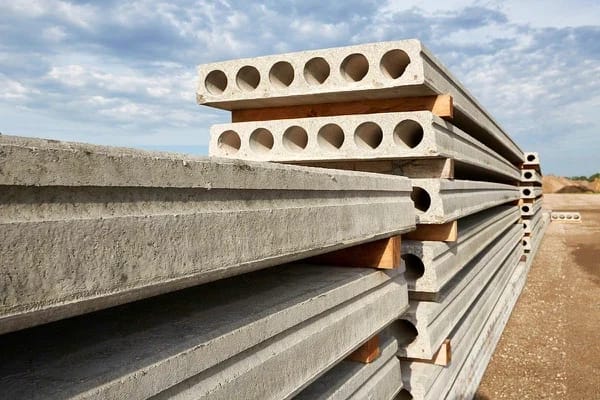
Precast concrete products are concrete elements that are manufactured in a controlled facility, cured under optimal conditions, and then transported to the job site for installation. Unlike cast-in-place concrete—which is poured, formed, and cured entirely on-site—precast components are produced ahead of time with strict quality controls.
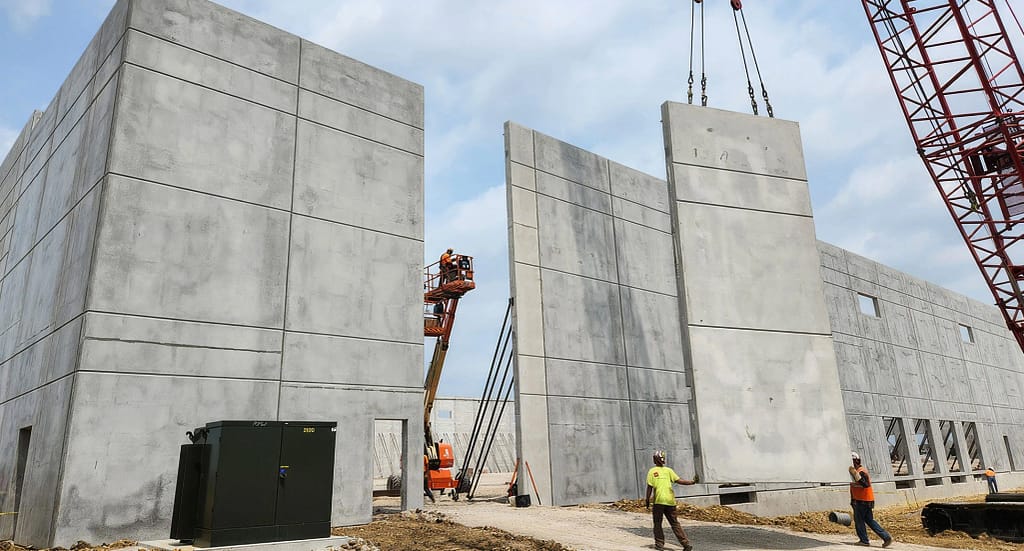
Common precast concrete products include structural panels, beams, columns, stairs, landings, foundation walls, retaining walls, and civil infrastructure components such as culverts and manholes. Once delivered, these elements are lifted into place using cranes or equipment, dramatically reducing on-site labour and construction time.
How Precast Concrete Is Manufactured
The precast manufacturing process is designed for consistency, strength, and repeatability—qualities that are difficult to achieve in Alberta’s outdoor construction conditions. While details vary by product, the process generally includes:
- Engineering & shop drawings prepared to CSA and project-specific requirements
- Formwork setup using precision steel or custom molds
- Reinforcement placement (rebar, welded wire mesh, or engineered inserts)
- Concrete casting using controlled mix designs
- Controlled curing to achieve target strength and durability
- Quality inspections before shipping to site
Because this work happens indoors, manufacturers can maintain consistent temperatures, moisture levels, and curing times—resulting in stronger, more uniform products compared to site-poured concrete exposed to wind, frost, or sudden temperature swings.
Why Precast Is Growing Rapidly in Alberta
Across Alberta, precast concrete adoption has accelerated in both private and public-sector projects. There are several reasons for this shift:
- Short construction seasons: Factory production continues year-round, even during winter.
- Labour shortages: Precast reduces on-site labour requirements.
- Schedule certainty: Manufacturing and site work happen in parallel.
- Durability demands: Alberta’s freeze–thaw cycles demand high-quality concrete.
According to industry data from Canadian construction associations, precast systems can reduce overall project timelines by 20–40% compared to traditional cast-in-place methods when properly planned. For developers and contractors working under tight deadlines, that time savings directly translates into cost control and earlier project completion.
If you’re new to factory-produced concrete systems, this precast concrete overview explains the fundamentals, product categories, and how precast differs from cast-in-place construction.
Types of Precast Concrete Products Used in Alberta
Structural Precast Concrete Products
Structural precast concrete products are designed to carry loads and form the primary framework of a building or structure. These include beams, columns, load-bearing wall panels, and floor systems commonly used in industrial, commercial, and institutional projects.
In Alberta, structural precast is especially popular for warehouses, manufacturing facilities, and logistics buildings where speed of construction and long-span capabilities are critical. Factory-controlled production ensures dimensional accuracy, which helps reduce fit-up issues during installation.
Architectural Precast Concrete
Architectural precast combines structural performance with visual appeal. These products are often used for building façades, exterior panels, and feature elements where appearance matters just as much as strength.
Architectural precast can be customized with:
- Textured or patterned finishes
- Integral colours or exposed aggregate
- Custom shapes and reveals
For commercial and civic projects in Alberta, architectural precast offers long-term aesthetics with minimal maintenance—an advantage over painted or clad exterior systems.
Precast Concrete Stairs and Landings
Precast concrete stairs and landings are widely used in residential, multi-family, and commercial buildings across Alberta. Because stairs are repetitive, safety-critical components, factory production ensures consistent rise, run, and structural integrity.
Real-world projects often benefit from installing precast stairs early in construction, allowing crews safe access between levels while other trades continue work. This improves job-site safety and accelerates schedules, especially in winter conditions.
Precast Foundations and Wall Systems
Precast foundation walls and retaining walls are increasingly common in Alberta residential, agricultural, and industrial construction. These systems arrive on site ready to install, eliminating the need for extensive forming and curing time.
Key advantages include:
- Improved waterproofing consistency
- High early strength for faster backfilling
- Reduced exposure to weather delays
Civil and Infrastructure Precast Products
Civil precast products play a critical role in Alberta’s infrastructure network. These include manholes, box culverts, utility vaults, barriers, and specialty components used in transportation and municipal projects.
Municipalities often specify precast for infrastructure due to its proven durability, standardized quality, and long service life—often exceeding 50 years when properly designed and installed.
In the next section of this guide, we’ll explore the key benefits of precast concrete for Alberta projects, including speed, quality control, cost predictability, and performance in harsh climates—followed by a clear comparison between precast and cast-in-place concrete to help you decide which approach fits your project best.

Key Benefits of Precast Concrete for Alberta Projects
Faster Project Timelines
One of the biggest advantages of precast concrete products is speed. Because precast elements are manufactured off-site while excavation and site preparation are happening, multiple phases of construction can move forward at the same time. This parallel workflow is especially valuable in Alberta, where weather delays can quickly derail schedules.
Once delivered, precast components are installed in hours or days—not weeks. For example, a set of precast stairs or wall panels can often be installed in a single crane day, allowing following trades to start immediately instead of waiting for concrete to cure.
Superior Quality Control
Precast concrete is produced in a controlled manufacturing environment where temperature, curing conditions, and mix design are carefully monitored. This level of control leads to consistent strength, dimensional accuracy, and surface quality that is difficult to achieve with cast-in-place concrete exposed to Alberta’s fluctuating weather.
Manufacturers following CSA A23 standards perform routine inspections, strength testing, and documentation, which gives engineers, inspectors, and owners greater confidence in long-term performance.
Durability in Harsh Alberta Climates
Alberta structures must withstand extreme freeze–thaw cycles, de-icing chemicals, and wide temperature swings. Precast concrete products are specifically designed to meet these challenges through optimized air entrainment, proper curing, and high-performance mix designs.
Studies from Canadian concrete associations consistently show that properly manufactured precast concrete can outperform site-poured concrete in durability, especially when exposed to aggressive environmental conditions.
Cost Predictability and Risk Reduction
While precast concrete may not always have the lowest upfront material cost, it often delivers better overall value. Reduced on-site labour, fewer weather-related delays, and minimized rework lead to more predictable budgets and lower risk.
For developers and contractors, this predictability is critical—especially on large or schedule-sensitive projects where delays can have significant financial impacts.
Many of the advantages discussed here—such as faster timelines, quality control, and reduced labour—are explored further in our guide to the benefits of precast concrete for commercial construction.
Precast Concrete vs Cast-in-Place Concrete
Side-by-Side Comparison
| Factor | Precast Concrete | Cast-in-Place Concrete |
|---|---|---|
| Construction Speed | Fast installation, parallel production | Slower, sequential process |
| Weather Sensitivity | Minimal on-site weather impact | Highly weather-dependent |
| Quality Control | Factory-controlled and consistent | Varies by site conditions |
| Labour Requirements | Reduced on-site labour | Labour-intensive |
| Cost Predictability | High | Lower due to delays and rework |
When Cast-in-Place Still Makes Sense
Cast-in-place concrete can still be the right choice for certain projects, such as highly irregular geometries, very small pours, or remote locations where transportation of large precast elements is impractical. In many Alberta projects, however, a hybrid approach—combining precast components with site-poured concrete—delivers the best balance of efficiency and flexibility.
Alberta Codes, Standards, and Compliance for Precast Concrete
CSA and Canadian Standards
Precast concrete products in Canada are typically designed and manufactured in accordance with CSA A23.4, which governs precast concrete materials, production, and performance. Compliance ensures that products meet structural, durability, and safety requirements suitable for Canadian climates.
Alberta Building Code Considerations
In Alberta, precast concrete must also comply with the Alberta Building Code and project-specific engineering requirements. Shop drawings are reviewed and stamped by professional engineers, ensuring structural integrity and regulatory compliance before production begins.
Quality Assurance and Documentation
Reputable precast manufacturers provide detailed documentation, including shop drawings, test reports, and inspection records. This transparency supports smoother approvals and inspections throughout the project lifecycle.
Structural and architectural precast systems are often completed using precast concrete wall panels, which serve both load-bearing and enclosure functions across commercial and industrial projects.
Precast Concrete Applications Across Alberta Industries
Commercial and Industrial Construction
Warehouses, manufacturing plants, and distribution centres across Alberta rely on precast concrete for its speed, durability, and ability to support large spans. Faster enclosure means earlier equipment installation and reduced exposure to weather delays.
Residential and Multi-Family Buildings
In residential and multi-family construction, precast foundations, stairs, and balconies offer consistent quality and faster build cycles—helping builders maintain schedules even during colder months.
Agricultural and Rural Projects
Farm and rural projects benefit from precast concrete’s strength and longevity. From equipment foundations to retaining walls, precast components stand up well to heavy loads and harsh environmental conditions.
Municipal and Infrastructure Projects
Municipalities frequently specify precast for utilities, roadways, and public works due to its long service life and reduced maintenance requirements. Many infrastructure precast elements are designed for service lives exceeding 50 years.
Cost Factors for Precast Concrete in Alberta
What Influences Precast Pricing
Several factors affect the cost of precast concrete products, including:
- Product size and complexity
- Customization and architectural finishes
- Production volume
- Transportation distance and logistics
Long-Term Value vs Upfront Cost
When evaluating precast concrete, it’s important to look beyond initial pricing. Reduced construction time, lower maintenance, and longer service life often result in a lower total cost of ownership compared to traditional methods.
How Omega Precast Delivers Reliable Precast Across Canada
Modern Manufacturing and Skilled Teams
Omega Precast combines modern equipment, experienced technicians, and proven production processes to deliver consistent, high-quality precast concrete products. Controlled manufacturing environments allow for precise tolerances and dependable results.
Custom Precast Solutions
Every project is different. By working closely with engineers, contractors, and developers, Omega Precast provides custom solutions tailored to specific structural, architectural, and logistical requirements.
Canada-Wide Service and Logistics
With the ability to serve projects across Alberta and throughout Canada, coordinated production and delivery schedules help ensure materials arrive when needed—keeping projects moving forward.

How to Choose the Right Precast Concrete Supplier in Alberta
Key Questions to Ask
- Do they meet CSA and local code requirements?
- Can they provide engineering support and documentation?
- What is their experience with similar projects?
- How reliable are their lead times?
Common Red Flags
Lack of certifications, unclear quality processes, and unrealistic timelines can all signal risk. Choosing an experienced, transparent supplier is essential for project success.
Frequently Asked Questions About Precast Concrete Products
Is precast concrete suitable for Alberta winters?
Yes. Precast concrete is manufactured under controlled conditions and designed specifically to withstand Alberta’s freeze–thaw cycles and extreme temperatures.
How long do precast concrete products last?
With proper design and installation, precast concrete products can last 50 years or more, often outlasting many alternative building materials.
Can precast concrete be customized?
Absolutely. Precast can be engineered for structural requirements and customized with different finishes, textures, and shapes.
Is precast concrete more expensive than poured concrete?
While upfront costs may vary, precast often delivers better overall value through reduced labour, faster timelines, and long-term durability.
How fast can precast concrete be installed?
Installation typically takes hours or days rather than weeks, depending on the scope and size of the project.
Conclusion: Why Precast Concrete Is a Smart Choice for Alberta Projects
Precast concrete products offer Alberta builders, developers, and municipalities a powerful combination of speed, quality, durability, and cost control. By shifting critical work into a controlled manufacturing environment, projects become more predictable and resilient to weather and labour challenges.
For anyone planning construction in Alberta or across Canada, precast concrete is no longer just an alternative—it’s often the most practical solution.
Ready to Plan Your Precast Concrete Project?
If you’re considering precast concrete products for your next project, working with an experienced manufacturer makes all the difference. Omega Precast provides reliable, high-quality precast solutions backed by technical expertise and responsive service across Canada.
Contact Omega Precast today to discuss your project requirements, review drawings, and get expert guidance on the right precast solution for your build.