
Last updated: August 5, 2026
Quality control in precast concrete production covers approved mix designs, calibrated batching, proper consolidation and curing, dimensional inspection, and embed-placement checks on every element. Following recognized standards such as CPCQA ensures consistent strength, accurate tolerances, and defect-free components — preventing costly delays and rework during on-site installation.
Precast concrete is supposed to make construction faster and more predictable—until a single hidden defect turns into a jobsite headache. A mislocated embed can delay installation. Poor consolidation can create honeycombing that needs patching. Inconsistent curing can lead to cracking that shows up after the piece is already in place. These aren’t “small” issues. They cost time, money, and trust.
That’s why precast concrete quality control matters. Not just to “hit strength,” but to deliver consistent dimensions, reliable fit-up, durable performance, and clean finishes—piece after piece. In this guide, you’ll learn how the best producers control quality from raw materials to shipping, which standards typically govern precast work in Canada, and what to look for when comparing suppliers.
Quality checks done in the plant help prevent expensive rework on site.

Why Quality Control Matters in Precast (Beyond “Passing Strength”)
QC vs QA (and why you need both)
People often use “QC” and “QA” like they mean the same thing, but they solve different problems:
- Term
- What it means in a precast plant
- What it protects
- Quality Control (QC)
- Inspections and tests during production (materials checks, pre-pour sign-offs, fresh concrete tests, dimensional checks).
Today’s piece: strength, finish, tolerances, embed placement, traceability.
Quality Assurance (QA)
The management system behind QC (procedures, training, calibration, audits, corrective actions).
Tomorrow’s pieces: repeatability, fewer defects, fewer NCRs, consistent outcomes.
In plain language: QC catches issues; QA prevents them from coming back. The best precast concrete quality control programs are supported by strong QA—because “inspecting quality in” is never as effective as “building quality in.”
In Canada, most precast specifications reference CSA A23.4 requirements for precast concrete, which define fabrication, tolerances, curing, and quality documentation expectations.
Cost of poor quality (COPQ) in precast projects
Quality problems don’t end at the plant gate. Once a piece arrives on site, the cost of fixing anything climbs quickly—crane time, labor, engineering review, schedule knock-on effects, and sometimes replacement.
Industry research frequently puts the cost of rework from poor quality at roughly about 5% of total project cost in commercial construction.
For precast scope, rework can look like:
- Fit-up delays: Out-of-tolerance dimensions mean shim stacks, grinding, or field modifications.
- Embed conflicts: Misplaced inserts force drilling, epoxy anchoring, or redesign—and always a conversation with the engineer of record.
- Finish repairs: Honeycombing, voids, or surface defects create patching and acceptance disputes.
- Handling cracks: Damage during stripping, lifting, or transport can lead to repairs—or rejection.
Many quality issues trace back to coordination between design intent and fabrication reality. This overview of design considerations for precast concrete structures highlights how embed layout, tolerances, connections, and exposure conditions influence both producibility and quality outcomes.
Workability is commonly verified using standardized procedures such as ASTM C143 for slump testing of fresh concrete, ensuring consistency at placement.
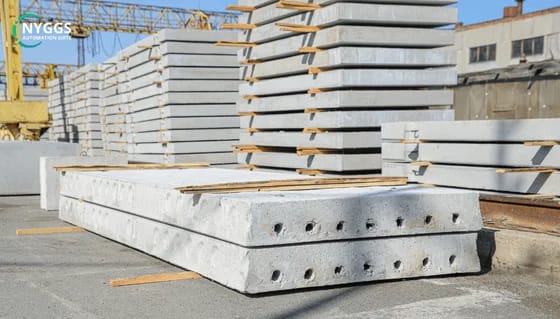
What “high-quality precast” looks like on site
If you’re a GC, superintendent, or engineer, you can usually tell quality in the first installation cycle. Good precast tends to show up as:
- Predictable fit-up: Panels, stairs, beams, or utility structures align with minimal adjustment.
- Clean finishes: Consistent surfaces that meet the specified appearance standards.
- Fewer surprises: Clear piece identification, correct embeds, and documentation that matches the drawings.
“This test method is intended to provide the user with a procedure to determine slump of plastic hydraulic-cement concretes.”
That quote is about a simple test—but the idea applies everywhere: quality isn’t a guess. It’s measured, recorded, and controlled.
Standards & Compliance Framework (What Specs Usually Require)
The “standards stack” used in precast production
Most precast specifications reference a combination of:
- National standards that set baseline requirements for precast materials, fabrication, and construction.
- Test standards that define how properties like slump and compressive strength are measured.
- Project specifications (and drawings) that define tolerances, finishes, exposure classes, and acceptance criteria.
- Plant procedures (your supplier’s QC manual) that describe hold points, inspection steps, and documentation.
In Canada, CSA A23.4 is commonly referenced for precast concrete requirements, and it is often paired with recognized plant quality manuals and certification programs.

Typical documentation owners should request
If you want confidence in precast concrete quality control, request documentation that proves consistency—not just promises it. A strong submittal or turnover package typically includes:
- Mix design information aligned to the project requirements and exposure conditions
- Fresh concrete test records (e.g., slump/flow, air content, temperature, unit weight as required)
- Compressive strength reports for release and specified ages
- Calibration and maintenance logs for batching and testing equipment
- Curing records (method, temperature control, maturity/strength release criteria where used)
- Piece identification and traceability (piece marks, pour dates, drawing revisions)
- Nonconformance/repair documentation when applicable (what happened, how it was corrected, re-inspection results)
Plant certification & third-party oversight (when applicable)
Many buyers and spec writers look for third-party frameworks because they reinforce repeatability. For example, Canadian precast quality programs may require fabrication to conform to CSA A23.4 and also reference recognized quality control manuals used in precast production.
Practical takeaway: certification isn’t a magic shield—but it can be a meaningful signal that the plant has documented procedures, trained personnel, and external verification of its quality system.
The Precast QC Workflow (From Raw Materials to Shipping)
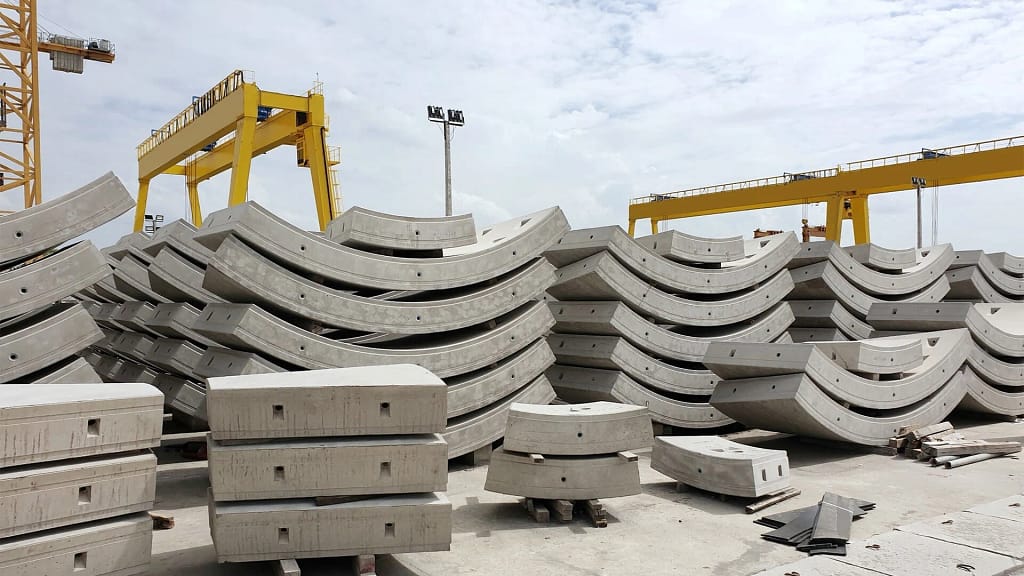
Step 1 — Incoming materials inspection
Great precast starts with stable inputs. Plants typically verify that cementitious materials, aggregates, admixtures, reinforcement, embeds, and lifting hardware match the approved submittals and are stored properly. Even small issues—like aggregate contamination or improper storage—can cause variability that shows up later as finish defects or strength scatter.
Real-world example: If aggregate moisture changes and the batch water isn’t adjusted, the water-to-cement ratio can drift. That affects workability, strength development, and durability—especially in freeze-thaw exposure environments common across Canada.
Step 2 — Batching & mixing controls
Batching is where repeatability is either protected or lost. Strong precast concrete quality control programs pay attention to:
- Scale calibration: Cement, aggregates, and admixtures must be dosed accurately.
- Mix ID verification: The correct approved mix for the product and exposure condition.
- Time and temperature: Controlling variability that impacts set time and finishing.
Testing standards matter here. For compressive strength testing of cylindrical specimens, ASTM C39/C39M is widely used to define how strength is measured and reported.
Step 3 — Formwork, reinforcement, and embeds inspection
Before concrete is placed, the highest-value inspections happen fast:
- Forms: Cleanliness, dimensional control, tight joints (to reduce paste loss and fins), correct release agent use.
- Reinforcement: Bar size, spacing, placement stability, and cover alignment.
- Embeds/inserts: Exact location, orientation, depth, thread protection, and secure fastening so they don’t float or shift during consolidation.
Real-world example: An embed that’s off by even a small amount can force field drilling or adapter plates. The cost isn’t only the fix—it’s the delay, coordination, and approval cycle that follows.
Step 4 — Placement, consolidation, and finishing
This is where workmanship meets process control. The goal is a uniform, well-consolidated element with minimal segregation and a finish that meets the specified standard.
Consolidation control: Proper vibration technique helps prevent honeycombing and voids.
Finish consistency: Especially important for architectural precast where appearance criteria are strict.
Fresh concrete verification: Slump testing (ASTM C143) is one common method to confirm workability at placement.
Step 5 — Curing & maturity (strength without surprises)
Curing is not just “waiting.” It’s controlled temperature and moisture management to achieve the required release strength, durability, and long-term performance. Plants often use defined curing procedures (including controlled ramps for accelerated curing) so early strength doesn’t come at the expense of cracking risk or inconsistent properties.
Practical insight: If early stripping is driven by schedule instead of verified strength criteria, you can get microcracking that becomes visible later—especially after handling and transport. Good QC ties stripping and lifting decisions to measurable criteria (test results or maturity methods where used), not guesswork.
Next in Part 2: the essential test matrix (fresh + hardened), a defects-and-prevention playbook, traceability documentation, a copy/paste buyer checklist, and an FAQ section—plus a clear CTA for getting a QC-ready precast quote from Omega Precast.
When defects do slip through—such as surface voids, minor cracking, or handling damage—the long-term outcome depends on how repairs are evaluated and executed. This guide on maintenance and repair of precast concrete structures explains common repair strategies, acceptance criteria, and how early quality decisions affect lifecycle performance.
About the Author
This article was prepared by the Omega Precast team for builders, engineers, and procurement teams evaluating precast solutions across Canada. Our focus is practical, documented precast concrete quality control—from repeatable production processes to clear records that support approvals, installation, and long-term performance.
Have questions about precast concrete quality control or documentation? Contact Omega Precast to review your project needs and get expert guidance before production begins.