
Last updated: August 4, 2026
Precast concrete cost depends on element type, size, finish, quantity, and delivery distance. While the per-unit price can look higher than cast-in-place, precast usually lowers total project cost through faster installation, less on-site labour, reduced formwork, and fewer weather delays — making it cost-efficient for most commercial and residential builds.
Precast concrete has become one of the most cost-efficient and time-saving construction methods in Canada—yet pricing is still one of the most misunderstood aspects for builders, developers, and homeowners. Many expect precast to be expensive, but in reality, its controlled manufacturing process, reduced on-site labor, and predictable installation often make it far more economical than cast-in-place concrete.
In this guide, we break down precast concrete cost in 2025, including cost per square foot, manufacturing expenses, transportation fees, installation charges, and real examples from Canadian projects. Whether you’re budgeting a warehouse, residential foundation, retaining wall, or large commercial structure, this article gives you a clear roadmap to estimate your total investment.
As a Canada-wide manufacturer, Omega Precast delivers high-quality precast solutions using modern equipment, advanced curing systems, and a professional team—ensuring the best cost-to-value ratio for projects of all sizes.
What Is Precast Concrete and Why Does It Matter for Cost?
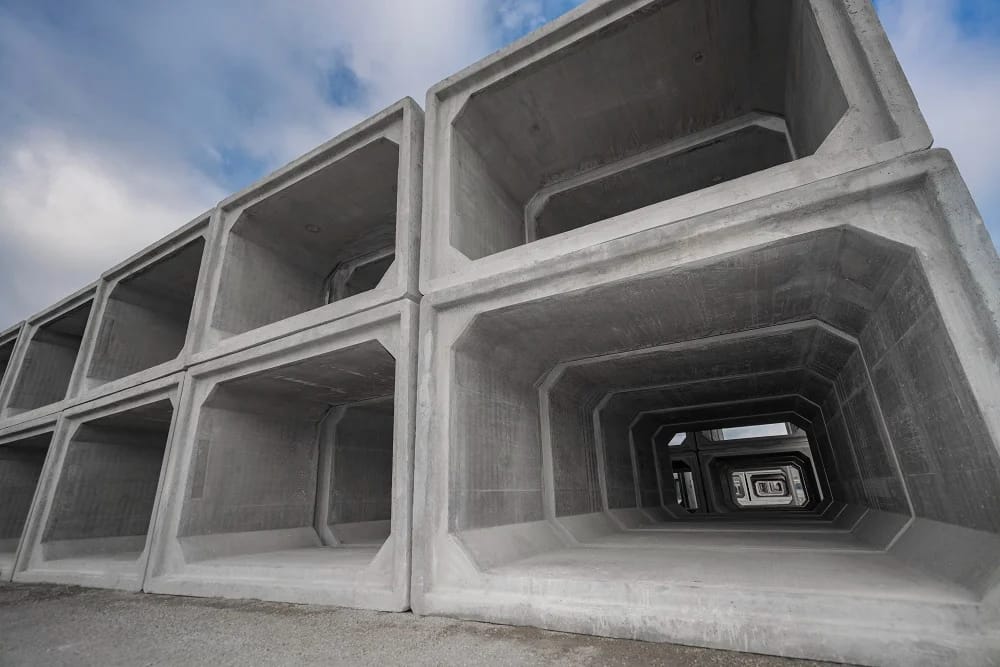
Understanding precast concrete cost starts with understanding how precast products are manufactured and delivered.
Definition of Precast Concrete
Precast concrete is produced in a controlled factory environment, using precise molds and high-strength materials. Once cured, finished elements are transported to the jobsite and lifted into place. Unlike cast-in-place concrete, precast does not rely on weather conditions or extended on-site labor—making it faster, safer, and often more economical.
Typical Precast Products Used in Canada
In 2025, precast is widely used in commercial, industrial, residential, and public infrastructure projects. Common examples include:
- Precast wall panels (insulated or non-insulated)
- Hollow-core floor slabs
- Beams and girders
- Columns and foundations
- Retaining walls and barrier systems
- Architectural precast with textured finishes
Each product type has its own cost structure—something we will break down in detail later.
Why Precast Is Often More Cost-Efficient
A major benefit of precast concrete cost is the predictability of factory-controlled production.
Precast frequently reduces total project cost because:
- Manufacturing is optimized — factory-controlled curing improves strength and reduces waste.
- Project timelines are shorter — on-site installation is fast, saving labor and overhead.
- Weather delays are minimized — predictable manufacturing reduces scheduling risks.
- Quality is higher — better durability lowers long-term maintenance cost.
These advantages can cut total structural costs by 5–15% compared to cast-in-place concrete, depending on project type.
Average Precast Concrete Cost in 2025 (Canada)
These ranges give buyers a clear starting point for estimating precast concrete cost across Canada.
Because precast pricing varies by region, product type, reinforcement level, and finish, the following ranges reflect Canadian national averages. These estimates are based on industry reports, supplier pricing models, and data from major North American precast associations.
Cost per Square Foot (Most Common Metric)
Each component—from materials to installation—plays a direct role in the final precast concrete cost.
For standard exterior wall panels, the average precast concrete cost in Canada ranges from:
$35 to $60 per square foot (installed)
This includes materials, reinforcement, labor, equipment, and installation. Higher-end architectural panels may cost more due to custom finishes and complex reinforcement.
Cost per Cubic Yard
Precast concrete volume pricing typically ranges from $350 to $650 per cubic yard, depending on mix design and reinforcement requirements.
Cost Range by Product Type
| Precast Product | Average Cost (CAD) |
|---|---|
| Standard wall panels | $35 – $60 per sq ft |
| Insulated panels | $45 – $75 per sq ft |
| Hollow-core slabs | $6 – $12 per sq ft |
| Structural beams & girders | $80 – $150 per linear ft |
| Precast foundations | $250 – $450 per linear ft |
These ranges include material, manufacturing, and installation but exclude transportation, which varies based on distance.
Cost Compared to Cast-in-Place Concrete
Many contractors still assume cast-in-place is cheaper because the concrete itself is inexpensive. But when total cost of labor, rebar, formwork, curing time, and site conditions are considered, precast often shows a cost advantage.
| Factor | Precast Concrete | Cast-in-Place |
|---|---|---|
| Labor Cost | Lower | Higher |
| Weather Delays | Minimal | High Risk |
| Quality Control | High (factory-controlled) | Variable |
| Installation Time | Very Fast | Slow |
| Total Cost | Often lower by 5–15% | Higher due to labor + delays |
According to the PCI (Precast/Prestressed Concrete Institute), switching to precast can reduce scheduling duration by up to 40% and labor needs by up to 60% — directly impacting total project cost.
Full Precast Cost Breakdown (Material → Installation)
To accurately estimate your project’s budget, you must understand how each component contributes to the final price. Below is a transparent breakdown of what you’re really paying for when ordering precast elements.
1. Material Costs
Material pricing makes up 40–55% of the total precast concrete cost. This includes:
- Cement & aggregates — the base price depends on mix strength and regional market conditions.
- Steel reinforcement — rebar and mesh can account for 12–20% of total cost.
- Admixtures — chemical additives that improve strength and curing.
- Formwork amortization — reusable steel molds reduce per-unit cost over time.
In Canada, the quality requirements for structural precast are high, which ensures long-term performance but also affects price.
2. Manufacturing Costs
Manufacturing represents roughly 20–30% of project cost. Key cost drivers include:
- Skilled labor for casting, finishing, and reinforcement placement
- Factory curing systems (steam curing, temperature control)
- Quality control processes such as compressive strength testing
- Production overhead including equipment, cranes, energy use, and maintenance
Because precast is made in a controlled environment, defects and waste are significantly reduced compared to on-site casting.
3. Transportation Costs
Transportation cost varies widely depending on distance, weight, and escort requirements. On average in Canada, transportation accounts for:
5–15% of total precast cost
Typical cost drivers include:
- Long-haul transport for heavy panels
- Special permits for oversized loads
- Escort vehicles (mandatory in some provinces)
Choosing a local manufacturer like Omega Precast significantly minimizes delivery charges and reduces carbon footprint.
4. Installation Costs
Installation is usually 10–20% of total cost and includes:
- Crane rental (one of the most significant installation expenses)
- Rigging equipment and lifting anchors
- On-site labor trained in precast installation
- Site preparation for foundations, gravel pads, access routes
Because precast panels are installed quickly—often in a matter of hours—labor cost is substantially lower than cast-in-place projects that require weeks of work.
5. Additional Costs (Often Overlooked)
- Engineering and shop drawings
- Structural design review
- Lifting hardware and embedded plates
- Temporary storage or staging areas
These additional items typically add 3–10% to the total budget depending on project complexity.
Factors That Affect Precast Concrete Pricing
Precast concrete pricing is highly dependent on several engineering, logistical, and project-specific variables. Understanding these factors allows owners and contractors to better predict total investment and optimize design to reduce unnecessary costs.
Panel Size & Thickness
Larger and thicker panels require more concrete, increased reinforcement, and heavier lifting equipment—all of which raise the final cost. For example, a standard 6-inch panel will cost significantly less than a 10-inch structural panel requiring double reinforcement.
Reinforcement Level
Steel reinforcement can account for up to 20% of the total precast concrete cost. Complex loads, seismic design, or long-span requirements increase rebar density, driving manufacturing cost upward.
Surface Finish (Smooth, Architectural, Textured)
Architectural finishes such as exposed aggregate, form liner textures, or color pigments add to manufacturing time and material usage. Decorative surfaces may cost 15–40% more than a standard smooth finish due to labor intensity and specialized molds.
Project Location & Delivery Distance
Transportation is one of the most variable cost components. Delivering precast panels across provinces can dramatically increase cost due to fuel, permits, and escort vehicle requirements. Working with a local supplier like Omega Precast minimizes these costs and avoids long-distance shipping delays.
Complexity of Design
Complex shapes, connection details, or custom engineering add time and labor to both shop drawings and manufacturing. Projects requiring multiple revisions or non-standard geometries will naturally have higher pricing.
Volume Ordered (Batch Size)
Precast becomes more economical as order volume increases because factory setups, molds, and production cycles are optimized for repeatability. Bulk orders often reduce per-unit cost by 10–30%.
Precast vs Cast-In-Place: Which Is More Cost-Effective?
Cost-effectiveness goes far beyond the price of concrete itself. When evaluating whole-project budgets, precast often provides significant financial advantages through time savings, reduced labor, and improved quality control.
Material Cost Comparison
Although the raw material cost for concrete may be similar, precast uses optimized mix designs with reduced waste. Cast-in-place typically requires more formwork, curing time, and on-site quality management.
Labor Differences
- Precast: Manufactured by skilled labor in a controlled factory environment.
- Cast-in-place: Requires larger on-site crews, formwork carpenters, and extended curing time.
Labor often represents the single biggest difference—precast can reduce needs by up to 60%.
Time Savings
With precast, panels arrive ready to install. Cast-in-place requires form installation, pouring, curing, and stripping. Delays caused by weather add further risk and cost.
Long-Term Maintenance Costs
Precast typically offers superior durability, tighter quality control, and higher compressive strength. This lowers maintenance and repair costs over the building’s lifecycle.
Total Life-Cycle Cost Analysis (2025)
Industry data shows that precast buildings often achieve:
- 5–15% lower initial construction cost
- 20–35% faster project timelines
- Up to 40% lower life-cycle cost due to reduced maintenance
Example Calculation
A 20,000 sq ft warehouse:
- Cast-in-place estimated cost: $1.45M
- Precast estimated cost: $1.25M
Total savings: $200,000 (14%)
Real-World Precast Cost Examples in Canada
To make budgeting clearer, here are typical cost ranges from real Canadian projects Omega Precast and industry partners have delivered.
Warehouse Wall Panels
Cost: $35–$55 per sq ft
Industrial Buildings
Cost: $45–$70 per sq ft depending on reinforcement and finishes.
Residential Precast Walls
Cost: $30–$50 per sq ft for basement or exterior wall systems.
Infrastructure & Municipal Projects
Retaining walls, barriers, and precast utility structures vary widely but generally range from $200–$450 per linear foot.
Cost Range Table
| Project Type | Average Cost (CAD) |
|---|---|
| Commercial warehouse | $35–$55 per sq ft |
| Manufacturing facility | $45–$70 per sq ft |
| Residential precast basement | $30–$50 per sq ft |
How to Estimate Precast Costs for Your Project
If you want a predictable budgeting method, follow this simple step-by-step guide used by many builders and estimators across Canada.
Step-by-Step Estimation Guide
- Measure the total surface area (sq ft or sq m).
- Select the panel type: insulated, structural, hollow-core, etc.
- Choose the finish (standard, smooth, architectural).
- Account for reinforcement based on load requirements.
- Add transportation based on distance.
- Add installation costs (crane, rigging, labor).
Cost Calculator Formula
Total Precast Cost = (Panel Area × Unit Cost) + Transportation + Installation
When to Request a Professional Quote
Always request a custom estimate when:
- Your project involves engineered loads or unusual geometries.
- Delivery exceeds 200 km.
- You need architectural finishes or multi-layer insulated panels.
Tips to Reduce Precast Concrete Costs
Standardize Panel Sizes
Designing panels to match common mold sizes minimizes formwork customization and speeds up manufacturing.
Reduce Finish Complexity
Smoother surfaces and simpler forms reduce material and labor costs.
Order in Bulk
Bulk ordering spreads mold and setup costs across more units, lowering cost per piece.
Use Local Suppliers (Omega Precast Advantage)
Working with a Canada-wide manufacturer like Omega Precast helps reduce transportation charges and avoids cross-province shipping delays.
Early Engineering Collaboration
Bringing engineers and precast specialists early can optimize design and prevent costly revisions.
Why Choose Omega Precast (Canada-Wide Manufacturing)
Modern Equipment & Controlled Quality
Our advanced curing technology and precision formwork ensure every panel meets or exceeds Canadian structural standards.
Fast Turnaround & On-Time Delivery
Because we manufacture domestically, projects move quickly with predictable schedules.
Competitive Pricing Across Canada
We optimize production, logistics, and engineering to offer industry-leading value.
Support from Design to Installation
Our team assists with engineering, drawings, manufacturing, transportation, and installation, ensuring seamless project execution.
Conclusion: Budgeting for Precast Concrete in 2025
When analyzed properly, precast concrete cost shows strong advantages over cast-in-place methods.
Precast concrete provides a reliable, cost-efficient, and durable solution for commercial, residential, and industrial structures. Understanding the full cost breakdown—from materials and manufacturing to transportation and installation—helps you prepare a more accurate budget and avoid unexpected expenses.
Key takeaways:
- Average cost ranges from $35–$60 per sq ft.
- Precast can reduce total project cost by 5–15%.
- Transportation, finish, reinforcement, and panel size are major cost drivers.
- Precast offers significant time savings and long-term durability benefits.
Ready for an accurate estimate? Contact Omega Precast for a custom quote tailored to your project needs.
FAQ: Precast Concrete Cost in 2025
Is precast cheaper than cast-in-place?
In many cases, yes. When labor, time savings, and reduced weather delays are included, precast is often 5–15% more cost-effective.
How much does precast wall cost per square foot?
Most standard precast wall systems range from $35–$60 per sq ft, depending on finish and reinforcement.
What affects precast transportation pricing?
Distance, weight, permits, and escort vehicle requirements are the main factors.
How long does manufacturing take?
Standard panels can be produced in 3–7 days. Large or custom pieces may take longer due to reinforcement and curing requirements.
Do prices vary across Canada?
Yes. Transportation and regional material costs influence final pricing. Ordering from a nearby precast manufacturer helps reduce cost.