
Last updated: August 5, 2026
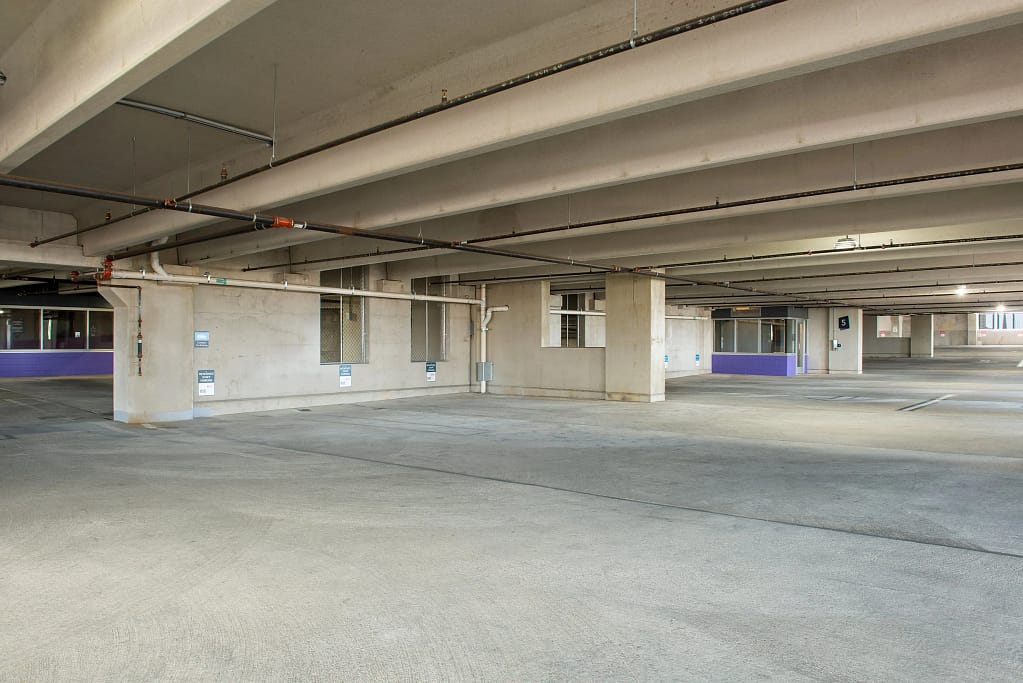
For a parking structure, going total-precast can take roughly 30% or more off the construction schedule. Industry sources report that for a typical 1,000-car structure a total-precast system can save more than 30% of the construction schedule, and a post-and-beam precast system more than 15%, with prefabrication studies bracketing the saving at 20 to 50 percent.
The saving comes from three mechanics a cast-in-place parkade can’t match: components are fabricated off-site in parallel with foundations and permitting, the frame is erected in days rather than weeks, and erection continues through winter because precast arrives on site ready for installation and doesn’t need protection from rain, sun, snow, wind, or extreme temperatures. Faster topping-out means earlier beneficial occupancy, faster revenue, and a shorter construction-loan period — which is why the schedule case, not the unit price, is the real argument for a precast parkade. These are industry and standards figures for what precast can do, not a measured Omega result.
Lots of pages say “precast is faster.” This one assembles the sourced numbers, proves them with the mechanics behind them, answers the durability objection, and localizes every beat to Calgary’s six-month winter and salt-heavy parkades. For the panel’s structure and fire duty, see “Architectural Precast as Structure + Façade + Fire Rating”.
How much faster is a precast parkade?
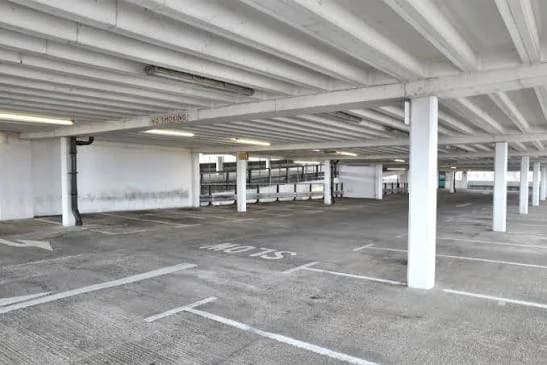
Start with the cleanest sourced figure. “For a typical 1,000-car parking structure, total precast structures can save more than 30% of the construction schedule,” and “post & beam solutions can save more than 15%.”
(Sources: Clark Pacific, “Precast + Parking,” https://www.clarkpacific.com/precast-parking/ ; corroborated by G/C PCI, “Life Cycle Costs,” http://www.gcpci.org/index.cfm/precast_solutions/life .)
That 30%-plus figure sits inside a wider industry band. Prefabrication “shortens construction schedules by 30% to 50%, enabling earlier occupancy,” precast specialists report “trimming project schedules by over 30%, especially for large-scale structures,” and the National Precast Concrete Association notes precast projects typically reduce the construction schedule by 20 to 50 percent.
(Sources: Clark Pacific, “Revolutionizing Parking Structures with Prefabricated Concrete Solutions,” https://www.clarkpacific.com/revolutionizing-parking-structures-with-prefabricated-concrete-solutions/ ; High Concrete, “Benefits of Precast Parking Garage Construction,” https://www.highconcrete.com/blog/benefits-precast-parking-garage-construction/ .)
A concrete data point shows the upper end in practice. At Swedish Covenant Hospital in Chicago, “building, framing, and parking garage construction was completed in only 7.5 weeks due to the total-precast concrete system.”
(Source: PCI-NE, “Incorporating Parking into Mixed-Use Development with Precast Concrete,” https://www.pci.org/PCINE/PCINE/Blog/2022/Incorporating_Parking_into_Mixed-Use_Development_with_Precast_Concrete.aspx .)
A note on attribution, because it matters here: every figure above is an industry or third-party report of what precast can do. Omega Precast is a late-2025 manufacturer entering this category and has no parkade track record. None of these numbers is an Omega-measured result, and the Swedish Covenant project is a PCI-NE example, not an Omega project. The value of this article is assembling the sourced case, not claiming the outcome.
Why is precast faster? The three mechanics
The schedule saving isn’t magic. It comes from three things a cast-in-place parkade structurally can’t do.
Parallel-path fabrication
Precast components are fabricated “while permitting and foundation work progress, so they are ready to begin erection as soon as foundations are complete,” and a single-source precaster “helps maintain the critical-path scheduling.” (Sources: PCI-MA, “Installation & Erection Considerations,” https://info.pci-ma.org/blog/faq-installation-erection-considerations-pci-ma ; PCI-NE, URL above.) The plant is building your frame while your site is still pouring footings. Off-site and on-site work happen at the same time instead of one after the other.
Erection in days, not weeks
Once foundations are ready, the precast frame goes up fast. Pieces are “erected quickly and efficiently, achieving schedules measured in days, not weeks,” versus the weeks a cast-in-place deck needs for forming, casting, curing, stripping, and clean-up of each level. (Source: Clark Pacific, “Precast + Parking,” URL above.)
Weather independence
This is the mechanic that matters most in Calgary. “Inclement weather can cause significant delays in construction with other materials, whereas precast can be erected through the winter months,” because “precast concrete arrives on site ready for installation and doesn’t require protection from rain, sun, snow, wind, or extreme temperatures, which saves time and money and reduces the potential for change orders due to winter conditions.”
(Source: PCI-MA, “Why Precast Parking Garages Are Superior,” https://info.pci-ma.org/blog/why-precast-parking-garages-are-superior .)
A cast-in-place parkade either pays for winter heating and hoarding or loses the season. A precast one erects straight through it.
Does the schedule saving actually save money?
Yes, and this is the close for a developer. Faster completion converts to dollars three ways.
“A fast-track approach allows the facility to begin operation more quickly, which means a shorter period before construction bonds can be paid off and faster generation of revenue,” and “no structure is put into service more quickly than a precast structure.” The time savings “translates directly into cost savings for the owner … quicker time to service and revenue generation, and potentially shorter construction loan periods.”
(Sources: PCI, Parking Structures Recommended Practice, https://www.pci.org/pci_docs/project_resources/parking_structures/parking%20structures%20recommended%20practice%20in%20design%20and%20construction.pdf ; Clark Pacific, URL above.)
So a 30%-class schedule saving is not just calendar. It is earlier beneficial occupancy, revenue starting sooner, and a shorter construction-loan carry. On a large parkade, the carry alone can outweigh a unit-price difference, which is exactly why the schedule case, not the per-stall price, is the argument that should decide the structure.
The named design authority behind all of this is free to read: PCI MNL-129-15, the Recommended Practice for Design and Construction of precast, prestressed concrete parking structures. PCI’s position is blunt: “decades of research have proven that precast, prestressed concrete is a cost-effective, durable solution for parking structures.”
(Source: PCI MNL-129-15, https://www.pci.org/ItemDetail?iProductCode=MNL-129-15E&Category=FREE .)
Fast, but is it durable? The salt question
A fair objection: did you trade durability for speed? The Canadian authority says no.
Factory precast components are “highly resistant to attack by chloride ions” (that’s road salt) and give “great resistance to ground waters, freeze and thaw cycles, salts.”
(Sources: CPCI, Parking Garages, https://wsmtp.cpci.ca/en/precast_solutions/parking_garages/ ; CPCI, Parking Structures, https://www.cpci.ca/en/precast_solutions/products_systems/parking_structures .)
The durability system for a precast parkade is the controlled factory concrete plus good drainage, corrosion inhibitors, and, on the driving surface, a waterproofing membrane or wear course. One practical caution from CPCI: deicing chemicals shouldn’t be applied until the structure is at least a year old.
A Canadian service-life and economic assessment of parking-garage options from the National Research Council backs the durability-and-cost case for precast as a structural choice.
(Source: NRC, service-life/economic assessment of parking-garage options, https://nrc-publications.canada.ca/eng/view/supplement/?id=49c7996a-27aa-4c44-bcaa-5f6df2ea4f1b&dp=147 .)
So the schedule case comes with a durability case, not at its expense, which lands hard in a city that salts its parkades through a long winter.
The Calgary layer
Three local facts make the schedule case stronger here than the national average.
The winter math is the clincher. Calgary runs a roughly six-month cold-weather pour regime. A cast-in-place parkade either pays winter heating and hoarding or loses those months; a precast parkade erects through them. The 30%-plus saving the industry reports is larger in practice in a Chinook climate, because the weather penalty a precast parkade avoids is bigger here.
(Source: PCI-MA winter quote, URL above; Omega Knowledge Base, cold-weather calendar.)
Salt plus freeze-thaw makes the durability answer matter. Calgary parkades see heavy deicing salt and roughly 128 freeze-thaw cycles a year. CPCI’s chloride-resistance and drainage guidance is directly on point, and the NRC study is a Canadian service-life authority. (Source: CPCI and NRC, URLs above; Omega Knowledge Base, climate.)
Mixed-use infill is where it compounds. Calgary’s mid-rise and mixed-use pipeline, parkade under residential, is exactly where precast’s parallel-path fabrication and tight-footprint erection stack up. (Source: PCI-NE mixed-use blog, URL above.)
The Calgary parkade and multi-family GC is a real buyer, and firms have been forming parkades locally for decades. Omega Precast enters as a solid-precast manufacturer; we present the sourced schedule case and our capability to supply, not a list of parkades we’ve topped out.
When cast-in-place still makes sense
The honest counterpoint. Cast-in-place can be the right call on a small structure where the schedule saving is modest in absolute terms, on a heavily irregular geometry that doesn’t suit repetitive precast components, or where a project is already tooled and crewed for cast-in-place and the changeover cost outweighs the gain. The precast schedule case is strongest on larger, more repetitive structures built through a real winter, which is most Calgary parkades.
FAQ
How much faster is a precast parkade than cast-in-place? Industry sources report a total-precast structure can save more than 30% of the schedule for a typical 1,000-car structure, with prefabrication studies bracketing the saving at 20 to 50 percent. These are industry figures for what precast can do, not a single project’s measured result.
Why is precast faster for parking structures? Three mechanics: components are fabricated off-site in parallel with foundations and permitting, the frame is erected in days rather than weeks, and erection is weather-independent.
Can you build a parkade through a Calgary winter? Yes. Precast arrives ready to install and doesn’t need protection from snow, wind, or cold, so erection continues year-round instead of losing the winter to heating and hoarding.
Does the schedule saving actually save money? Yes. Earlier beneficial occupancy, faster revenue, and a shorter construction-loan and bond carry. On a large parkade, the carry saving can outweigh a unit-price difference.
Are precast parkades durable against road salt? Yes. CPCI reports factory precast is highly resistant to chloride attack. Durability relies on the controlled concrete plus good drainage, corrosion inhibitors, and a waterproofing membrane or wear course on the deck.
What standard covers precast parking-structure design? PCI MNL-129, the Recommended Practice for Design and Construction of precast, prestressed concrete parking structures (a free PDF).
Does Omega have a parkade track record? No. Omega Precast launched in late 2025 and is entering the category as a solid-precast manufacturer. The figures here are industry and standards data for what precast can do, not Omega-measured results.
Build Your Parkade on a Shorter Schedule
Whether you’re planning a commercial parkade, mixed-use development, institutional facility, or multi-family project, Omega Precast helps general contractors and developers evaluate where precast delivers the biggest schedule advantage.
Our team can review your structural drawings, discuss erection sequencing, identify opportunities to shorten the critical path, and recommend the right precast system for your project.
Contact Omega Precast today to discuss your parking structure and request a project consultation.