
Last updated: August 6, 2026
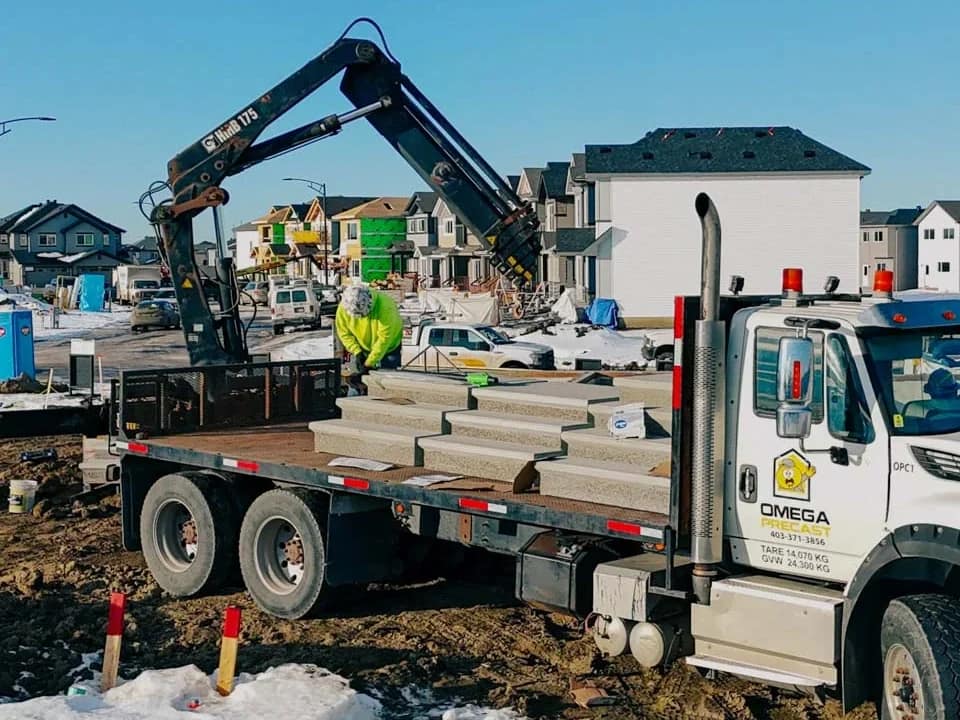
Getting a precast product approved for municipal use in the Calgary area is a qualification path, not a single application. First, the product must be made to the standards the municipality references. For precast drainage products that means CSA A257 (such as A257.4 for manholes and catch basins) and/or ASTM C478, plus the relevant City of Calgary or Alberta Transportation standard drawings.
Second, the manufacturing plant must be prequalified: the City of Calgary requires producers of precast concrete drainage products to be prequalified under the Ontario Concrete Pipe Association (OCPA) “Prequalification Requirements for Precast Concrete Drainage Products” and to submit their prequalification certificates to the City annually, and Alberta Transportation works through certification and standard-drawing conformance.
Third, the product is listed, since the City of Calgary maintains a Water Utility Product Approvals and Wastewater Approved Products List, and only then can it be specified-in on a tender. For a newer plant, the practical route is to qualify the product categories it can certify first, then expand the approvals.
This process lives buried in spec PDFs and tribal knowledge. No single plain-English page walks a precaster, or a municipal buyer vetting a newcomer, through the Calgary and Alberta qualification path. This is that page.
Before a precast product can appear on an approved-products list, municipalities have already decided why concrete—not alternative materials—is the preferred infrastructure solution. Our guide explains why underground concrete infrastructure is precast-by-default.
Why an approved-products list exists
Municipal buying is tender-based and risk-averse. A City buys buried infrastructure that has to last decades under a road, so it doesn’t evaluate every product on every job. It maintains lists of products and producers it has already vetted, and tenders are written against those lists. For a manufacturer, that means you can’t simply quote a job. You have to be eligible first. For a buyer, it means the list is your assurance that a product met the standard before it ever reached a tender.
The path to eligibility has three gates: meet the standard, get the plant prequalified or certified, and get listed. Here is each one, mapped to the two authorities a Calgary-orbit project deals with.
Gate 1: Meet the referenced standards
Before anything else, the product has to be made to the standard the municipality names. For precast drainage products in the Calgary area, that means CSA A257 (such as A257.4 for manholes and catch basins) and/or ASTM C478, plus City of Calgary or Alberta Transportation standard drawings.
The City of Calgary’s sewer specifications set out manhole and catch-basin material requirements in detail (manholes at §402.12.02, catch basins at §402.12.03). Alberta Transportation references C478 for precast manhole sections, publishes standard drawings such as CB6-2.10M9 (a 1200 mm precast manhole), and covers manholes, inlets, and catch basins in Section 2.10 of its Highway Construction Standard Specifications.
(Sources: City of Calgary 2025 Standard Specifications for Sewer and Waterworks Construction, https://www.calgary.ca/content/dam/www/uep/water/documents/water-documents/development-approvals-documents/2025/standard-specifications-for-sewer-and-waterworks-construction.pdf ; AT drawing CB6-2.10M9, https://www.alberta.ca/system/files/trans-dwg-cb6-2-10m9rev1.pdf ; AT Standard Specifications for Highway Construction §2.10, https://www.transportation.alberta.ca/Content/docType245/Production/2010_Highway_Construction.pdf .)
Gate 2: Get the plant prequalified or certified
Meeting the standard on paper isn’t enough. The municipality also wants assurance that the plant making the product runs a controlled quality system. There are two layers a Calgary-orbit precaster encounters.
The City of Calgary’s OCPA prequalification
This is the concrete, sourced Calgary requirement. Producers of precast concrete drainage products (manholes, catch basins) must be “certified under the Ontario Concrete Pipe Association Program (OCPA) ‘Prequalification Requirements for Precast Concrete Drainage Products,'” with “Prequalification Certificates … submitted to City of Calgary Wastewater annually starting March 1,” along with copies of all reports to the OCPA. Current sewer specs update the submission to “every May 1 of the current year.”
(Sources: City of Calgary 2025 Standard Specifications for Sewer and Waterworks Construction, URL above; City of Calgary 2022 Sewer Construction spec, https://www.calgary.ca/content/dam/www/uep/water/documents/water-documents/development-approvals-documents/2022/2022-standard-specifications-sewer-construction-01.pdf .)
The submission date differs between spec editions (older editions say March 1, current ones say May 1), so confirm the date in the current edition before you rely on it. The City spec PDFs are scan-heavy, so verify the exact section and date verbatim against the live document at the time you act on this.
CPCQA, the plant-certification layer
The Canadian Precast Concrete Quality Assurance (CPCQA) program is the certification a municipal or transportation spec commonly leans on for precast. CPCQA certifies plants to CSA A23.4 plus PCI MNL-116 and MNL-117, in three category families: structural precast, architectural precast, and concrete pipe, manhole sections, and precast drainage products. Certification is per category: a plant certified for one family is not automatically certified for another. The path runs through a Quality System Manual approval, a two-day pre-certification evaluation, a first audit, and a minimum of two audits each calendar year thereafter, and a public Certified Plants directory lets a buyer verify a plant.
(Sources: CPCQA Certification Program, https://www.precastcertification.ca/en/certification_program/ ; CPCQA Codes and Standards, https://www.precastcertification.ca/en/codes_standards/ ; CPCQA Certified Plants, https://www.precastcertification.ca/en/certified_plants/ .)
Two things matter for how to read this. First, for a buyer, CPCQA is a verification tool: check the Certified Plants directory for the specific product category the job needs, and don’t assume a structural certification covers drainage products. Second, this article presents CPCQA as what the municipality and Alberta Transportation require of a plant and how you verify a plant, not as any one supplier’s badge. Omega Precast does not represent itself as CPCQA-certified; the deeper certification mechanics live in the specifier’s guide to CPCQA categories, and a buyer should always confirm a plant’s current status in the public directory.
Gate 3: Submit, get listed, get specified-in
With the standard met and the plant prequalified or certified for the right category, the product moves toward the list.
The general mechanism is a submittal. The manufacturer or contractor submits product data, test data, and shop drawings to the engineer or owner, who compares them against “the specified products and acceptable products listed in the specification and addenda”; an approved submittal “authorizes quantity and quality of a material or an assembly to be released for fabrication.”
(Source: Submittals (construction) overview, https://en.wikipedia.org/wiki/Submittals_(construction) .)
Then the listing. The City of Calgary references a “Wastewater Approved Products List” available under separate cover, and its water-development specifications page lists a “Water Utility Product Approvals” document (dated 2026-03-09, which shows the list is live and maintained).
(Sources: City of Calgary water development specifications page, https://www.calgary.ca/development/home-building/water-development-specifications.html ; City of Calgary sewer spec, URL above.)
These lists are maintained separately and updated periodically, so confirm the current list title and version when you need it.
Only after a product is listed can it be specified-in on a tender. That’s the final step: the product appears in, or is accepted against, the project specification, and the buyer can use it. This product approval sits inside the City’s broader procurement framework, which also runs formal prequalification programs for prime contractors and engineering services.
(Source: City of Calgary prequalification, https://www.calgary.ca/buy-sell/supply-to-city/prequalification.html .)
What this means for a newer plant
The three gates explain a reality every newcomer faces, and it’s the avatar’s real fear: you can’t win municipal work by being good. You have to be eligible first, category by category.
So the practical route for a newer plant is a ladder. Qualify the product categories you can certify and deliver well, get those categories prequalified or certified, get the products listed, and get specified-in. Then expand into the next category and repeat. You climb the approvals ladder rather than vaulting it.
That maps exactly onto how Omega Precast is entering the category: start with the products it can certify and deliver flawlessly, then climb. Read carefully: that is a description of the path Omega is on, the direction of travel. It is not a claim that Omega is already OCPA-prequalified, CPCQA-certified, or on a City of Calgary approved-products list. For a buyer vetting any newer plant, the same rule applies in reverse: check the public certifications and the current approved-products list before you specify, regardless of vendor.
The Calgary and Alberta layer
A few local specifics tie this together.
Two authorities, two paths. The City of Calgary runs OCPA prequalification feeding the Wastewater and Water Utility approved-products lists. Alberta Transportation works through certification and standard-drawing conformance. A Calgary-orbit precaster or buyer deals with both, so map them side by side rather than assuming one path covers the other. (Sources: City of Calgary and AT, URLs above.)
The durability spec is baked in. Because Calgary’s referenced standards include CSA A257 and CSA A23.1 (Type HS for sulphate soil), an “approved” precast product is inherently Calgary-durable, because the approval process and the durability spec are the same thing.
Surrounding municipalities often adopt these specs. Rocky View and other municipalities in the Calgary orbit frequently adopt City of Calgary or Alberta Transportation specifications by reference, so the same OCPA and certification path tends to generalize across the region, though you should confirm per municipality. (This reflects common Alberta municipal practice; confirm the specific municipality’s adopted specs.)
FAQ
How does a precast product get approved for municipal use in Calgary? Meet the referenced standards, get the plant prequalified or certified for the right product category, submit the product and test data, land on the City’s approved-products list, and then get specified-in on a tender.
What is the OCPA prequalification the City of Calgary requires? The Ontario Concrete Pipe Association “Prequalification Requirements for Precast Concrete Drainage Products.” Producers of precast drainage products must be prequalified under it and submit their certificates to the City annually (older specs say March 1, current specs say May 1; confirm the current edition).
Does the City of Calgary keep an approved-products list for precast? Yes. It references a Wastewater Approved Products List and a Water Utility Product Approvals document, maintained separately and updated periodically.
What standards must a precast manhole or catch basin meet for Calgary? CSA A257.4 and/or ASTM C478, plus the relevant City of Calgary and Alberta Transportation standard drawings.
How does Alberta Transportation approve precast drainage products? Through certification and conformance to AT standard drawings (such as CB6-2.10M9) and Highway Construction Standard Specifications §2.10.
How does a new precast plant break into municipal work? By climbing the ladder: qualify and certify the product categories it can deliver first, get those listed, get specified-in, then expand category by category. Eligibility comes before the tender.
Is being CPCQA-certified the same as being on the approved-products list? No. Plant certification (such as CPCQA, by product category) is one gate, and appearing on the City’s approved-products list is a separate step that also requires meeting the referenced standards and the submittal process. Verify a plant’s certification and the current list independently.
Planning to Supply Municipal Precast Products?
Municipal approval starts long before the first tender. From CSA and ASTM compliance to plant certification, product documentation, and approved-products lists, every step must align with the municipality’s requirements.
Omega Precast works with engineers, municipalities, developers, and utility contractors to manufacture precast infrastructure that is designed around Canadian standards and municipal specifications.
Talk with Omega Precast about your next municipal infrastructure project to discuss product requirements, engineering documentation, manufacturing capabilities, and approval pathways before procurement begins.