Last updated: August 5, 2026
This is the story of how a Calgary cribbing and foundation crew, working since 1988, built its own precast plant to deliver faster, more consistent foundations. It traces the 1988-to-2025 journey and explains why decades of field experience led the team to in-house precast manufacturing.
Brand: Omega Precast
Word count: ~2,400
Publish week: Week 6
Schema: Article + Organization (3-brand integration) + AboutPage
The 1988 → 2023 → 2025 timeline
In 1988, a single Calgary cribbing crew started pouring residential foundations.
In 2023, they added a volumetric concrete fleet.
In 2025, they added a precast plant.
Three brands, one Alberta family of companies, all built around 36 years of understanding what Calgary’s residential foundations actually need. This piece explains why each move happened — and what the three-brand structure means for builders, GCs, and the Calgary residential construction supply chain.
36 years of cribbing told us when precast wins
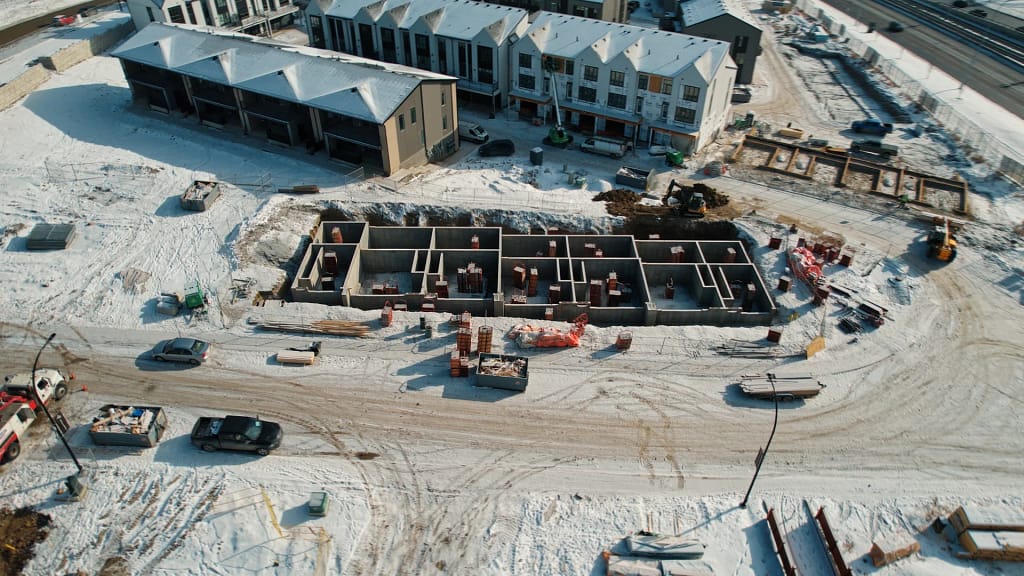
Cribbing — the trade of forming and pouring residential foundations — is where you learn what concrete supply and structural-wall economics actually look like under real Calgary conditions. Across 4,538 Fieldwire-tracked tasks (3,762 named project addresses), here’s what 36 years of pouring told us about when precast becomes the right call:
1. Calgary’s winter shutdown problem
Foundation pours after the September 30 cold-weather trigger require expensive procedures — heated mix, accelerators, hoarding, frost blankets, continuous monitoring. The cost stack adds 10–25% per pour. Most production builders simply schedule around the trigger, losing 4–6 months of foundation season per year.
2. Schedule pressure on production builders
Cast-in-place foundation walls take 7–10 calendar days from forms set to forms stripped (cure-cycle dependent). For production builders running multi-lot phases, that gap compounds across the schedule. Precast’s 1-day install vs CIP’s 7–10 day cure compresses the foundation-to-framing handoff by 6–9 days per lot.
3. Multi-family blocks
4–12 unit townhome and rowhouse blocks have repeated wall geometries — perfect for factory-cast panels manufactured to identical spec on a controlled production line. Multi-family is precast’s structural-leverage category.
Calgary’s S-2 sulphate exposure class mandates HS sulphate-resistant cement (Type HS, originally branded Kalicrete in Alberta in 1930) per CSA A23.1:24. Factory-cured precast delivers 35 MPa HS at 56 days — the mandatory specification — under controlled cure conditions, reliably, every panel. On-site cast-in-place delivers the same spec under variable site conditions, with more variability across pours.
4. Sulphate exposure
When all four conditions show up on the same project — schedule pressure, multi-family geometry, winter scheduling, sulphate exposure — precast is structurally the right call. The 2025 launch was based on enough years of cribbing-floor evidence that precast was the right move for a specific class of Calgary projects.
The 2025 launch logic
First customer: Sterling Calgary’s Okotoks production line at Wedderburn.
Sterling Homes’ Wedderburn community in Okotoks (Anthem master plan) was where every reason to build a precast plant converged on one customer:
- Multi-lot production phasing
- Same-spec townhome blocks
- Cold-weather + shoulder-season scheduling pressure
- An established multi-builder relationship Sterling already had with Omega 2000 cribbing
Operational contact verified via Fieldwire records (May 2026). Across 11+ active named addresses in the Wedderburn community — Burns Street, Birch Row, Sweetgrass Circle, Wintergreen Bend, Aster Link, Ware Street, plus pipeline expansion through 2026 — Sterling has specified Omega Precast walls since our late-2025 plant launch. Sterling’s broader Wedderburn community has been an active multi-year build; Omega Precast’s involvement began with our launch window.
The first-customer choice was structural. Sterling wasn’t taking a risk on a new supplier; Sterling had been on Omega 2000’s cribbing spec sheet for years. The precast launch was a brand extension into a category Sterling already needed and already trusted us to handle.
The three-brand ecosystem
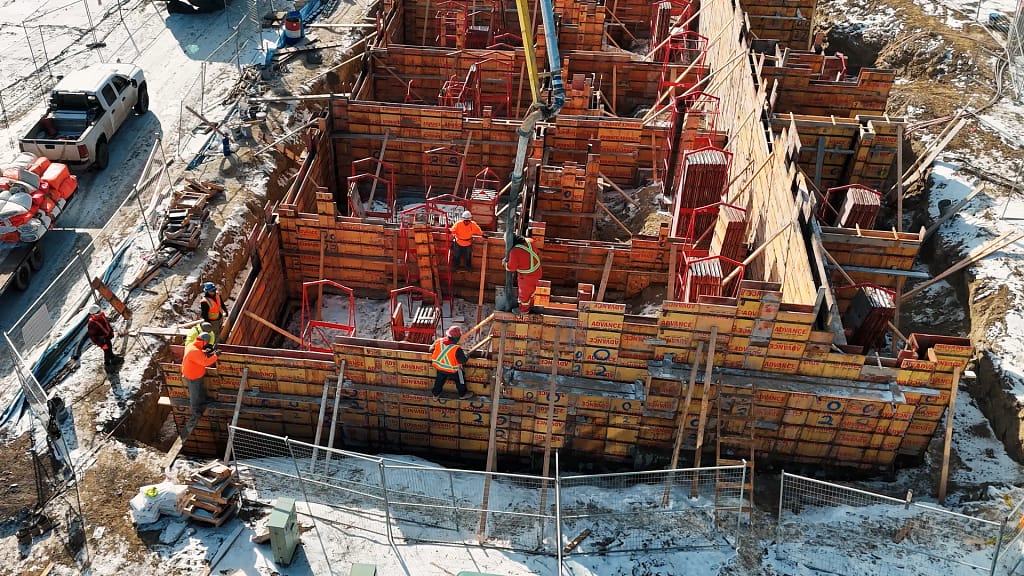
Omega 2000 Cribbing (1988): footings + cast-in-place foundation walls. 36 years tenure. +4,000 Fieldwire-tracked projects. The full Omega 2000 cribbing crew runs across South Field, North Field, and Service divisions. 12+ active production-builder partnerships. ~1 in 10 Calgary new home foundations (matched low-rise denominator; possibly 1 in 6 single-detached).
Omega Ready Mix (2023): volumetric concrete supply. 5 trucks (ProAll Reimer + CemenTech). 1 boom pump. Calgary metro 24/7 + 30–40 min radius. Calgary’s only city-based volumetric concrete fleet. ASTM C685 / CSA A23.1 compliant.
Omega Precast (2025): factory-cast foundation walls. 35 MPa HS sulphate-resistant cement spec per CSA A23.1:24 (strength verified at 56 days — intrinsic to HS cement chemistry, which gains strength more slowly than Type GU). CSA A23.4 governs the structural design. Plant certification pathway through CPCQA (the Canadian Precast Concrete Quality Assurance program, aligned with PCI MNL-116). Customer roster includes Sterling Wedderburn (11+ named addresses), Avalon Greystone Cochrane Net Zero rowhouse buildings, and Habitat for Humanity Southern Alberta’s Chestermere multi-family project at Dawson’s Landing (24 affordable townhomes).
What integration enables: one-vendor foundation supply chain. The cribbing crew that pours your footings is on the same group calendar as the volumetric truck delivering the concrete and the precast plant manufacturing the walls. One vendor relationship. One coordinated schedule. One invoice across the foundation phase.
The 6-step coded workflow (operational fingerprint)
Across 36 years of cribbing-floor reality, the Omega 2000 crew evolved a six-step coded workflow for foundation work. It now runs across all three brands:
- PCSTPO.M — Pre-Cast Pre-Order (manage stage)
- NTFCRB.M — Notify Cribber for delivery (manage stage)
- NTFEXC.M — Notify Excavation (manage stage)
- FTGFRM.M — Footing Form (manage stage)
- CRBLB.P — Cribber Labor — place precast (pour stage)
- PCSTPP.P — Precast Placement, final (pour stage)
The codes aren’t unique magic. They’re 36 years of operational learning compressed into a vocabulary the crew uses without thinking. They surfaced in our May 2026 Fieldwire deep-dive review — +4,000 tasks across ~3,800 named project addresses — and they’re the operational fingerprint no competitor can replicate without putting in the same number of years.
What 35 MPa HS factory-cast actually means
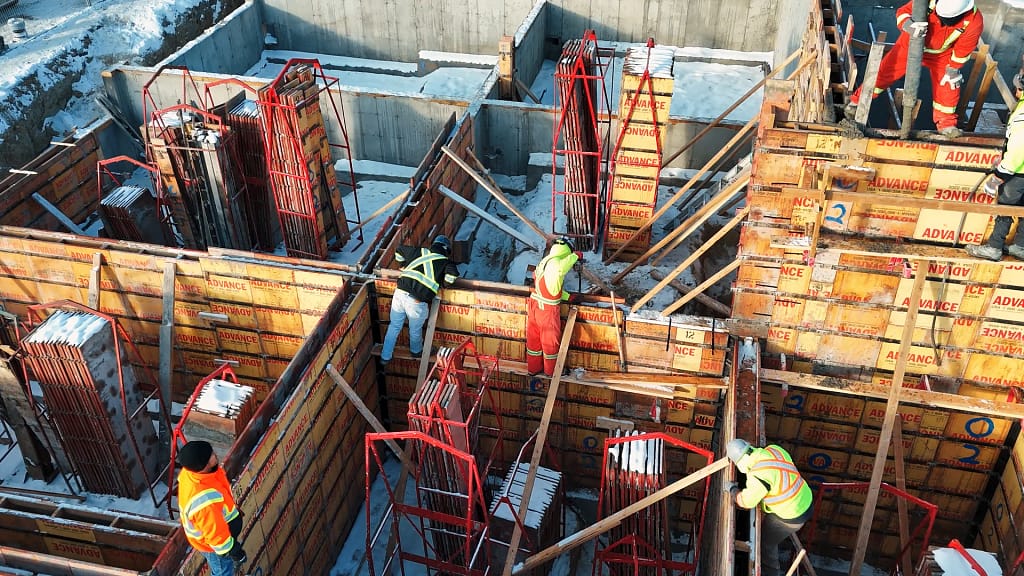
The cast-in-place residential foundation standard in Calgary is 25 MPa, S-1 or S-2 HS, depending on the soil sulphate testing on the lot. Most production-builder cast-in-place residential foundations target 25–32 MPa.
Omega Precast walls hit 35 MPa HS at 56 days — meeting the CSA A23.1:24 specification for sulphate-resistant precast applications. The 56-day spec point is intrinsic to HS cement chemistry: sulphate-resistant cement gains strength more slowly than ordinary Portland cement, so the design strength is verified at 56 days rather than the 28-day point used for general concrete.
Why factory-cured > on-site:
- Controlled curing. Plant temperature and humidity stay within tight bands across the cure cycle.
- Climate-controlled environment. No wind, no chinook reversals, no unexpected weather.
- Dedicated QA. 100% panel inspection before shipping. Per-panel paperwork (mix design, cure data, strength tests).
Cast-in-place walls hit the same spec under variable site conditions; precast hits the same spec under controlled conditions, every panel. Both produce real CSA-compliant concrete. The difference is the variability around the spec target.
The first-customer case study (Sterling Okotoks Wedderburn)
What the Wedderburn rollout looked like in practice:
- 11+ active named addresses since our precast plant launched in late 2025 (Burns Street, Birch Row, Sweetgrass Circle, Wintergreen Bend, Aster Link, Ware Street, plus pipeline). Sterling’s broader Wedderburn community is a multi-year build; Omega Precast’s involvement began with our late-2025 launch window.
- Operational contact: the Framing Supervisor at Sterling Calgary
- Omega’s role: 35 MPa HS factory-cast wall panels delivered + installed
- Sterling’s value-driver: precast bypasses the on-site cure-in-cold problem entirely — meaning Wedderburn’s production cadence runs through fall and shoulder seasons without absorbing the cold-weather procedure stack on the wall pour
- Schedule compression: 6–9 days per lot vs cast-in-place. At Wedderburn-phase scale (~50+ lots), that’s weeks of saved schedule per phase
The case study is documented in the dedicated PC-P4 pillar (with builder approval). What matters here is that the launch worked because the operating need was real, the customer relationship was already there, and the cribbing-side learning told us this was the right project type to start with.
FAQ
Q: When did Omega Precast launch?
- We’re the third brand in the Omega Group of companies after Omega 2000 Cribbing (1988) and Omega Ready Mix (2023).
Q: What’s the relationship between Omega 2000, Omega Ready Mix, and Omega Precast?
Three sister brands in one Alberta family of companies. Shared operational team of 100+ people across the three brands — cribbing crews (South Field / North Field / Service), the Omega Ready Mix volumetric drivers + boom pump operators, and the Omega Precast plant team. Shared customer relationships built over 36 years (cribbing tenure). Independent regulatory + certification compliance per brand. One coordinated foundation-phase calendar across the three.
Q: Where is Omega Precast’s plant located?
Calgary metro area. The plant operates year-round under controlled cure conditions, delivering panels across Calgary CMA + surrounding markets (Airdrie, Cochrane, Chestermere, Okotoks, plus the acreage corridor).
Q: What kind of precast does Omega make?
Residential foundation walls (the core product). Garage panels. Multi-family wall systems. Custom + architectural precast for boutique builders. We’re targeting CSA A23.4 structural compliance + CPCQA plant certification.
Q: Who are Omega Precast’s main customers?
Sterling Homes (Wedderburn Okotoks — flagship account, 11+ named addresses across Sweetgrass Circle, Birch Row, Burns Street, and Ware Street). Avalon Master Builder (Greystone Cochrane Net Zero rowhouse buildings). Habitat for Humanity Southern Alberta (24-townhome multi-family project at Dawson’s Landing in Chestermere). Plus emerging custom-builder partnerships.
CTA
Three brands. One Alberta family of companies. All built around 36 years of understanding Calgary’s foundations.
Omega Precast was built from 36 years of real Calgary foundation experience — not theory.
From cribbing crews and volumetric concrete delivery to factory-cast wall systems, the Omega Group delivers a coordinated foundation process designed for Alberta conditions and year-round construction schedules.
Need precast walls for your next build? Talk to the team that built the cribbing company first, then the concrete supply, then the precast plant. info@omegaprecast.ca | 403-217-4888.
Last updated: May 2026 | Methodology: brand origin story documented across the three Omega Group brands. Sterling Wedderburn 11+ named-address record verified via Fieldwire deep-dive (May 2026).