Last updated: August 4, 2026
Precast concrete supports affordable housing in Alberta by speeding construction, reducing on-site labour, and delivering durable, low-maintenance, fire- and sound-resistant structures. Factory production and repeatable designs help control budgets and timelines — letting developers deliver quality multi-unit housing faster and more predictably.
If you’re a developer eyeing a parcel in Beltline or a contractor tackling a multi-unit project in Saddleridge, you know the clock is ticking and the budget is tight. Alberta needs quality housing quickly, and traditional building methods often struggle to meet that dual demand. That’s where precast concrete offers a powerful solution, blending speed, durability, and cost-effectiveness in one package.
For projects from the Alexis Nakota Sioux Nation to Calgary’s urban corridors, this method is changing the affordability equation. Let’s break down why precast concrete is becoming the go-to choice for affordable housing in our province and how local experts like OmegaPrecast are making it a reality.
Benefits of Precast Concrete in Affordable Housing
When you’re building for affordability, every decision impacts the bottom line and the timeline. Precast concrete delivers advantages that directly address the core challenges of affordable housing projects across Alberta. From Calgary’s short build season to the need for long-term durability, here’s how it stacks up.
Speed and Fast Construction Time
The single biggest advantage is speed. Precast concrete components—walls, floors, staircases—are manufactured off-site in a controlled plant environment while site work happens simultaneously. This means foundations can be poured in Martindale while wall panels are being cast miles away.
Once delivered, a building envelope can be erected in days or weeks, not months. This slashes overall project timelines by 30-50%, getting tenants into homes faster and reducing carrying costs like construction financing. For a developer, that faster turnaround is a direct path to improved project viability and quicker returns.
Cost Reduction and Low Cost
While the upfront material cost can be comparable to wood framing, the true savings are systemic. Faster construction means lower labour costs on-site and reduced exposure to Alberta’s weather delays, which can blow budgets apart. The factory environment minimizes material waste—a huge cost in traditional building.
There’s also predictability. With most fabrication happening off-site, you’re shielded from the price volatility and supply chain hiccups that plague on-site material deliveries. This controlled process gives you a locked-in cost structure that is far easier to budget for from the start.
Durability and Safety in Alberta Winters
Alberta’s climate demands toughness. Our harsh freeze-thaw cycles wreak havoc on lesser materials, leading to maintenance headaches and shortened building lifespans. Precast concrete is inherently resilient, with high compressive strength and excellent resistance to moisture penetration and temperature extremes.
This translates to safer, more durable housing that requires far less maintenance over decades. It’s also non-combustible, providing superior fire resistance—a critical safety factor in multi-unit dwellings. You’re building a legacy, not just a quick fix.
Energy Efficiency and Sustainability
Modern precast wall systems often come as insulated sandwich panels, achieving high R-values in a single, integrated component. This creates a continuous thermal barrier, eliminating the thermal bridging common in stud-framed construction and leading to significantly lower heating and cooling costs for residents.
That energy efficiency is a win for both the planet and the pocketbook. Furthermore, concrete’s thermal mass helps regulate indoor temperatures, adding to comfort and reducing strain on HVAC systems. In short, precast delivers a high-performance building envelope by default.
Precast Concrete Products and Systems
Not all precast is the same. The technology has evolved into specialized systems designed for different scales and goals of affordable housing. Understanding these options helps you match the right product to your specific project vision and budget.
Precast Insulated Wall Panels
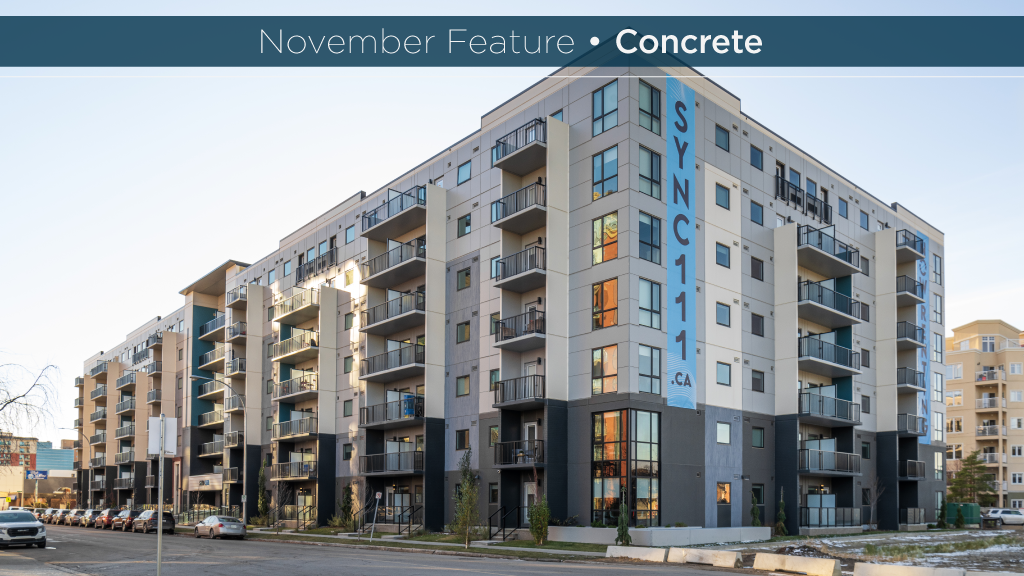
These are the workhorses for energy-efficient enclosures. They consist of an inner and outer concrete wythe (layer) with a rigid insulation core permanently bonded between them. Manufactured to exact specifications, they arrive on site with finishes, window openings, and even interior wall backing pre-installed.
This all-in-one approach means your building is weather-tight and insulated the moment the panels are set. It eliminates multiple trades and sequencing delays, making it ideal for mid-rise apartments or townhouse complexes where speed and performance are paramount.
Rapid Housing Panels
Designed specifically for the urgent need for fast, dignified housing, these panels simplify the system further. They are often lighter and designed for quick connection, sometimes using bolted systems that require minimal specialized equipment or skilled labour to assemble.
This makes them perfect for remote community projects, workforce housing, or emergency shelter complexes where construction logistics are challenging. The goal is maximum deployability, helping to create habitable units in record time to address critical shortages.
Tilt-Up Concrete Homes
A variant where large wall panels are cast on-site on the building slab, then lifted (“tilted”) into place with a crane. While it shares the benefits of large panel construction, it differs from plant-cast precast by using the site as the factory floor.
This method can be cost-effective for larger, single-story community buildings or housing blocks where there’s ample slab space for casting. It reduces transportation costs but is more susceptible to weather delays during the casting and curing phase than factory-controlled precast.
Precast Concrete Wall Systems
This is a broader category encompassing load-bearing wall panels that form the primary structural system of a building. They are engineered to carry the weight of floors and roofs, not just enclose space. These systems provide incredible strength and open up flexible interior layouts, as interior walls don’t need to be load-bearing.
For affordable housing, this means more durable construction and adaptable unit designs. It’s a go-to for projects requiring long-term resilience and low maintenance, from seniors’ lodges to multi-generational family housing.
Modular Precast Buildings
Taking prefabrication to its logical conclusion, this involves casting entire volumetric units—complete with walls, floor, and ceiling—in a factory. These “boxes” are then transported and stacked on-site to form buildings.
It offers the ultimate in speed and quality control, with up to 90% of construction completed off-site. While transportation logistics are more complex, the on-site assembly time is phenomenally short. This approach is gaining traction for repeatable, high-density housing solutions where units share common layouts.
Precast Concrete Projects in Alberta
The proof is in the projects already changing Alberta’s landscape. From Indigenous-led community housing to innovative urban developments, precast concrete is proving its value where it matters most.
Alexis Nakota Sioux Nation Housing
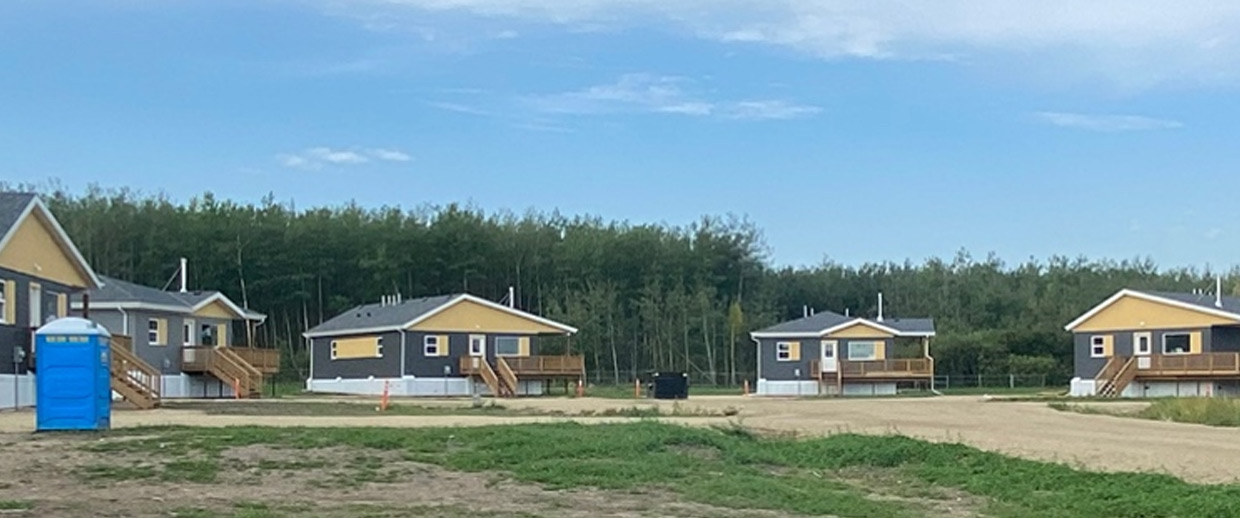
This landmark project is a prime example of addressing housing needs with dignity and durability. Located west of Edmonton, the development utilized precast concrete insulated wall panels to construct high-quality, energy-efficient homes for the community.
The off-site fabrication was crucial, allowing for efficient construction despite the remote location and ensuring a consistent, high-quality finish. The project delivered safe, healthy, and sustainable housing that will stand up to the Prairie climate for generations, serving as a model for remote and Indigenous community housing across Canada.
Sustainable Precast Projects
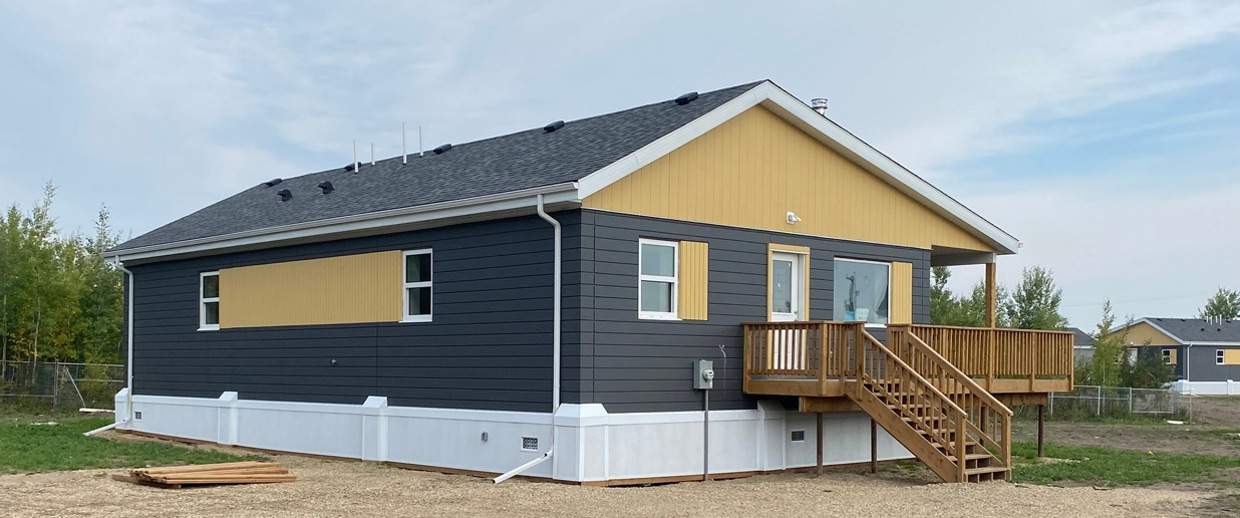
Alberta is also at the forefront of integrating sustainability into precast construction. Innovations include the use of low-carbon cement mixes and exploring 3D-printing technologies for concrete components, which aim to reduce the carbon footprint of building materials drastically.
Projects in Calgary and Edmonton are increasingly targeting higher environmental standards. By combining the efficiency of precast with low-carbon materials, developers can meet both affordability goals and ambitious sustainability targets, future-proofing their investments.
Why Precast Concrete Solves the Housing Crisis
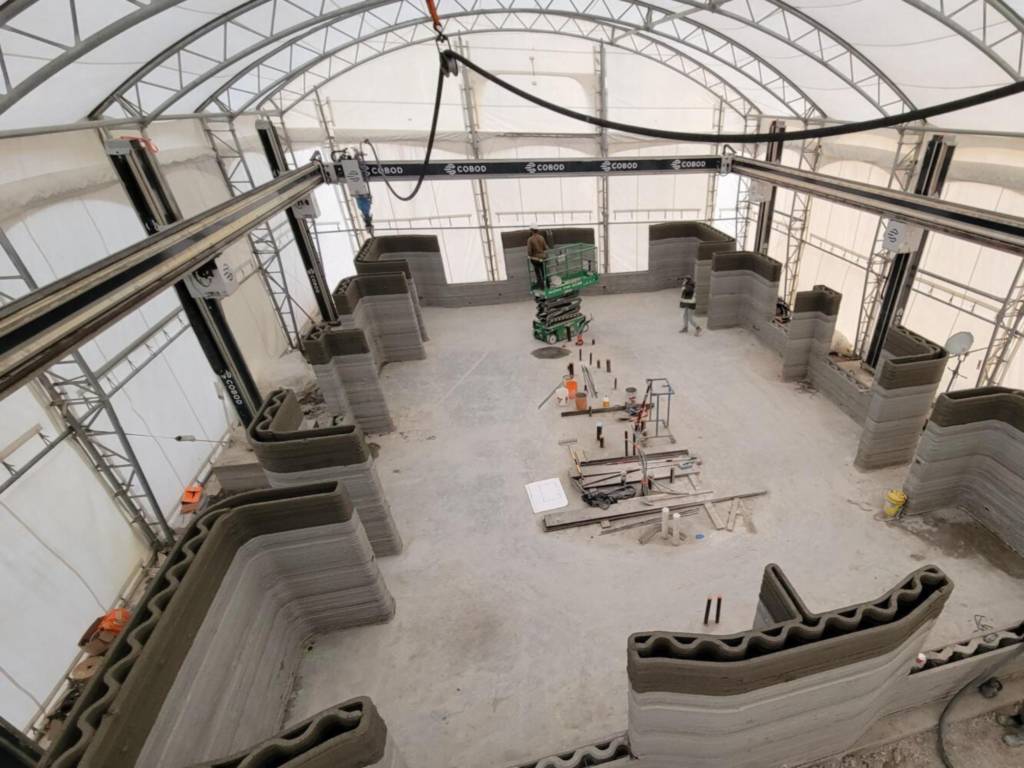
The “housing crisis” isn’t an abstract concept—it’s a shortage of safe, durable, and affordable places for people to live. Precast concrete attacks the root of this problem by fundamentally changing how we build.
Addressing Canada’s Housing Shortage
The core issue is a deficit of units built versus units needed. Traditional construction simply can’t scale up fast enough to close the gap. Precast concrete’s factory-based model is inherently scalable; production can be ramped up in a controlled setting without being limited by weather, skilled labour shortages on-site, or seasonal slowdowns.
This industrial approach to building is what allows for the rapid deployment of hundreds or thousands of housing units. It turns construction from a craft-based, sequential process into a manufacturing and assembly operation, which is the only way to achieve the volume required.
Advantages Over Traditional Construction
When stacked against wood-frame or cast-in-place concrete, the advantages for volume housing are clear. Speed, as discussed, is number one. Quality control is another; factory conditions ensure consistent mix, curing, and finishing, leading to fewer defects and callbacks.
There’s also less community disruption. With most work done off-site, the noise, dust, and traffic at the building location are significantly reduced—a major benefit for infill projects in established neighbourhoods like Bridgeland or Inglewood. You get a better-built home, faster, with less hassle for everyone involved.
Alberta Precast Concrete Providers
Choosing the right partner is critical. Alberta is home to several experienced precast manufacturers and specialists who understand local needs, from Calgary’s expansive clays to northern climate demands. Here’s a look at some key players.
Superior Walls of Alberta
A specialist in prefabricated, insulated foundation wall systems. Their product is a precise, energy-efficient alternative to traditional block or poured foundations, delivered as a complete system. This can significantly accelerate the critical foundation stage of any housing project.
Westcon Precast
A major manufacturer with a broad portfolio, producing everything from structural beams and columns to architectural cladding and insulated wall panels. Their scale and experience make them a potential partner for large-scale, multi-building affordable housing developments.
Alberta Precast
A provider offering a range of precast products, often for agricultural, commercial, and industrial applications. Their expertise in durable, functional concrete construction can be applicable to certain types of workforce or utility housing projects.
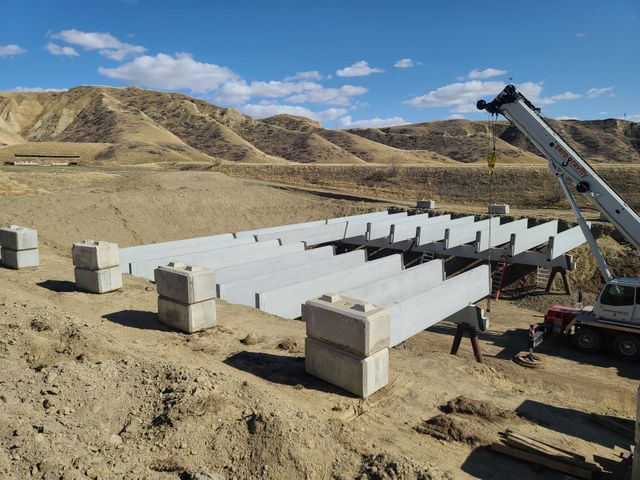
JanVeek Concrete Homes
A company focused specifically on the residential market, offering complete precast concrete home packages. They represent a turnkey approach for developers or groups looking to build single-family or duplex-style affordable homes with the benefits of concrete construction.
For a comprehensive partner that can guide you from design through to erection, a local specialist like OmegaPrecast brings valuable coordination and expertise to ensure your project’s success from the ground up.
Building and Buying Precast Concrete Homes
For a developer or housing corporation, procuring a precast concrete building is a different process than managing a stick-built project. Understanding the workflow and customization options is key to a smooth experience.
Customization and Layout Options
Far from being rigid or uniform, precast concrete offers significant flexibility. Floor plans can be customized within the dimensional grids of the panel system. Exterior finishes are virtually limitless—brick, stone, stucco, or exposed aggregate textures can be cast directly into the panels.
This means you can design buildings that fit the architectural character of a specific community, whether it’s a modern infill in Sunalta or a more traditional look for a suburban development in McKenzie Towne. The structure is durable, but the aesthetics are fully in your control.
Simple Buying Process
The process typically follows a design-assist model. You engage with a precast specialist early in the design phase. Their engineers work with your architect to optimize the design for precast efficiency, finalize panel layouts, and create shop drawings.
Once approved, manufacturing begins on a precise schedule aligned with your site readiness. The simplified on-site assembly then follows, turning a complex construction project into a streamlined logistics and installation operation. This collaborative approach de-risks the project and locks in timelines.
Sustainability and Future of Precast Housing
The future of affordable housing isn’t just about cost—it’s about building responsibly for the long term. Precast concrete is uniquely positioned to meet evolving sustainability standards while delivering on its core promises of durability and value.
High-Quality and Low Maintenance Solutions
The long-term sustainability story is powerful. A precast concrete building lasts decades longer than many alternatives, with minimal ongoing maintenance. This life-cycle cost advantage is enormous for housing providers, freeing up capital from repairs for further development.
When a building’s operational energy use is low and its structural life is measured in generations, you have a truly sustainable asset. This resilience is the ultimate form of affordability, protecting residents and owners from future cost shocks and ensuring housing stock remains viable for the long haul.
FAQ: Precast Concrete for Affordable Housing in Alberta
Developers and contractors new to precast often have practical questions. Here are clear answers to some of the most common ones.
Is precast concrete actually cheaper than wood framing for a multi-unit project?
When you look at the total project cost—including faster completion, reduced financing costs, lower maintenance, and superior energy performance—precast concrete often provides a better long-term value. The initial material cost may be higher, but the system-wide savings and risk reduction typically result in a more predictable and often lower total cost of ownership, especially for projects with 20+ units.
For a 50-unit building in Calgary, shaving three months off the construction schedule can save hundreds of thousands in interest and overhead alone. That’s where the real cost advantage materializes.
How does precast concrete handle Calgary’s expansive clay soil?
It handles it exceptionally well. Precast foundations and structural systems are engineered for specific site conditions, including soil reports. The inherent strength and rigidity of precast help mitigate differential settlement issues common in Calgary’s clay belts, from the legacy neighbourhoods to new developments in the city’s outer edges.
A proper geotechnical report informs the foundation design, ensuring the precast system specified is built to perform on your specific site, providing a stable and durable base for the life of the building.
Can we achieve net-zero or high green building standards with precast?
Absolutely. The thermal performance of insulated precast panels provides an excellent starting point for an energy-efficient envelope. This can be combined with other technologies like geothermal heating, solar panels, and high-efficiency windows to achieve stringent standards like LEED or Net Zero Ready.
Many Alberta precast producers are now incorporating low-carbon concrete mixes, further reducing the embodied carbon of the building. Choosing precast doesn’t limit your sustainability ambitions; it gives you a high-performance foundation to build upon.
What’s the lead time for manufacturing precast components?
Lead times vary by manufacturer and project complexity but generally range from 8 to 16 weeks from finalized shop drawings. This is why early engagement is critical. The manufacturing happens concurrently with your site preparation and foundation work, so it doesn’t add to the critical path—it runs parallel to it, which is what creates the time savings.
Planning ahead with your precast partner is the key to unlocking the system’s full speed potential.
Conclusion
For affordable housing in Alberta, the goal is clear: build more, build better, and build to last. Precast concrete delivers on all three fronts by transforming construction from a slow, on-site craft into a efficient, factory-driven process. The result is homes that go up faster, cost less to operate, and withstand our climate for generations.
From rapid-assembly panels for urgent needs to highly customized systems for permanent community housing, the flexibility is there. The local expertise, from providers across the province, is ready to deploy.
If you’re planning a multi-family, supportive housing, or community development project and need a solution that balances upfront costs with long-term value, it’s time to look at precast. Reach out to OmegaPrecast to discuss how precast concrete can make your next affordable housing project in Alberta not just possible, but profoundly successful.