
Last updated: August 5, 2026
Hidden costs of precast concrete in Alberta can include delivery and craning, site access and prep, connection hardware, engineering and shop drawings, and winter logistics. Budgeting only the material quote understates the total — accounting for these installed costs upfront prevents surprises and gives a true project comparison.
You’ve done your due diligence, comparing upfront quotes for a precast concrete project in Calgary. But if your budget is based on that initial material price alone, you’re likely in for a surprise. Understanding the hidden costs of precast concrete in Alberta projects is the difference between a smooth build and a financial headache.
From unexpected delivery fees along Deerfoot Trail to weather delays that disrupt a tight schedule in the Beltline, the real price tag is often buried. Let’s pull back the curtain on what Calgary homeowners, contractors, and developers should really budget for.
Understanding Precast Concrete Pricing Basics
Precast concrete pricing can seem straightforward at first glance, but it’s built on a complex foundation. It’s not a single flat rate; instead, it’s a layered calculation that combines material, labor, and project-specific factors. The initial quote you receive often represents the base cost of the manufactured element itself.
Beyond that, the total project cost is influenced by scale, complexity, and location. A simple retaining wall panel for a backyard in Silver Springs will have a different financial profile than architectural cladding for a multi-story commercial build downtown. Grasping this layered model is your first defense against budget overruns.

Average Cost Ranges by Product Type
Costs vary dramatically depending on what you’re having manufactured. Standard structural elements like beams or columns are typically more economical per unit due to high-volume production. Architectural panels with custom textures or finishes command a significant premium for their aesthetic value and specialized molds.
Hollow-core slabs for floor systems, common in multi-family projects, fall somewhere in the middle. They offer efficiency in both manufacturing and installation but require careful handling. Knowing which product type your project needs is the first step in establishing a realistic budget baseline.
Bottom line: Always ask for a line-item breakdown that separates standard product costs from custom or architectural premiums.
Per-Square-Foot and Per-Linear-Foot Costs
For planning purposes, costs are often discussed in per-square-foot (for walls, floors) or per-linear-foot (for beams, lintels) terms. In Alberta, basic precast wall panels can start in the range of $25-$40 per square foot for standard finishes. More complex architectural panels easily jump to $60+ per square foot.
Linear elements, like precast lintels for garage openings in new McKenzie Towne builds, might be quoted at $150-$300 per linear foot, depending on load requirements. These metrics are useful for initial comparisons but remember they rarely include the critical extras like shipping, craneage, or on-site fitting.
Upfront Material and Production Costs
The journey of a precast element begins long before it arrives on your site. The upfront costs tied to materials and factory production form the core of your initial quote. Fluctuations in global commodity markets directly impact the price of cement, aggregates, and steel reinforcement.
This stage also includes the engineering and creation of the formwork or molds. For a custom project, the mold cost is a one-time expense that can be substantial, but it’s amortized over the number of identical pieces cast. A change order mid-production, however, can render a mold useless and trigger this cost again.
Cement, Aggregates, and Reinforcement Expenses
Cement is the binder, and its price is sensitive to energy costs and supply chain logistics. High-performance mixes or those requiring specific properties for Alberta’s freeze-thaw resilience will cost more. Aggregates—the sand and stone—add another layer, with locally sourced materials generally being more cost-effective than imported ones.
Reinforcement is the skeleton: rebar or prestressing strands. Steel prices are volatile, and designs requiring dense, complex rebar cages (like for seismic zones in Calgary) increase both material and labor costs at the plant. This trio forms the non-negotiable material base of every piece.
Formwork and Admixtures Breakdown
Formwork is the custom-shaped mold that gives the concrete its final form. Simple, reusable forms for standard products keep costs down. Intricate, one-off forms for a unique architectural feature on a project in Bridgeland represent a major upfront investment passed on to the client.
Admixtures are the “secret sauce”—chemicals added to the mix to control setting time, improve workability, or enhance durability. In our climate, air-entraining admixtures are crucial to prevent freeze-thaw damage, adding a necessary but often overlooked line item to the production cost.
Bottom line: Customization at the production stage is where budgets can quietly double—plan meticulously to avoid change orders.
Specialized Manufacturing Processes
Not all precast is created equal. Processes like steam curing accelerate strength gain, allowing faster turnover of molds but consuming significant energy. Tilt-up casting, where panels are cast on-site on the slab, has different cost drivers than plant-cast elements that must be transported.
Post-tensioning, where steel cables are tensioned after the concrete has cured, creates incredibly strong, slender elements but requires specialized expertise and equipment. Each of these processes adds a layer of cost that is justified by the performance benefit but must be accounted for in the estimate.

Transportation and Logistics Hidden Costs
This is where many budgets first encounter the “hidden” part of hidden costs. Moving massive, heavy concrete elements from plant to site is a logistical feat with a price tag all its own. It’s not a simple delivery fee; it’s a complex calculation of distance, equipment, and risk.
For a project in a developed area like Kensington, narrow streets and overhead wires can turn a straightforward delivery into a puzzle requiring police escorts and specialized routing. These aren’t hypotheticals—they’re real, billable hours that can appear on your final invoice.
Delivery Fees for Large Elements
Delivery fees are calculated based on the number of trucks, the size of the load, the distance from the plant, and the required permits for oversized loads. A single, massive beam might require a multi-axle trailer and a pilot car, adding thousands to the transport cost before the element even leaves the yard.
Unloading adds another layer. If the delivery truck’s onboard crane can’t handle the weight or reach, you’ll need a mobile crane on standby at the site—a separate rental that begins the moment it leaves the depot. This coordination failure is a common and expensive oversight.
Regional Factors in Alberta
Alberta’s vast geography and variable infrastructure play a huge role. Hauling from a plant in Lethbridge to a site in Edmonton incurs major fuel and time costs. Projects in remote areas or up mountain passes, like those near Canmore, face exponentially higher transportation premiums and limited carrier availability.
Even within Calgary, location matters. A site with easy highway access off Stoney Trail is far cheaper to service than one tucked into a mature community with restrictive covenants. Always factor the true logistical path from plant to foundation into your early budget conversations.
Bottom line: Get a firm, written transportation quote that includes all permits, escort vehicles, and defines responsibility for unloading before you sign.
Installation and Equipment Expenses
The moment the truck arrives, the clock starts on the most equipment-intensive phase. Installing precast isn’t like pouring a slab; it requires heavy lifting, precise placement, and skilled crews. The cost of this orchestration is often underestimated by those new to precast construction.
It’s not just about renting a crane. It’s about the right crane with the correct reach and capacity, certified riggers, signalers, and the installation crew itself. Any delay in this finely tuned sequence results in idle equipment and labor—costs that add up by the hour.
Crane and Specialized Equipment Rentals
A mobile crane large enough to lift multi-ton panels can cost several thousand dollars per day, plus mobilization/demobilization fees. For taller structures, a tower crane may be needed for the duration of the project, representing a major capital or long-term rental expense.
Beyond the crane, you’ll need specialized lifting hardware (lifting inserts, spreader beams), temporary bracing to hold panels plumb until permanent connections are made, and potentially manlifts or scaffolding for the connection crew. Each piece of equipment is a line item.
Labor and Installation Time Overruns
Precast erection is a high-skill trade. The crew must interpret shop drawings, safely rig loads, guide them into millimeter-perfect alignment, and make secure structural connections. This labor is premium-priced, and their efficiency directly controls your equipment rental duration.
Time overruns are a major cost driver. Inclement weather, unprepared site conditions, or last-minute design clarifications can bring the entire operation to a halt while the crane and crew sit on standby. Padding your schedule and budget for these inevitable hiccups is prudent planning.
Building Permits and Compliance Costs
Your project needs permits, and precast often triggers specific requirements. The City of Calgary will require engineering stamps on the shop drawings for all structural precast elements. This engineering review adds cost and time before a single piece can be manufactured.
Compliance with Alberta’s building code, especially for seismic design in certain zones or for energy efficiency (thermal bridging through panels), may require enhanced details or additional materials. These aren’t optional; they’re mandatory costs for obtaining your final inspection and occupancy permit.
On-Site Challenges and Delays
Even the best-laid plans meet reality on the jobsite. On-site challenges are the wild cards of construction, and with precast’s tight sequencing, they are magnified. A delay in one trade can cascade, holding up the entire precast delivery and erection schedule.
For a contractor managing a tight timeline for a new commercial build in Quarry Park, these delays aren’t just inconvenient—they’re financially punitive. Understanding common pitfalls is the first step to mitigating their impact on your project’s bottom line.
Weather Interruptions and Curing Issues
Alberta weather is notoriously unpredictable. High winds can ground crane operations, putting the entire crew on hold. Rain can turn a site into a mud pit, making it unsafe for heavy equipment to operate or for panels to be placed accurately.
While the concrete itself is cured, the installation and grouting of joints are weather-sensitive. Grout poured in freezing temperatures won’t set properly, compromising structural connections. Building in weather contingency days isn’t pessimism; it’s essential Calgary project management.
Coordination and Rework Risks
Precast requires flawless coordination between the foundation crew, the precast supplier, and the erection team. If the foundation bolts aren’t in the exact location shown on the shop drawings, the panel won’t fit. The cost to fix this—whether modifying the foundation or the panel—is steep and contentious.
Rework is the budget killer. Drilling new holes in a cured panel on-site, patching, or worse, sending an element back to the plant for modification, incurs massive costs in labor, downtime, and transportation. A single coordination error can erase your project’s contingency fund.
Bottom line: Invest in a meticulous site layout and pre-pour bolt location verification—it’s the cheapest insurance you can buy.
Customization and Design Overheads
The appeal of precast often lies in its ability to be customized. However, that bespoke quality comes with a financial premium at every turn. Moving from a standard catalog item to a custom design introduces costs in engineering, formwork, and production complexity.
For a homeowner wanting a unique textured finish on a garage in Aspen Woods, or a developer seeking a distinctive facade for a building, these design aspirations must be balanced against their direct impact on the project budget. There are rarely shortcuts in custom concrete.
According to the Government of Alberta, building regulations and construction standards can directly impact project costs, especially when it comes to structural safety and material performance.
Custom Finishes and Dimensions Premiums
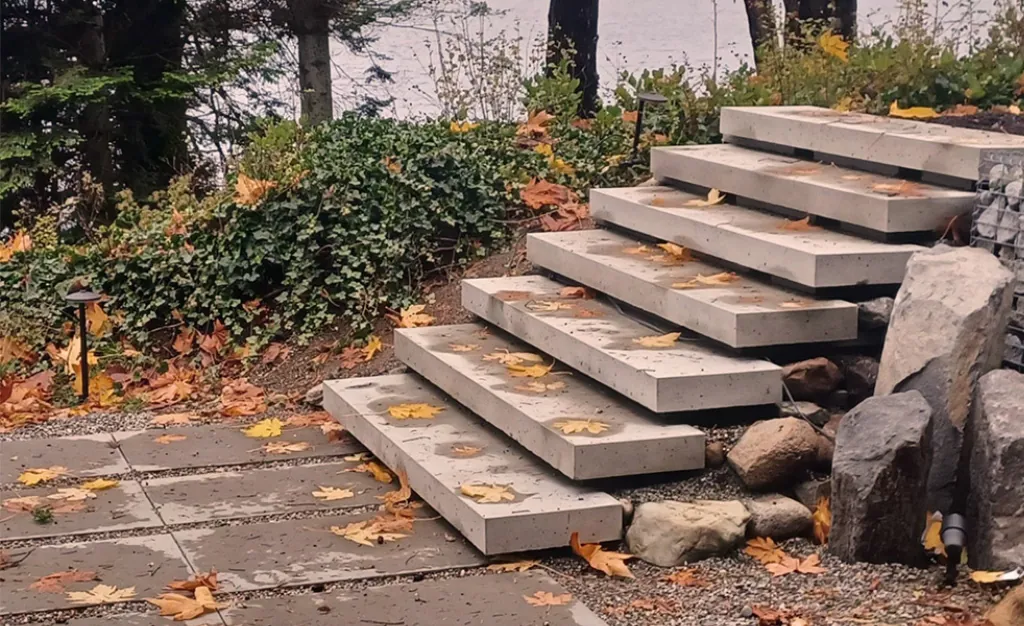
A standard grey, smooth-off-the-form finish is included. Anything else costs extra. Exposed aggregate, sandblasted patterns, integral colour, or formliner textures (to look like brick or stone) all require special materials, processes, and often handwork at the plant.
Non-standard dimensions are another cost driver. Panels that are larger, thinner, or an irregular shape may require special reinforcement, unique formwork, or even adjustments to the manufacturing process to ensure they can be safely handled and transported.
Architectural vs. Standard Panels
It’s critical to distinguish between structural precast (which is designed to carry load and is often hidden) and architectural precast (which forms the visible building envelope). Architectural panels have much tighter tolerances for appearance, colour consistency, and finish.
They often include integrated insulation, complex reveals, and special attachment systems. The quality control, handling requirements, and design effort for architectural precast are in a different league—and so is the price per square foot. Know which one your project actually needs.
Long-Term and Indirect Costs
The financial analysis of precast shouldn’t end at project completion. A true cost assessment considers the entire lifecycle of the structure. While precast is famously durable, it’s not maintenance-free, and its initial installation choices can have decades-long financial implications.
Furthermore, indirect costs like the impact of project delays on financing, leasing, or revenue generation can dwarf the direct cost of the concrete itself. For a commercial developer, time truly is money, and schedule reliability has immense value.
Maintenance and Lifecycle Expenses
Precast concrete is low-maintenance, but not no-maintenance. Joints between panels are potential failure points for water infiltration, especially in Calgary’s freeze-thaw cycles. Regular inspection and occasional re-caulking are necessary long-term expenses to preserve building integrity.
If the panels weren’t properly designed for our climate (e.g., insufficient air entrainment), spalling or surface deterioration can occur, leading to costly repairs. Investing in a high-quality initial product from a reputable local supplier like OmegaPrecast is a long-term cost-saving strategy.
Scheduling Delays Impact
For a contractor, a delayed project means extended general conditions costs: site trailers, fencing, utilities, and supervision. For a developer, a delayed opening means postponed lease revenues or sales. For a homeowner, it means more months of alternate living arrangements or storage fees.
While precast can accelerate schedules through fast erection, any delay in its delivery or installation creates a bottleneck that delays every downstream trade—electrical, mechanical, interior finishes. The ripple effect of a one-week delay in the precast schedule can push the overall completion date back by a month or more.
Bottom line: When evaluating quotes, consider the supplier’s track record for on-time delivery as a critical financial factor, not just a convenience.

Alberta-Specific Considerations
Building in Alberta isn’t the same as building anywhere else. Our unique economic climate, geographic challenges, and local market dynamics directly shape the cost equation for precast concrete. A budget built on national averages will quickly fall apart here.
From the labour market’s fluctuations tied to the energy sector to the specific ground conditions in different parts of the province, the local context is everything. A savvy project manager integrates these factors from the very first estimate.
Regional Market and Location Factors
Alberta’s construction market is dynamic. During peak boom times, demand for precast can outstrip local manufacturing capacity, leading to longer lead times and higher prices. Conversely, in a slower market, you may find more competitive pricing and faster schedules.
Location within the province drastically affects logistics. A project in Fort McMurray faces astronomically higher transportation and labour costs than one in Calgary or Red Deer. Even within a city, site access and local traffic restrictions (like on Crowchild Trail during rush hour) add layers of cost and complexity.
Project Scale Influences on Costs
Economies of scale are powerful in precast. A developer building 50 identical townhouse units can spread the cost of custom formwork and engineering over many pieces, reducing the per-unit cost dramatically. A single custom home project bears the full brunt of those one-time setup expenses.
Large-scale commercial or infrastructure projects often have the buying power to negotiate better unit prices and secure dedicated production time at the plant. For smaller projects, flexibility and planning around the plant’s production schedule can be a key strategy to manage costs.
Frequently Asked Questions
What is the single biggest hidden cost with precast concrete in Calgary?
The biggest surprise is usually the full package of transportation and installation. Homeowners often budget for the panel cost but forget to factor in oversized load permits, pilot cars for transport down Macleod Trail, and the daily rental for a large mobile crane and crew. This bundle can easily add 20-30% to your delivered material cost.
Proper planning with your supplier to get an all-inclusive quote that covers delivery, offloading, and placement is the best way to avoid this sticker shock.
Can I save money by sourcing precast from a cheaper province?
Rarely, and it’s a major risk. While the unit price might seem lower, the transportation costs from Ontario or BC to Alberta are enormous and volatile. More critically, you lose the ability for easy communication, last-minute site measures, and quick resolution of any issues.
A local Alberta supplier like OmegaPrecast understands our specific building code amendments and climate challenges. The value of local expertise and responsive service far outweighs any theoretical savings from a distant, cheaper bid.
How does Calgary’s climate specifically increase precast costs?
Our harsh freeze-thaw cycles mandate higher-performance concrete mixes with air-entraining admixtures, which cost more. The short, unpredictable construction season also compresses schedules, increasing demand for crews and equipment during peak summer months, which drives up rates.
Furthermore, projects must be designed to manage thermal bridging and condensation risk, which can require more complex panel designs with integrated insulation—another cost adder that is essential for long-term durability and energy efficiency.
Are there any City of Calgary bylaws that add cost to precast projects?
Absolutely. The City has strict rules regarding construction hours, noise, and street occupancy permits for crane set-ups that can block traffic. You’ll need permits for any oversized loads travelling on city roads, which requires detailed routing plans and often police escorts.
For projects in established communities or near landmarks like the Bow River pathway, there may be additional community association guidelines or environmental protections that influence construction methods and timing, adding layers of planning and potential cost.
Conclusion
Navigating the true cost of a precast concrete project in Alberta means looking beyond the initial quote. It’s about accounting for the entire journey—from specialized manufacturing and volatile material markets to the logistical puzzle of delivery and the precision of installation. The hidden costs of precast concrete in Alberta projects are manageable, but only if you see them coming.
By understanding these layers, from regional factors to long-term maintenance, you transform from a vulnerable budget-holder into an informed project partner. You can ask the right questions, scrutinize quotes effectively, and build realistic contingency plans.
The most cost-effective project isn’t the one with the cheapest upfront price; it’s the one delivered on time, to specification, and built to last in our challenging climate. For a partner who provides transparent costing and local expertise for your next project in Calgary or beyond, reach out to OmegaPrecast for a detailed consultation.